
Graduate Certificate in Human and Community Services

Domestic student, 2027

Compare (0)

Why Graduate Certificate in Human and Community Services?

Combining policy, practice and research, you will gain foundational knowledge and skills for entry into the Australian human and community services industry, with the opportunity to focus on specific fields of practice, including management, community work and violence against women.

If your ambition is to make a positive difference in mental health, women's services, corrections, disability support, child and family services, migrant and refugee services or international development, then this is the program for you.

Overview

Fees

A$16,250*

This is the indicative total tuition fee to complete this course

Estimate only. View complete fee details

Duration

6 months full-time
(Available part-time)
Not available to student visa holders.

Intake/s

Semester 1 - February
Semester 2 - August
Check semester start dates

campus Location

This course is delivered at:
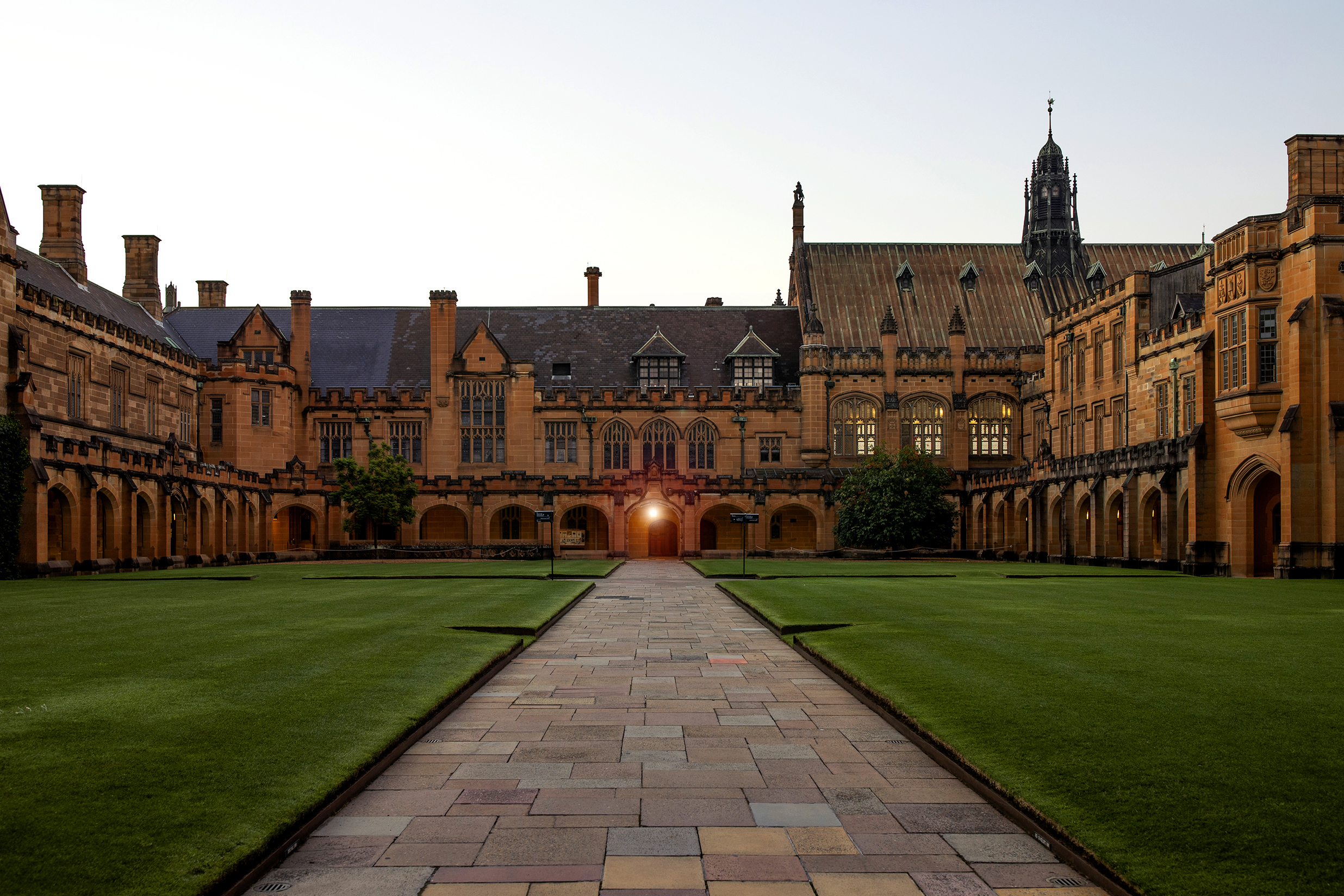
The University of Sydney (Camperdown/Darlington campus)

Study mode

Face to face

Additional info

Credit points :
24
Total amount of credits points required to complete this course. All subjects have a credit point value to indicate their contribution towards completing the course.
GCHUCOSE1000

What you’ll study

To qualify for the award of Graduate Certificate in Human and Community Services candidates must complete 24 credit points, including:

  • 6 core units of study
  • 18 elective units of study from the Graduate Certificate in Human and Community Services Units of Study Table.

Explore your options

Browse the various subject areas you can choose within this degree.

Specialisation

Specialisations are a group of related subjects developed for a profession or career, as part of a professional or specialist degree like Engineering.

Domestic and Family Violence

The domestic and family violence specialisation provides the first and only specialisation in this important area of research and practice in Australia. 

The domestic and family violence specialisation will provide students with an understanding of the nature, extent and effects of violence against women and children in local, national and global contexts. Students will be able to identify short and long term impacts of violence against women and children and the implications for practice in a variety of contexts.

In addition, students will demonstrate skills in responding to violence against women and children through policy, practice and research, as well as demonstrating skills in collaboration and teamwork. International students will have the option of field-based learning about domestic and family violence through enrolment in the unit of study SCWK6917 Practice Development.

Learn more

2027 tuition fees

AUD$16,250

This is the indicative total tuition fee to complete this course

Your Fees Explained

This is an estimate

This is an indicative amount based on the total amount of credit points required for completion of this course. Depending on the calendar year in which you undertake your study, and if your study load is more or less than the 1.0 EFTSL, your tuition fee will differ from the indicative amount. 

How to calculate your tuition fee

Additional costs, fees and incidentals

For most courses, there are other costs in addition to the tuition and/or student contribution amount, such as the Student Services Amenities Fee. Some are significant and can include course-specific materials, tools, protected clothing and equipment. Other costs may include application fees and credit card surcharges.

Scholarships

Whether you’re starting out, wanting to further your career, or pursuing a passion, let’s make it happen.

Entry requirements

1

Qualifications

Mandatory for course entry

Admission to candidature requires a bachelor's degree from the University of Sydney or equivalent qualification.

International qualifications

For qualifications awarded outside Australia, equivalencies and entry requirements are determined based on the country, institution, and qualification.

Recognition of prior learning

Related study may be credited towards your degree. This may also include relevant work experience for some postgraduate courses. Learn more

2

English Language Requirements

Mandatory for course entry

You may need to provide evidence of your English proficiency to study with us. Find out which requirements are applicable to you below:

Option 1
English language requirements

If English is your first language, you need to have citizenship or permanent long-term residency (minimum 10 years) and completed secondary or higher education (tertiary) studies in an English-speaking country recognised by the University.

List of recognised English-speaking countries

American Samoa, Australia, Bahamas, Barbados, Belize, Botswana, Canada (excluding Quebec), Fiji, Gambia, Ghana, Gibraltar, Guyana, Ireland, Jamaica, Kenya, Lesotho, Liberia, New Zealand, Nigeria, Papua New Guinea, Samoa, Singapore, Solomon Islands, South Africa, Tonga, Trinidad and Tobago, United Kingdom (including Northern Ireland), United States of America, Zambia, Zimbabwe.

Option 2
English is NOT my first language

If English is not your first language, you will need to provide proof of your English proficiency before you can commence your studies at the University.

You can do this either by demonstrating that you have completed specific secondary or tertiary qualifications, by taking an English language skills test, or by completing a relevant English language course at the University’s Centre for English Teaching.

IELTS score A minimum result of 6.5 overall and a minimum result of 6.0 in each band
TOEFL - IBT score A minimum result of 85 overall including a minimum result of 17 in Reading, Listening and Speaking and 19 in Writing
Pearsons Test of English A minimum result of 64 overall and a minimum result of 60 in each band

How to apply

Submit application

Apply early as applications can close prior to the advertised closing dates if course capacity is reached. 

Closing dates

Semester 1

31 January of the commencing year.

Scholarship applications

Separate deadlines apply for scholarships.

View scholarship closing dates