
Bachelor of Politics, Philosophy, and Economics

Shape the future and unleash your potential with the Bachelor of Politics, Philosophy, and Economics, a prestigious course recognised globally as a starting point for future leaders.

Domestic student, 2027

Compare (0)

Why Bachelor of Politics, Philosophy, and Economics?

Embark on an transformative journey with the Bachelor of Politics, Philosophy, and Economics, equipping you with intellectual skills for leadership, policymaking, business, and advocacy, to tackle global challenges, while honing critical thinking, ethical decision-making, and communication skills.

Ideal for analytical thinkers aiming to lead, our PPE program nurtures decision-making and ethical reasoning skills, aligning with careers in policy, politics, business, the not-for-profit sector, and beyond.

Overview

Entry score

92.0 Selection rank

Fees

A$17,822*

This is the indicative annual student contribution amount (per calendar year), based on a full-time study load of 48 credit points. The degree requires 144 credit points in total. 

Estimate only. View complete fee details

Duration

3 years full-time
(Not available part-time)

Intake/s

Semester 1 - February

campus Location

This course is delivered at:
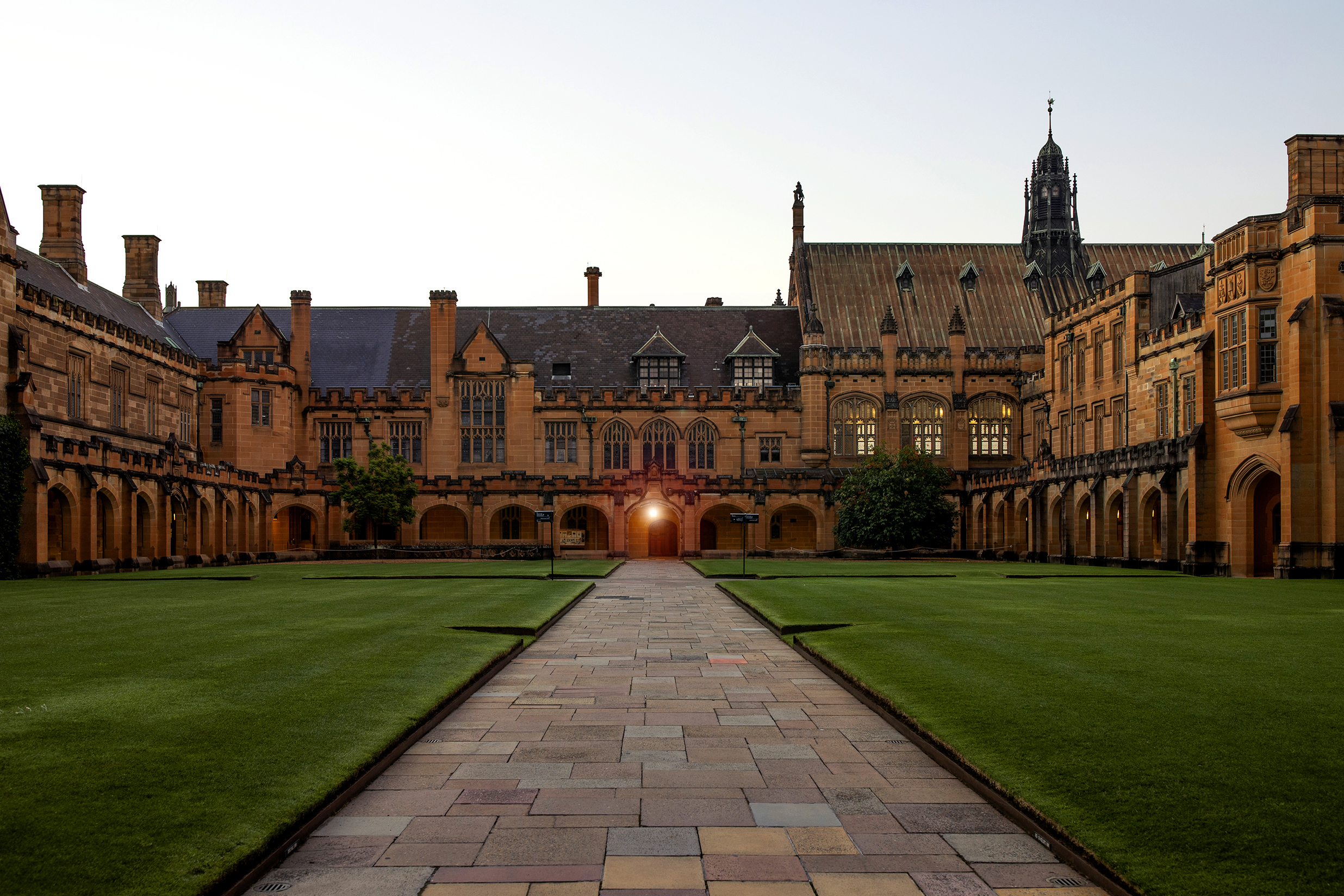
The University of Sydney (Camperdown/Darlington campus)

Study mode

Face to face

Additional info

UAC Code :
513221
Credit points :
144
Total amount of credits points required to complete this course. All subjects have a credit point value to indicate their contribution towards completing the course.
BPPLPHEC1000

What you’ll study

The Bachelor of Politics, Philosophy, and Economics will foster your academic excellence and leadership effectiveness. You will be equipped to tackle global challenges with critical thinking, ethical decision-making, and high-level communication skills.

The degree focuses on four disciplines - Politics, Philosophy, Political Economy, and Economics. You will choose one as your major and one as your minor.

You can look forward to gaining critical thinking and data literacy skills to synthesise information and marshal evidence. You’ll become adept at clear speaking and persuasive writing. You’ll also hone your ethical decision-making experience with training in moral philosophy.

Interested in policymaking? We’ll cover how policies and institutions affect governments, businesses and organisations. You’ll learn how to read and draft policy briefs too. You’ll graduate with robust knowledge in navigating international relations and global economic, social and political trends. 

With an option to undertake a Sydney Global Mobility program, you can also study at one of 250+ partner institutions in more than 40 countries around the world. Our placement and exchange opportunities set you up for a global career as you develop skills and broaden your world perspective.

Additionally, you will take electives from the Shared Pool of electives to make up the required credit points for this course.

This program will have a strong cohort and a sense of community as students are required to work closely and take core units together.  

Explore your options

Browse the various subject areas you can choose within this degree.

Major

A major is a sequence of units of study that offer specialised knowledge in a particular field.

Economics

This major conveys a valuable understanding of the context of business and government and the technical skills required to analyse economic and social data and events. Develop key capabilities for business fields such as financial markets, marketing, transport and logistics, international trade and consulting or the media.

About this major

Offered by one of Australia’s highly ranked centres in economics, this major conveys a valuable understanding of the context of business and government and the technical skills required to analyse economic and social data and events. Develop key capabilities for business fields such as financial markets, marketing, transport and logistics, international trade and consulting or the media. 

The objective of the major in Economics is to prepare you for the diverse range of careers which value the key skills of the discipline. These include understanding economic and social phenomena, analysing economic data, and exploring alternative choices in addressing key challenges. The major builds your training in economics incrementally. It begins by addressing the essentials of the discipline early in the degree, which opens a wide range of study areas at senior level. This allows you to shape concentrations in areas of interest such as macroeconomics, or in areas of applied economic policy.

Our graduates are leaders in their fields, holding positions at the Reserve Bank, Treasury and other government departments, in global financial institutions, and with international agencies and NGOs. They also go on to further study at some of the finest institutions in the world.

For more information on the program structure and content including unit of study information, please refer to the Arts and Social Sciences Handbook.

This major is offered by the School of Economics.

View the Economics Unit timetable.
Please note this timetable is indicative only.

Learn more

Philosophy

Philosophy explores fundamental and important questions such as 'How am I to live?', 'What do I know?', and 'Why should I care?' Cultivate critical thinking and intellectual perspectives crucial for adapting to fast-changing social, political and academic environments. Learn to think precisely, deliberate carefully, and communicate ideas in vivid and persuasive ways.

Learn more

Political Economy

About this major

Political Economy focuses on the links between the economy, society and political interests. You will be equipped to understand a range of competing economic theories, and will use them to analyse pressing economic issues in the contemporary world, including inequality and economic development, economic crisis and change, and the conflict between economic growth and environmental sustainability. You will also study the historical development of capitalist economies and their institutional foundations.

In first year you will be introduced to the principal schools of economic thought and the historical development of the global economy. The second and third year units progressively build upon these foundations, further developing your understanding of central issues in the study of political economy. You can specialise in particular approaches to understanding the economy and can choose from a range of contemporary political economic issues.

This major covers key research and teaching areas including economic development, the distribution of income and wealth, the political economy of human rights, finance, neoliberalism, the environment, business cycles, and global political economy and gender.

You will graduate with the skills required to analyse economic issues of important contemporary public concern, including their social and political aspects.

For more information on the program structure and content including unit of study information, please refer to the Arts and Social Sciences Handbook.

This major is offered by Political Economy.  

Learn more

Politics

About this major

Politics is the study of the nature of governments and the distribution of power at the domestic level. Gain the knowledge, theoretical understandings, and practical skills that underpin a successful career that engages with politics at the domestic level. You will focus on how individuals participate in and are affected by politics, and how governing bodies that shape peoples' lives make decisions.

Compare key elements of political systems including government institutions, political parties, interest groups, elections, patterns of political participation, and social movements. At the end of your study you will be equipped with the key concepts, theories and methods used across the discipline of political science.

Key research and teaching areas include:

  • comparative politics: looking at the way politics is conducted in different nations, and the impact of different political systems and structure on the distribution of power in society
  • politics at a domestic level: the study of Australian politics, including the role of political parties and elections, interest groups and social movements, and the position of Australia in its region
  • the policy-making process and the way governments create and implement public policy
  • key issues: elections, political protest, environmental politics, leadership, state economies, constitutions, and differing political systems.

As a graduate you will have the skills desired by public, private and non-profit organisations, domestically and in different political contexts across the world.

Learn more

Minor

A minor is a defined sequence of units of study that develops expertise in a subject area. A minor requires fewer credit points than a major.

Economics

Offered by one of Australia's highly ranked centres in economics, this minor conveys a valuable understanding of the context of business and government and the technical skills required to analyse economic and social data and events. Develop key capabilities for business fields such as financial markets, marketing, transport and logistics, international trade and consulting or the media. 

Learn more

Philosophy

Philosophy explores fundamental and important questions such as 'How am I to live?', 'What do I know?', and 'Why should I care?' Cultivate critical thinking and intellectual perspectives crucial for adapting to fast-changing social, political and academic environments. 

Learn more

Political Economy

Political Economy examines the links between the economy, society and political interests, drawing on a range of competing economic theories to analyse contemporary issues such as inequality, economic development, economic crises and environmental sustainability.

Learn more

Politics

Politics is the study of the nature of governments and the distribution of power at the domestic level. Gain the knowledge, theoretical understandings, and practical skills that underpin a successful career that engages with politics at the domestic level. You will focus on how individuals participate in and are affected by politics, and how governing bodies that shape peoples' lives make decisions.

Learn more

2027 tuition fees

AUD$17,822

This is the indicative annual student contribution amount (per calendar year), based on a full-time study load of 48 credit points. The degree requires 144 credit points in total. 

Your Fees Explained

This is an estimate

The indicative fees displayed are an estimate only.  The estimate is for a Commonwealth supported place for 1 year of full-time study, which is usually 48 credit points (also known as 1.0 EFTSL).
 
The actual fees you will pay in your first calendar year will depend on many factors including:  

1.    the calendar year in which you commence studying your current course
2. the intake in which you commence your studies
3. whether your course is eligible for special rates for particular units of study
4. the specific units of study in which you enrol; and 
5. the student contribution bands under which each unit of study sits.    

The most recently published calendar year of fees payable for a specific unit of study are available here.  If you have any questions, you can submit an enquiry. 
 
How the estimate has been calculated  
 
Generally, the estimate displayed on the course page is usually calculated based on one of two methods:   

1. if a course has the effective equivalent of at least 10 full-time students enrolled, the fee estimate is based on the most recent data showing the average amount those students actually paid; or  
2. for new courses or those with fewer students (where we don’t have enough data), the estimate is based on the typical cost of studying full-time in the main subject area of the course. 

Additional costs, fees and incidentals

For most courses, there are other costs in addition to the tuition and/or student contribution amount, such as the Student Services Amenities Fee. Some are significant and can include course-specific materials, tools, protected clothing and equipment. Other costs may include application fees and credit card surcharges.

Scholarships

Whether you’re starting out, wanting to further your career, or pursuing a passion, let’s make it happen.

Entry requirements

1

Qualifications

Mandatory for course entry

To be eligible for admission into one of our undergraduate degrees, you need to have completed a recognised qualification and meet the required entry score.

Find your qualification in the qualification dropdown below (organised by country). If your qualification isn’t listed, you can find the full list on the recognised qualifications page.

Find your qualification

entry score

92.0

Selection rank

ATAR + adjustment factors

All scores listed are a guide for admission and subject to change.

Didn’t meet the entry score? Explore admissions pathways

The entry scheme you are eligible for will depend on your circumstances. In some cases, an entry scheme might allow you to gain entry to a course with an ATAR lower than the cut-off point. Other schemes let you provide additional info to support your application – such as a creative portfolio or evidence of how your studies have been impacted.

Recognition of prior learning

Recognition of prior learning (RPL) is when your previous studies and/or work experience are recognised and counted towards your degree as credit.

By accepting credit, you may:

  • reduce your course duration
  • reduce your fees

What you can seek recognition for

  • Units of study taken at another university or higher education institution.
  • Approved qualifications from a higher education institution or certain vocational education and training institutions.
  • For certain postgraduate degrees, your relevant work experience.

Application process

You can apply for credit as part of your course application, or after you've accepted your offer.

2

Prerequisites

There are no prerequisites for this course.

3

Assumed knowledge

Depends on majors or units of study chosen.

4

English Language Requirements

Mandatory for course entry

You may need to provide evidence of your English proficiency to study with us. Find out which requirements are applicable to you below:

Option 1
English language requirements

If English is your first language, you need to have citizenship or permanent long-term residency (minimum 10 years) and completed secondary or higher education (tertiary) studies in an English-speaking country recognised by the University.

List of recognised English-speaking countries

American Samoa, Australia, Bahamas, Barbados, Belize, Botswana, Canada (excluding Quebec), Fiji, Gambia, Ghana, Gibraltar, Guyana, Ireland, Jamaica, Kenya, Lesotho, Liberia, New Zealand, Nigeria, Papua New Guinea, Samoa, Singapore, Solomon Islands, South Africa, Tonga, Trinidad and Tobago, United Kingdom (including Northern Ireland), United States of America, Zambia, Zimbabwe.

Option 2
English is NOT my first language

If English is not your first language, you will need to provide proof of your English proficiency before you can commence your studies at the University.

You can do this either by demonstrating that you have completed specific secondary or tertiary qualifications, by taking an English language skills test, or by completing a relevant English language course at the University’s Centre for English Teaching.

IELTS score A minimum result of 7.0 overall and a minimum result of 6.0 in each band
TOEFL - IBT score A minimum result of 96 overall including a minimum result of 17 in Reading, Listening and Speaking and 19 in Writing
Pearsons Test of English A minimum result of 72 overall and a minimum result of 60 in each band

How to apply

All domestic students need to apply through the Universities Admissions Centre (UAC).

Step 1:Documents you'll need

If you're an Australian Year 12 student UAC can usually obtain your results and ATAR from the relevant state education authorities.

For a full list of documents required, visit the UAC website .

Step 2:Key dates

Applying for Semester 1 (February)?

  • The University makes most of its Semester 1 offers through UAC's December Round 2.
  • It does not participate in every UAC offer round and makes limited or no offers before December Round 2. 
  • Application close for December Round 2: Applications typically close in late November.
  • Offers released for December Round 2: Offers are typically released in late December.
  • After December Round 2, some courses may be full and stop making offers.
  • Course vacancies will be available on the UAC website after January Round 1 offers are released.


Applying for Semester 2 (August)?

The University typically participates in selected UAC offer rounds between May and July. Offer rounds and dates may vary each year.


We strongly encourage you to visit the UAC website for a comprehensive list of key dates, including December Round 2 offers.

Step 3:Apply via UAC

To maximise your chances of receiving an offer from the University of Sydney, make sure to list your most desired degree at the University of Sydney as your first preference in your UAC application.

Step 4:After you apply

When the outcome of your application is available, you’ll receive an email from UAC. You will then receive an email from us with instructions on how to accept your offer.

Accepting your offer

Stay informed

Key dates, event invites and more - we’ll keep you in the loop.