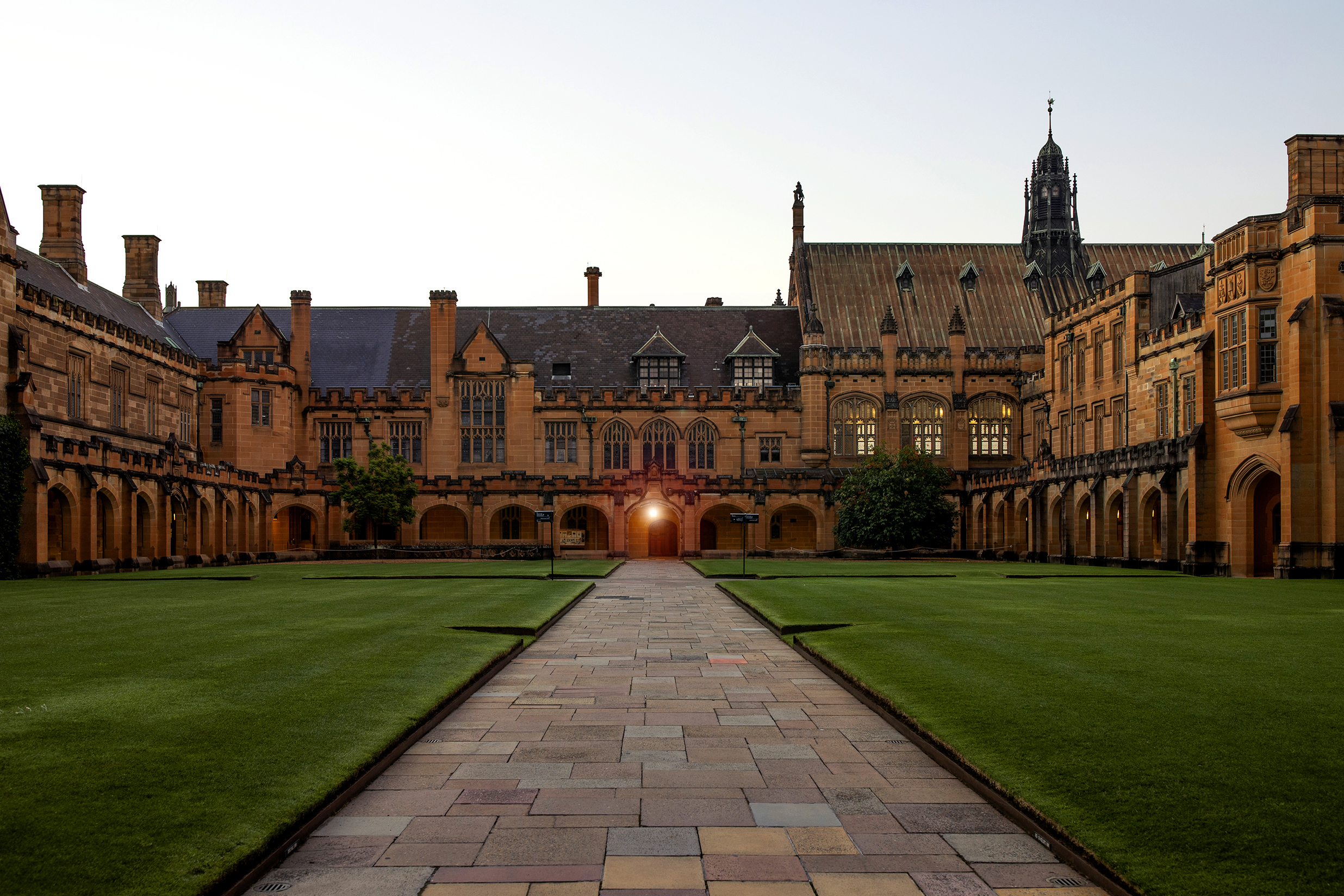
Master of Architecture

Forward thinking, collaborative and at the forefront of the changing architectural profession

Domestic student, 2027

Compare (0)

Why Master of Architecture?

In our Master of Architecture program you will mature your skills and critical thinking in envisioning novel, intelligent, and ethical architectural designs. Blending interdisciplinary theory and practice, be guided by leading experts and practitioners through diverse studio itineraries to investigate issues in our built environments.

The Master of Architecture is designed for graduates and professionals who wish to become a registered architect. Our customisable curriculum is ideal for crafting your personal design philosophy with versatile skills that are adaptive to environmental and societal challenges in practice.

Overview

Fees

CSP
A$9,893*

This is the indicative annual student contribution amount (per calendar year), based on a full-time study load of 48 credit points. The degree requires 96 credit points in total. 

Full Fee Paying
A$40,300*

This is the indicative annual tuition fee (per calendar year), based on a full-time study load of 48 credit points. The degree requires 96 credit points in total. 

Estimate only. View complete fee details

Duration

2 years full-time
(Available part-time)
Not available to student visa holders.

Intake/s

Semester 1 - February
Semester 2 - August
Check semester start dates

campus Location

This course is delivered at:
The University of Sydney (Camperdown/Darlington campus)

Study mode

Face to face

Additional info

Credit points :
96
Total amount of credits points required to complete this course. All subjects have a credit point value to indicate their contribution towards completing the course.
MAARCHIT2000

What you’ll study

The Master of Architecture is a postgraduate coursework degree in which you will broaden your professional, design and creative skills through a series of projects, research, and practical work. You will complete core units in a studio-based learning environment, including a capstone and any elective units as needed to meet the requirements of the course.

2027 tuition fees

AUD$40,300

This is the indicative annual tuition fee (per calendar year), based on a full-time study load of 48 credit points. The degree requires 96 credit points in total. 

Your Fees Explained

This is an estimate

This is an indicative amount based on 1 year of full-time study i.e. 48 credit points (1.0 EFTSL). Depending on the calendar year in which you undertake your study, and if your study load is more or less than the 1.0 EFTSL, your tuition fee will differ from the indicative amount. 

How to calculate your tuition fee

Additional costs, fees and incidentals

For most courses, there are other costs in addition to the tuition and/or student contribution amount, such as the Student Services Amenities Fee. Some are significant and can include course-specific materials, tools, protected clothing and equipment. Other costs may include application fees and credit card surcharges.

Scholarships

Whether you’re starting out, wanting to further your career, or pursuing a passion, let’s make it happen.

Entry requirements

1

Qualifications

Mandatory for course entry

For admission to the Master of Architecture, you need to hold

  • a Bachelor of Design in Architecture, or 
  • a Bachelor of Architecture and Environments or 
  • an equivalent from another university.

Bachelor of Design in Architecture

Students who have completed the Bachelor of Design in Architecture at the University of Sydney need to have completed the Master of Architecture prerequisite unit of study BDES3025 (Architectural Professional Practice) and have an average mark of 65.

Bachelor of Architecture and Environments

Students who have completed the Bachelor of Architecture and Environments at the University of Sydney need to have completed the Master of Architecture prerequisite unit of study BDES3025 (Architectural Professional Practice), have an average mark of 65, and are required to submit a portfolio.

Equivalent undergraduate architecture degree

Students who have completed an equivalent undergraduate architecture degree at another university will need a credit average (65 percent or equivalent) over the final two years of their degree, and must submit a portfolio of work to the school and/or demonstrate practical experience.

International qualifications

For qualifications awarded outside Australia, equivalencies and entry requirements are determined based on the country, institution, and qualification.

Recognition of prior learning

Related study may be credited towards your degree. This may also include relevant work experience for some postgraduate courses. Learn more

2

English language requirements

Mandatory for course entry

You may be able to provide evidence of your English proficiency through one of the following options:

Option 1
English is my first language

If English is your first language, you may be able to meet the English language requirements if you have;  

  1. citizenship or permanent long-term residency (minimum ten years), AND
  2. completed secondary or higher education (tertiary) studies recognised by the University in an approved English-speaking country below:
    • American Samoa        
    • Australia
    • Bahamas
    • Barbados
    • Belize
    • Botswana
    • Canada (excluding Quebec)
    • Fiji
    • Gambia
    • Ghana
    • Gibraltar
    • Guyana
    • Ireland
    • Jamaica
    • Kenya
    • Lesotho
    • Liberia
    • New Zealand
    • Nigeria
    • Papua New Guinea
    • Samoa
    • Singapore
    • Solomon Islands
    • South Africa
    • Tonga
    • Trinidad and Tobago
    • United Kingdom (including Northern Ireland)
    • United States of America
    • Zambia
    • Zimbabwe


Option 2
Previous study in an English-speaking country

You must have a minimum of two years of full-time study (or part-time equivalent) in a recognised bachelor’s degree or higher in one of the English-speaking countries below, within five years of course commencement.

Approved English speaking countries:

  • American Samoa
  • Australia
  • Bahamas
  • Barbados
  • Belize
  • Botswana
  • Canada (excluding Quebec)
  • Fiji
  • Gambia
  • Ghana
  • Gibraltar
  • Guyana
  • Ireland
  • Jamaica
  • Kenya
  • Lesotho
  • Liberia
  • New Zealand
  • Nigeria
  • Papua New Guinea
  • Samoa
  • Singapore
  • Solomon Islands
  • South Africa
  • Tonga
  • Trinidad and Tobago
  • United Kingdom (including Northern Ireland)
  • United States of America
  • Zambia
  • Zimbabwe

Option 3
Previous study in a non English-speaking country

You will meet the English language requirements if you can provide proof of previous study that shows you have completed either:

1. an undergraduate degree in English

You must have a minimum three-year recognised undergraduate degree conducted entirely in English and in which the language of instruction (teaching, assessment and examination) was English, within five years of course commencement.

2. a postgraduate degree in English

You must have a minimum two year recognised postgraduate degree conducted entirely in English and in which the language of instruction (teaching, assessment and examination) was English, within five years of course commencement.

Option 4
English language skills test

If English is not your first language, you may be able to prove English proficiency with an approved English skills test taken within 2 years of commencing the course.

Required scores:

IELTS score A minimum result of 6.5 overall and a minimum result of 6.0 in each band
TOEFL - IBT score A minimum result of 85 overall including a minimum result of 17 in Reading, Listening and Speaking and 19 in Writing
Pearsons Test of English A minimum result of 64 overall and a minimum result of 60 in each band

How to apply

Before applying

Prepare your portfolio

You will need to submit a portfolio showcasing your academic work and/or work experience. It should include:

  • your best undergraduate projects (English translation, if required), to display your designer and design communication skills, 
  • any relevant work experience. This can include group projects, ensuring you clearly outline your tasks and contribution.

Portfolios should:

  • be 1 file only in PDF format under 10MB
  • be no longer than 15 digital A3 or A4 pages, 
  • have clear document titles documents titled with labels that indicate their contents,
  • clearly labelled ‘Portfolio’ with your application number and full name

Subscribe to learn more about submitting a portfolio

Submit application

Apply early as applications can close prior to the advertised closing dates if course capacity is reached. 

Closing dates

Semester 1

31 January of the commencing year.

Semester 2

15 July of the commencing year.

Scholarship applications

Separate deadlines apply for scholarships.

View scholarship closing dates

Stay informed

Key dates, event invites and more - we’ll keep you in the loop.