
Society is grappling with collapsing trust in institutions and the growing unreliability of the images we encounter, particularly in the age of artificial intelligence.
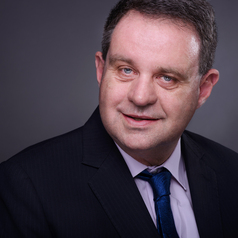
The new Faculty of Arts and Social Sciences podcast series Time for Trust, hosted by ARC Laureate Fellow Professor Terry Flew, Co-Director of the Centre for AI, Trust and Governance, addresses how governments, the economy and civil society depend on the public’s trust to work effectively – yet this trust is disappearing, while polarisation and misinformation are on the rise.
From trust in news to digital platforms, corporations, governments and AI, the series asks in who and what do we trust, how have we lost that trust, and can we get it back? And are new technologies such as AI bringing us together or driving us apart?
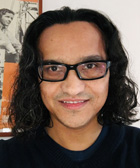
In the latest episode, Associate Professor of Film Studies Bruce Isaacs joined Professor Flew to explore one of the most powerful trust and image-making machines ever created: Hollywood.
Can cinema tell the truth in a world flooded with misinformation?
At a moment when AI can fabricate events and digital misinformation spreads faster than verification, how cinema shapes belief has never been more politically urgent, Associate Professor Isaacs said.
"Films straddle this fascinating tension between being truthful to history and intensifying experience. That’s where cinema gets its power, and also its danger," he said.
Associate Professor Isaacs argues that cinema is not meant to record historic events accurately. Rather, what it does is illustrate broader social truths through the way a film looks and tells its story.
"I don’t believe in historical truth in the film image," he said. "Cinema doesn’t look for that. What it seeks to show is a kind of aesthetic truth."
Hollywood, ideology and the Trump-era crisis of trust
Hollywood is a central player in the broader story of declining public confidence in media, government and technology, an issue now magnified by the polarisation of the Trump era.
With the 2026 Academy Awards about to take place, and films such as One Battle After Another nominated for multiple awards, much attention will be given to how the Academy chooses to deal with films critical of the Trump administration.
"Political anxieties have shaped a wave of recent Hollywood projects, including Civil War, Eddington and One Battle After Another," Associate Professor Isaacs said.
Hollywood has always packaged the truth, but in an era where trust is collapsing, those packages carry new political weight.
Associate Professor Bruce Isaacs
"Hollywood has always packaged the truth, but in an era where trust is collapsing, those packages carry new political weight."
"Is there excellence in filmmaking, or does it all come down to politics?" Professor Flew said.
"For the 2026 documentary Melania, for instance, the radically different reviews between audiences and critics on the website Rotten Tomatoes may indicate claims that film quality is divorced from politics are now redundant," he added.
Cinema has also become entangled with a long history of conspiracy culture, traversing Cold War propaganda films to more modern internet theories fuelled by cinematic tropes. A famous example of this includes Oliver Stone’s 1991 film JFK.
"Film may not cause conspiracies, but it gives them shape," Associate Professor Isaacs said.
"Movies offer totalising worlds, that’s what makes them compelling, but it’s also why conspiracies find a comfortable home there."
SAG-AFTRA member John Schmitt, second from right, and others carry signs on the picket line outside Netflix on Wednesday, Sept 27, 2023, in Los Angeles. Film and TV performers from the Screen Actors Guild-American Federation of Television and Radio Artists were striking to seek changes to compensation and protections from use of artificial intelligence in their craft. Photo: AP Photo/AAP/Chris Pizzello
50
automatic
LinkA timely conversation for an AI-shaped future
As AI systems increasingly produce synthetic media, images, videos and sounds indistinguishable from reality, the episode asks whether society is prepared for a world in which truth itself becomes harder to verify.
Associate Professor Isaacs and Professor Flew situated cinema as an early testing ground for these tensions.
"We’ve always struggled to distinguish truth from representation," Associate Professor Isaacs said. "AI simply makes that struggle visible, and urgent."
Professor Terry Flew notes that this comes at a time when AI is radically changing the conditions for filmmaking.
"If Hollywood blockbusters can be produced from a laptop, using AI software and drawing upon images and content scraped from the Internet, what will happen to the studios? Are we witnessing the end of cinema as the major cultural event it has been for the past century?" he said.
Listen to the episode on the Time for Trust website.
Hero photo: Adobe Stock.
Manual Name : Professor Terry Flew
Manual Description : Professor of Digital Communication & Culture and Australian Research Council (ARC) Laureate Fellow
Manual Address :
Manual Addition Info Title :
Manual Addition Info Content :
Profile image : /content/dam/people/academic-and-research-staff/terry-flew-lo-res.jpeg
Manual Type : profile
_self
Auto Type : contact
Auto Addition Title :
Auto Addition Content :
Auto Name : true
Auto Position : true
Auto Profile image :
Auto Phone Number : false
Auto Mobile Number : true
Auto Email Address : true
Auto Address : false
UUID :
Manual Name : Associate Professor Bruce Isaacs
Manual Description : Film Studies, School of Art, Communication and English
Manual Address :
Manual Addition Info Title :
Manual Addition Info Content :
Profile image : /content/dam/intranet/images/arts-social-sciences/about/profiles/Bruce-Isaacs.jpg
Manual Type : profile
_self
Auto Type : contact
Auto Addition Title :
Auto Addition Content :
Auto Name : true
Auto Position : true
Auto Profile image :
Auto Phone Number : false
Auto Mobile Number : true
Auto Email Address : true
Auto Address : false
UUID :