
Sydney Law School research is examining how countries' traceability rules can work together, so that sustainability claims can be checked rather than simply accepted.
A battery in an electric car may contain minerals dug up in one country, refined in a second, assembled into components in a third and sold in a fourth. When something goes wrong along the way, such as environmental damage or poor labor conditions, who is responsible?
For Professor Jeanne Huang, this question sits at the heart of one of the biggest challenges in making global supply chains more sustainable.
"A single product may involve raw material extraction in one country, processing in another, manufacturing somewhere else, and sale in a completely different market," says Professor Huang. "That makes it difficult to identify where is the country of origin or processing of this product, where environmental or social harm occurs, and who should be responsible for addressing it."
The rise of the circular economy, where products are reused and recycled, adds further layers, with materials passing through first, second and even third countries of consumption.
A second challenge is data. Companies and regulators often lack reliable information about where materials come from, how they were processed, by whom, and with what impact.
That is why governments, international organisations, and industrial organisations are introducing new laws and standards on traceability, the ability to track where a product or material comes from and what happens to it along the way. Traceability allows sustainability claims to be verified rather than simply accepted.
How to enable vulnerable parties to benefit from traceability is an underdeveloped issue
Professor Jeanne Huang
Sydney Law School
Professor Huang studies the legal and regulatory tools that can shape how businesses behave across global supply chains. One trend stands out, sustainability is increasingly written into product regulation and market access rules.
Digital Product Passports are a leading example. Under the European Union's Battery Regulation and the Eco-design regulation, from 18 February 2027, electric vehicle batteries and some others must carry a digital "passport" to be sold in the EU. The electronic record is linked to the battery and holds information about the battery and its lifecycle.
To comply, EU importers need information from miners, processors, component manufacturers and assemblers located well beyond Europe. A rule set in one major market can therefore ripple through an entire international supply chain.
Professor Huang calls this the Centralised Model, where one powerful jurisdiction projects its rules along the whole chain. It is administratively attractive because businesses have a single rulebook to follow. But she argues it is also fragile.
"Global mineral value chains involve mining, processing, manufacturing, consumption and recycling across multiple jurisdictions with different regulatory objectives," she says.
The tension is already visible. The EU's rules ask companies to collect and disclose product-level sustainability and carbon-footprint information, and its Data Act gives users rights to access and share product data. In China, new supply chain security provisions require data sharing along value chains to take place within a framework of risk monitoring and national-security oversight. In Australia, the Security of Critical Infrastructure Act treats certain infrastructure-related data as security-sensitive.
The result is that a mining or processing company may hold exactly the data an EU importer needs, but sharing it may first require compliance with the laws of its own country.
These conflicts are not limited to the EU, China and Australia, Professor Huang stresses. They reflect a broader global pattern in which rules that don't work together can undermine the resilience of the very supply chains they aim to improve.
The consequences reach beyond paperwork. Uncertainty about which law applies, and what evidence will be accepted, can affect customs clearance, financing, investment, procurement and dispute resolution.
There is also a fairness issue. Small and medium-sized businesses, Indigenous communities and Global South countries risk being shut out of high-value markets if external standards are imposed without practical ways to have their own systems recognised, or without support to comply.
"How to enable vulnerable parties to benefit from traceability is an underdeveloped issue," Professor Huang says.
She believes the next big question is no longer whether supply chains should be traceable, but how different traceability systems can work together.
Her answer is legal and regulatory interoperability, the ability of countries and businesses to evaluate, recognise and act on traceability data and digital credentials produced under another jurisdiction's laws, while each jurisdiction keeps its own regulatory goals and sovereignty. In practice, that means building mechanisms for mutual or unilateral recognition, alongside more consistent technical standards so that information generated in one system can be understood in another.
Inclusion must be built in from the start. "If compliance becomes too expensive or technically difficult, small and medium-sized businesses and developing countries may be excluded from global markets," she says. "Legal frameworks need to consider capacity, cost and access to technology."
Professor Huang leads an interdisciplinary team at Sydney Law School working on the United Nations Economic Commission for Europe (UNECE) Regulatory Interoperability and Traceability of Minerals and their Products Recommendation Project. It aims to produce a trade facilitation recommendation for UNECE's 56 member states.
"Our ultimate goal," she says, "is to achieve regulatory interoperability for sustainable and resilient supply chains."
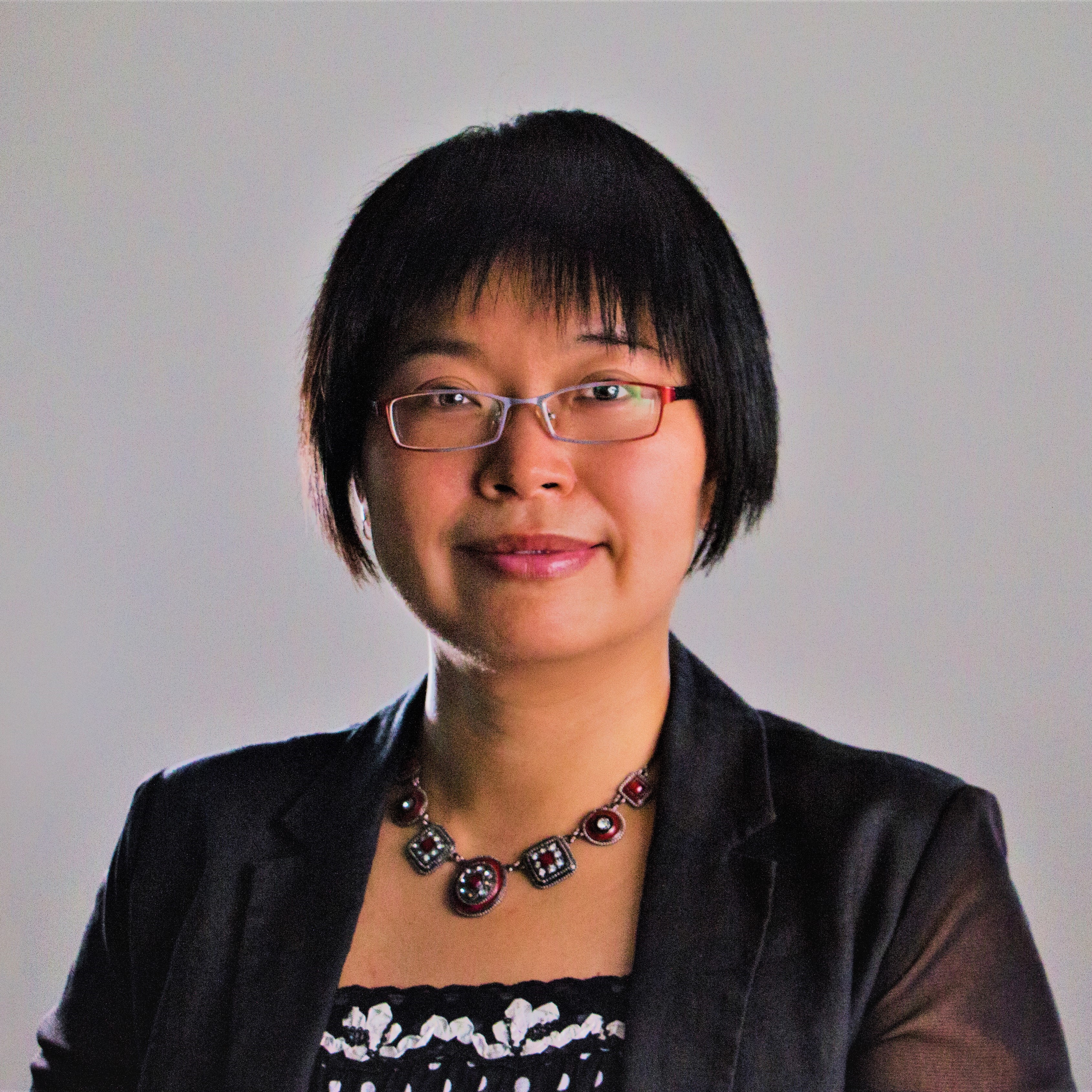
Professor Jeanne Huang is leading research on how countries' traceability rules can work together.
50
automatic
LinkManual Name : Professor Jeanne Huang
Manual Description : Sydney Law School
Manual Address :
Manual Addition Info Title :
Manual Addition Info Content :
Profile image : /content/dam/corporate/images/china-studies-centre/our-people/jeanne-huang.jpg
Manual Type : profile
_self
Auto Type : contact
Auto Addition Title :
Auto Addition Content :
Auto Name : true
Auto Position : true
Auto Profile image :
Auto Phone Number : false
Auto Mobile Number : true
Auto Email Address : true
Auto Address : false
UUID :