
Professor Jonathan Crowston is a world-renowned ophthalmologist working to understand not only how to slow vision loss but restore sight. So, it seems a touch ironic then that on his second day in Sydney, he was almost taken out by a local fruit bat, flying blind through the streets of Redfern.
“It clipped my partner on the back of the head, fell to the ground and latched itself onto my legs,” he says.
After an improvised move involving a loaf of bread, the bat fled into the night on foot. Professor Crowston was left with claw marks and five weeks of vaccinations to counter Australian Bat Lyssavirus (ABLV), the rabies-like virus carried by the local bat population.
To a superstitious person, it might seem like a somewhat ominous start to his appointment at Save Sight Institute at the University of Sydney in 2022, where he served as Co-Director at the Camperdown campus. Perhaps unsurprisingly for a scientist, Professor Crowston is unphased.
Rather, he was excited by the groundbreaking ophthalmology research being conducted at the University of Sydney, which caught his attention while working in Singapore as the Director of the Centre for Vision Research at Duke-NUS Medical School. In 2025, he will take on a new challenge as Director of the Snow Vision Accelerator. The Accelerator, a partnership between the University of Sydney and the Snow Medical Research Foundation (Snow Medical), brings together interdisciplinary researchers from medicine, pharmacology, and biotechnology to tackle vision loss from glaucoma. The 10-year $50 million commitment from Tom Snow, the Snow Family and Snow Medical is the largest single philanthropic investment in vision science in Australia.
Making the switch to ophthalmology
Professor Crowston came to ophthalmology in the early 1990s, mostly by chance. He had initially secured an internship to pursue haematology. But when the Gulf War broke out in 1991 and leukemia patients from Kuwait were transported to his London teaching hospital, his patient load tripled, and his working hours ballooned.
When he appeared dishevelled in the hospital’s canteen during a long-weekend on call, an ophthalmologist from New Zealand gave him the once over and suggested a career change.
“He said, ‘You’re nuts – you should do what I’m doing. You’ll never meet an unhappy ophthalmologist’,” he says. Unfortunately, I didn’t get his name so I can’t thank him for steering me in a different direction.”
It was an exciting time to shift into ophthalmology – when Professor Crowston began his career a diagnosis of macular degeneration was what he describes as a “bad news, good news” situation. On the one hand, there was no treatment and affected patients wouldn’t be able to see fine details like writing or faces. On the other, they would still maintain a level of independence because their peripheral vision remained intact. But the past 20 years have seen a boom in the development of new treatments, gene and cell therapies and advancements in surgical techniques and diagnostic methodologies, that have transformed the field and allowed patients to maintain their vision in ways previously thought impossible.
That's one of the biggest joys we get as researchers – mentoring and supporting the next generation of researchers to do better and stronger work than you.
Professor Jonathan Crowston
Increasing resilience
“Eyes are a wonderful organ to do research on because we can really accurately measure how well the eye functions. We can conduct incredibly high resolution structural and metabolic imaging non-invasively, so it’s the most accessible part of the central nervous system for applying and monitoring treatments.”
Professor Crowston’s research focuses on glaucoma, a neurodegenerative condition impacting the nerve cells that transmit the message from the eye to the brain, causing a patient’s field of vision to shrink. Glaucoma affects 80 million people globalley, with 4.5 million completely blind in both eyes.
Current treatments focus on lowering the pressure in the eye to protect the nerve cells, but as Professor Crowston points out, this doesn’t treat the optic nerve directly. Current treatments only target one of a number of risk factors.
“What we lack are treatments that directly protect or increase the resilience of the optic nerve,” he says.
This focus on building resilience has formed the basis of some of Professor Crowston’s biggest research breakthroughs, including a recent pilot study into Vitamin B3, which targets disruptions in optic nerve and retinal metabolism. The study showed positive short-term visual improvement and has been expanded to four large studies with over 1,500 participants looking at long term results.
Since arriving at the University, Professor Crowston’s lab has continued to investigate the effects of advanced ageing on the optic nerve, such as increased vulnerability to injury or degeneration from elevated eye pressure. What they found was exciting – the effects of ageing on the optic nerve could be almost completely reversed through lifestyle interventions like diet and exercise, and pharmacological interventions like metformin.
Professor Jonathan Crowston is poised to further expand his research impact through his work at the Snow Vision Accelerator. Photo credit: University of Sydney/Stefanie Zingsheim
50
automatic
LinkLooking to the future
The vision is to bring together some of the best researchers from Australia and beyond to collaborate on well-funded, well-staffed long-term research into optic nerve resilience, which will form the cornerstone of the work being conducted as part of the Snow Vision Accelerator.
"I’d love if in 20 years' time we could look back and say, ‘This all started in Sydney. People believed in us. They realised that sometimes you need to do things big and their support helped build a substantial collaborative research program to properly tackle glaucoma blindness’,” says Professor Crowston.
Professor Crowston’s group has expanded to ten researchers since his hiring. That rapid growth is set to continue thanks to the Accelerator.
“I find it really exciting to create environments that I want to work in, and hopefully if it’s exciting for me, it’s also appealing to younger, early career researchers,” he says. “That's one of the biggest joys we get as researchers – mentoring and supporting the next generation of researchers to do better and stronger work than you.”
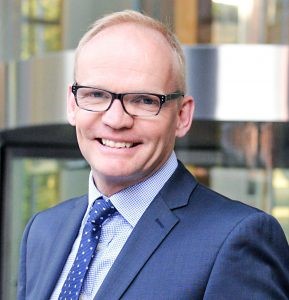
Manual Name : Professor Jonathan Crowston
Manual Description : Director, Snow Vision Accelerator
Manual Address :
Manual Addition Info Title :
Manual Addition Info Content :
Profile image : /content/dam/intranet/images/medicine-and-health/news-and-events/2022/december/jonathan-crowston.jpeg
Manual Type : profile
_self
Auto Type : contact
Auto Addition Title :
Auto Addition Content :
Auto Name : true
Auto Position : true
Auto Profile image :
Auto Phone Number : false
Auto Mobile Number : true
Auto Email Address : true
Auto Address : false
UUID :