
When Matt and Grace Kossatz first learned of Dr Benjamin Trist’s groundbreaking research into Parkinson’s disease at the University of Sydney’s Brain and Mind Centre, they felt an immediate and deeply personal connection. For both, the devastating impact of Parkinson’s was not an abstract concept but a lived experience—one that resonated with Dr Trist’s own journey and his determination to change the trajectory of this debilitating disease.
“It was a huge shock to our family,” Grace recalls of her father’s diagnosis at just 60 years old. “Even though my grandmother had Parkinson’s, she wasn’t diagnosed until two years before she passed away, in her 80s. My dad’s diagnosis came much earlier, which brought a whole different set of challenges.”
Dr Trist understands the weight of such challenges all too well. Watching his grandfather grapple with the disease left an enduring mark on him. “I have vivid memories of his condition,” he says. “Simple tasks like standing or walking became insurmountable. He was a highly intelligent man, trapped in a body working against him. It’s impossible to imagine how difficult that must have been.”
For Matt and Grace, this shared understanding of Parkinson’s struggles made their decision to support Dr Trist’s work a natural one. “Ben’s passion, expertise, and empathy stood out,” Matt explains.
Laying the groundwork for early intervention
Dr Trist’s personal experiences inspired his career-long commitment to Parkinson’s research. “Seeing what my grandfather endured motivated me to dedicate myself to finding solutions,” he says. “And who knows maybe in our lifetime we may be able to make meaningful progress towards helping others with the disorder?”
Dr Trist’s work focuses on unravelling the complex mechanisms that drive Parkinson’s disease, with a particular focus on a brain pigment called neuromelanin. Neuromelanin accumulates in brain regions highly vulnerable to degeneration in Parkinson’s patients. Using advanced stem cell technology, Dr Trist is exploring how neuromelanin is produced and its impact on brain cell health.
By investigating these fundamental processes, Dr Trist aims to lay the groundwork for early interventions to help combat Parkinson’s —potentially transforming outcomes for millions of people worldwide.
For Matt and Grace, supporting this critical work is not only a way to honour their own family’s experiences but also a step towards hope for a future free from the heartbreak of Parkinson’s. “It's really rewarding to feel like we're giving back in some way,” Grace says.
The Kossatz family’s philanthropy extends beyond neurological research to other urgent causes including youth mental health. As parents of a teenager, they know too well the growing pressures on young people that put their mental health at risk. This is why they are investing in a youth mental health website and app being developed at the Brain and Mind Centre to offer young people support during challenging times.
“It's amazing to work with the University and the Brain and Mind Centre, knowing that it's a trusted source sitting on huge amounts of knowledge and research, and so any of the data presented in an app or website will be reliable,” Matt says.
Philanthropy is an invaluable resource for helping young researchers to kick-start their own ideas, which is very important and stimulating for the research world.
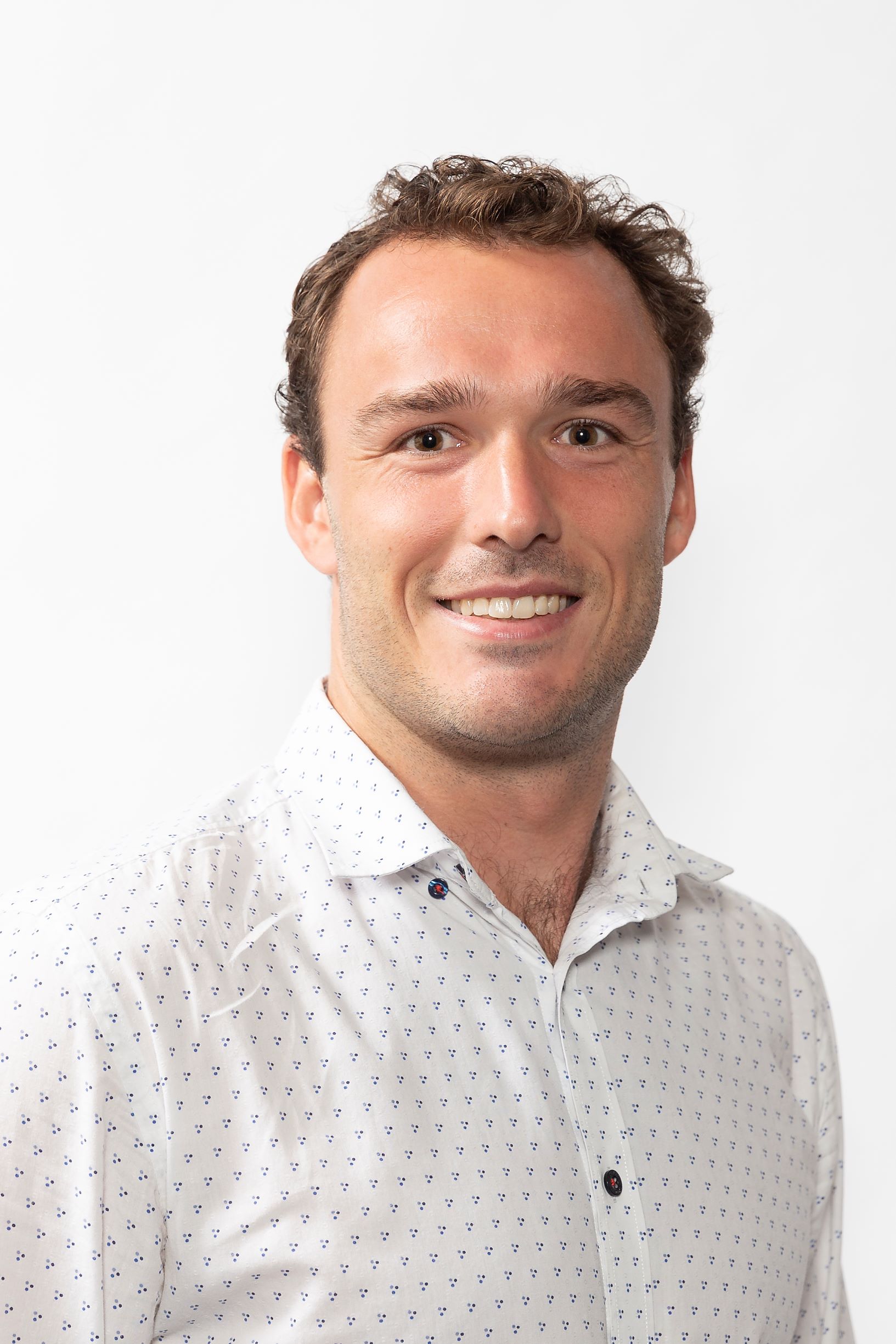
Dr Benjamin Trist
A collective endeavour
On a day-to-day basis, life is full and fast-paced for Matt and Grace Kossatz. As a young family with two children, their days are packed with school drop-offs, kids’ activities, and work commitments. “It’s pretty hectic,” Grace admits. Despite their packed schedules, the Kossatz family prioritises philanthropy, seeing it not just as an obligation but as a shared family value that brings them closer together.
“Philanthropy is something we make time for because it’s important to us,” Matt explains. “It’s a way for us to teach our kids about giving back and thinking beyond ourselves.” The family approaches their giving as a collective endeavour, often involving their children in discussions about the causes they support. “We try to connect as a family when it comes to talking about what we are giving to,” Grace says. “It’s important for our kids to understand why we’re doing it and ensuring we continue to make it part of our lives and see how our donations are helping others.”
For Dr Trist the impact of the Kossatz’ philanthropy has been considerable, especially as an early-career scientist. “Their donation has been invaluable in allowing me to establish my own research career,” he says. “Philanthropy is an invaluable resource for helping young researchers to kick-start their own ideas, which is very important and stimulating for the research world.”
Matt and Grace are aware it’s not feasible for everyone to offer philanthropic support to causes they are passionate about. But for those who are able to, they encourage them to give, no matter the size of their gift or the nature of their involvement.
“Your giving doesn’t have to be huge or overwhelming,” Matt says. “It’s about finding a cause that resonates with you and committing to making a difference in whatever way you can. If everyone did a little, the collective impact would be incredible.”
Matt and Grace Kossatz share their love of philanthropy with their children as a way connect their giving with their family values.
50
automatic
LinkManual Name : Dr Benjamin Trist
Manual Description : Postdoctoral Research Associate, University of Sydney Brain and Mind Centre
Manual Address :
Manual Addition Info Title :
Manual Addition Info Content :
Profile image : /content/dam/corporate/images/news-and-opinion/news/2025/march/bentrist-headshot.jpg
Manual Type : profile
_self
Auto Type : contact
Auto Addition Title :
Auto Addition Content :
Auto Name : true
Auto Position : true
Auto Profile image :
Auto Phone Number : false
Auto Mobile Number : true
Auto Email Address : true
Auto Address : false
UUID :