
Professor Corinne Caillaud and the University of New Caledonia’s Associate Professor Olivier Galy are working across the Pacific to develop digital solutions for health promotion and non-communicable disease prevention. Their aim is to combat rising obesity rates, one of the region’s most challenging health issues, in partnership with the teens most at risk from changing physical activity, diet, culture, and climate.
“Phone ownership and access to social media is also happening everywhere in the Pacific, exposing children to new cultural influences that are changing the health landscape,” explains Professor Caillaud, an expert in exercise science and digital health from the Sydney School of Public Health and the Charles Perkins Centre.
“We developed fruitful relationships with schools and communities and conducted research to understand physical activity and diets using digital technologies. The University of Sydney team led the implementation of the Australia-Pacific Youth (APY) project in schools so we can work with local teens to create solutions that address their needs.”
Across Australia and the Pacific, more than 6 million adolescents are navigating these rapid changes. Many of these adolescents live in complex systems and have unequal access to health information and healthcare.
The unprecedented rise in lifestyle-related chronic illnesses in the Western Pacific is set to continue and to increasingly stress health systems.
“Pacific youth obesity figures are among the highest in the world,” says Associate Professor Galy.
“It’s vital that we work with these young people to develop the tools and skills they need for their health and wellbeing. Partnering with the University of Sydney has been instrumental in developing this multidisciplinary research program.”
Impact to date
The Western Pacific is a diverse region with a mix of urban and remote communities from different cultural backgrounds, often with great distances between them. To overcome this, any health interventions need to be culturally suitable, portable, adaptable, and affordable.
“This is where mobile-based digital tools have a real advantage, but they must be designed and implemented appropriately. This is why we partner with young people,” says Professor Caillaud.
The collaboration produced iEngage, an educational and behaviour change program using a mobile app and activity trackers; as well as a digital dietary app tailored to the food of the Pacific Islands.
“Our research showed that these programs can be an effective tool, particularly among less active adolescents. Through our projects, we reached out to more than 2000 adolescents, providing them with basic digital health skills and information about physical activity and diets.
“The team at the Charles Perkins Centre node for Children and adolescents’ health and wellbeing in the Pacific implemented the APY project, empowering close to 400 teens so far to speak up about their ideas and priorities for healthy futures. We found that enhancing health literacy in the region is critical to effective engagement.”
Engaging with young people, determining lived experiences, views, attitudes and priorities must be a focus of research and education strategies.
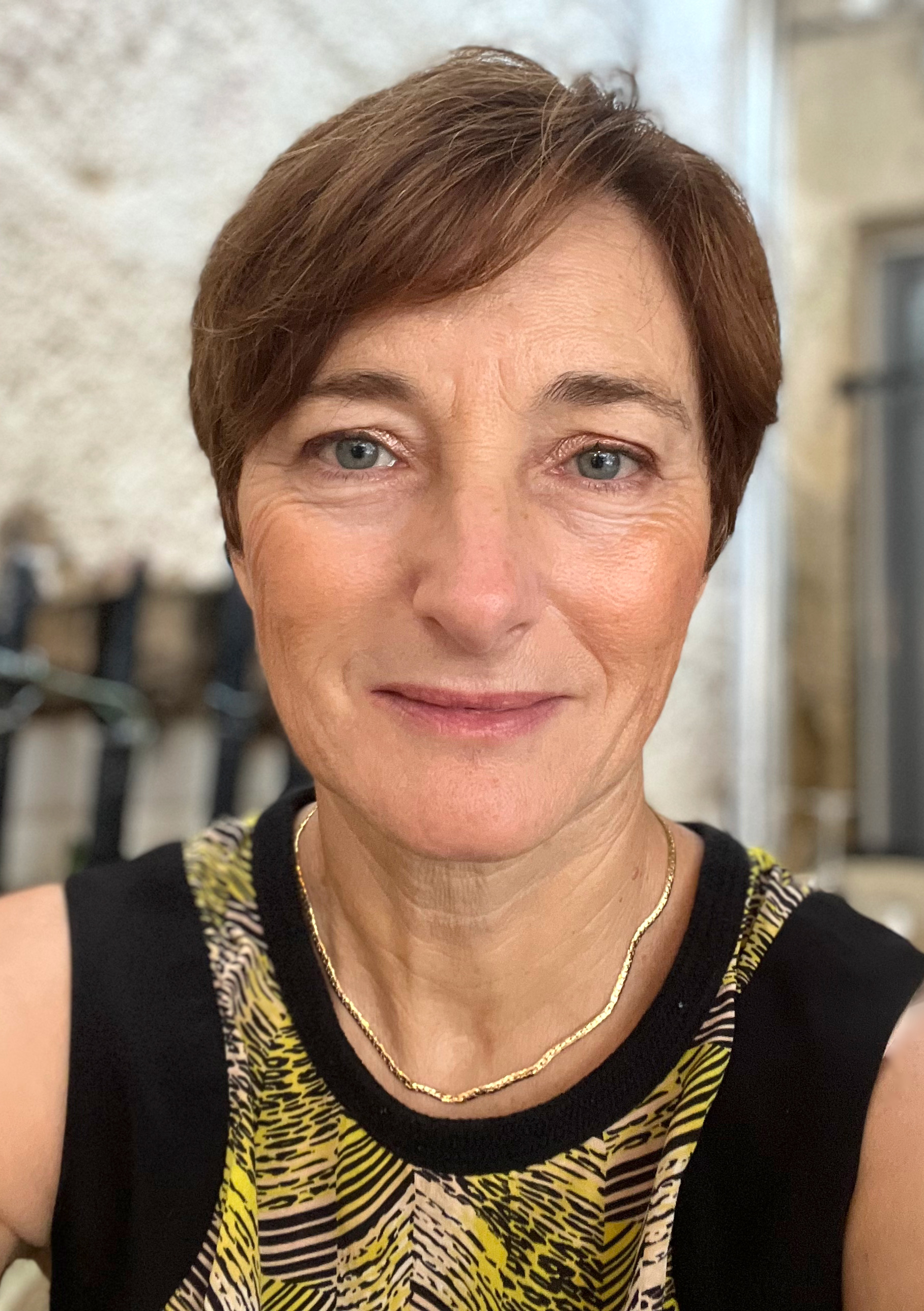
Professor Corinne Caillaud
Faculty of Medicine and Health
Sustainable co-design
The team’s work is grounded by two key principles: all solutions must be co-designed with the communities involved; and sustainability must be embedded in the team’s practice, informed by the United Nations’ Sustainable Development Goals.
“From our decade of work with these communities, we know that the best solution is to work with the people, rather than try and impose prescriptive programs on them,” says Professor Caillaud.
“Collaboration in co-design is a way for young Pacific peoples to advocate for their needs, to make their own voices heard, and to invest in their own futures. This work is a driver of empowerment for adolescents who have engaged with us. They said they want to make their ideas heard. ”
Engaging with young people, determining lived experiences, views, attitudes and priorities must be a focus of research and education strategies, Professor Caillaud says.
“Evidence shows that citizens' participation enhances the relevance of research outcomes and amplifies impacts for people and communities.”
Pacific Adolescents Health & Innovation Hub
The next stage in the group’s collaboration will be the establishment of the Pacific Adolescents Health & Innovation Hub, launching in September.
The hub aims to advance research and innovation for the prevention of obesity and non-communicable diseases in the Australia-Pacific region through engagement with adolescents and strategic partnerships with policymakers, educators, community leaders and health workers.
Along with expanding the team’s work on digital solutions and self-determination, the hub will provide innovative professional development opportunities to local innovators, educators, researchers and health professionals to build on their work to date.
“This has been a decade in the making, and it wouldn’t have gotten off the ground without support from the University of Sydney's Office for Global and Research Engagement (OGRE) to travel and meet with collaborators and communities,” says Professor Caillaud.
OGRE provided seed funding for the research through an International SDG Collaboration Award.
“That foundational support enabled us to obtain grants from Pacific Funds and to pursue our scientific engagement with the European Horizon RISE 2020 project FALAH (Family Farming, lifestyles and Health in the Pacific). The Sydney team's active participation in the FALAH seminars over the past two years has been truly inspiring and has significantly enriched our discussions and collaborations.”
Professor Caillaud acknowledges the multidisciplinary expertise that has contributed to the success of the program.
“I am lucky to work with Associate Professor Galy and with a fabulous team here at the University of Sydney. My colleagues Dr Krestina Amon, Dr Rowena Forsyth, Dr Juliana Chen and Associate Professor Louisa Peralta were keen travellers and great collaborators! I am very proud of the way we engaged with colleagues, communities and young people during our trips.
“We’ve shown that adolescents are excited and responsive to these programs, and our framework is founded in robust health science. I’m excited to see what we can achieve with the Hub.”
Manual Name : Professor Corinne Caillaud
Manual Description : Sydney School of Public Health
Manual Address :
Manual Addition Info Title :
Manual Addition Info Content :
Profile image : /content/dam/intranet/images/medicine-and-health/news-and-events/2022/july/corinne-caillaud.jpeg
Manual Type : profile
_self
Auto Type : contact
Auto Addition Title :
Auto Addition Content :
Auto Name : true
Auto Position : true
Auto Profile image :
Auto Phone Number : false
Auto Mobile Number : true
Auto Email Address : true
Auto Address : false
UUID :