
Physicists in Australia and Britain have reshaped quantum uncertainty to sidestep the restriction imposed by the famous Heisenberg uncertainty principle – a result that could underpin future ultra-precise sensor technology used in navigation, medicine and astronomy.
The Heisenberg uncertainty principle, introduced in 1927, says that you can’t know certain pairs of properties – such as a particle’s position and momentum – with unlimited precision at the same time. In other words, there is always a trade-off in uncertainty: the more closely one property is pinned down, the less certainty there is about the other.
In research published today in Science Advances, a team led by Dr Tingrei Tan from the University of Sydney Nano Institute and School of Physics has shown how to engineer a different trade-off to precisely measure position and momentum at the same time.
“Think of uncertainty like air in a balloon,” Dr Tan said. “You can’t remove it without popping the balloon, but you can squeeze it around to shift it. That’s effectively what we’ve done. We push the unavoidable quantum uncertainty to places we don’t care about (big, coarse jumps in position and momentum) so the fine details we do care about can be measured more precisely.”
The researchers also use the analogy of a clock to explain their findings (see image below). Think of a normal clock with two hands: the hour hand and the minute hand. Now imagine the clock only has one hand. If it’s the hour hand, you can tell what hour it is and roughly what minute, but the minute reading will be very imprecise.
If the clock only has the minute hand, you can read the minutes very precisely, but you lose track of the larger context – specifically, which hour you’re in. This ‘modular’ measurement sacrifices some global information in exchange for much finer detail.
“By applying this strategy in quantum systems, we can measure the changes in both position and momentum of a particle far more precisely,” said first author Dr Christophe Valahu from the Quantum Control Laboratory team at the University of Sydney. “We give up global information but gain the ability to detect tiny changes with unprecedented sensitivity.”
Quantum computing tools for a new sensing protocol
This strategy was outlined theoretically in 2017. Here, Dr Tan’s team performed the first experimental demonstration by using a technological approach they had previously developed for error-corrected quantum computers, a result recently published in Nature Physics.
“It’s a neat crossover from quantum computing to sensing,” said co-author Professor Nicolas Menicucci, a theorist from RMIT University. “Ideas first designed for robust quantum computers can be repurposed so that sensors pick up weaker signals without being drowned out by quantum noise.”
The Sydney team implemented the sensing protocol using the tiny vibrational motion of a trapped ion – the quantum equivalent of a pendulum. They prepared the ion in “grid states”, a kind of quantum state originally developed for error-corrected quantum computing. With this, they showed that both position and momentum can be measured together with precision beyond the ‘standard quantum limit’ – the best achievable using only classical sensors.
“We haven’t broken Heisenberg’s principle. Our protocol works entirely within quantum mechanics,” said Dr Ben Baragiola, co-author from RMIT. “The scheme is optimised for small signals, where fine details matter more than coarse ones.”
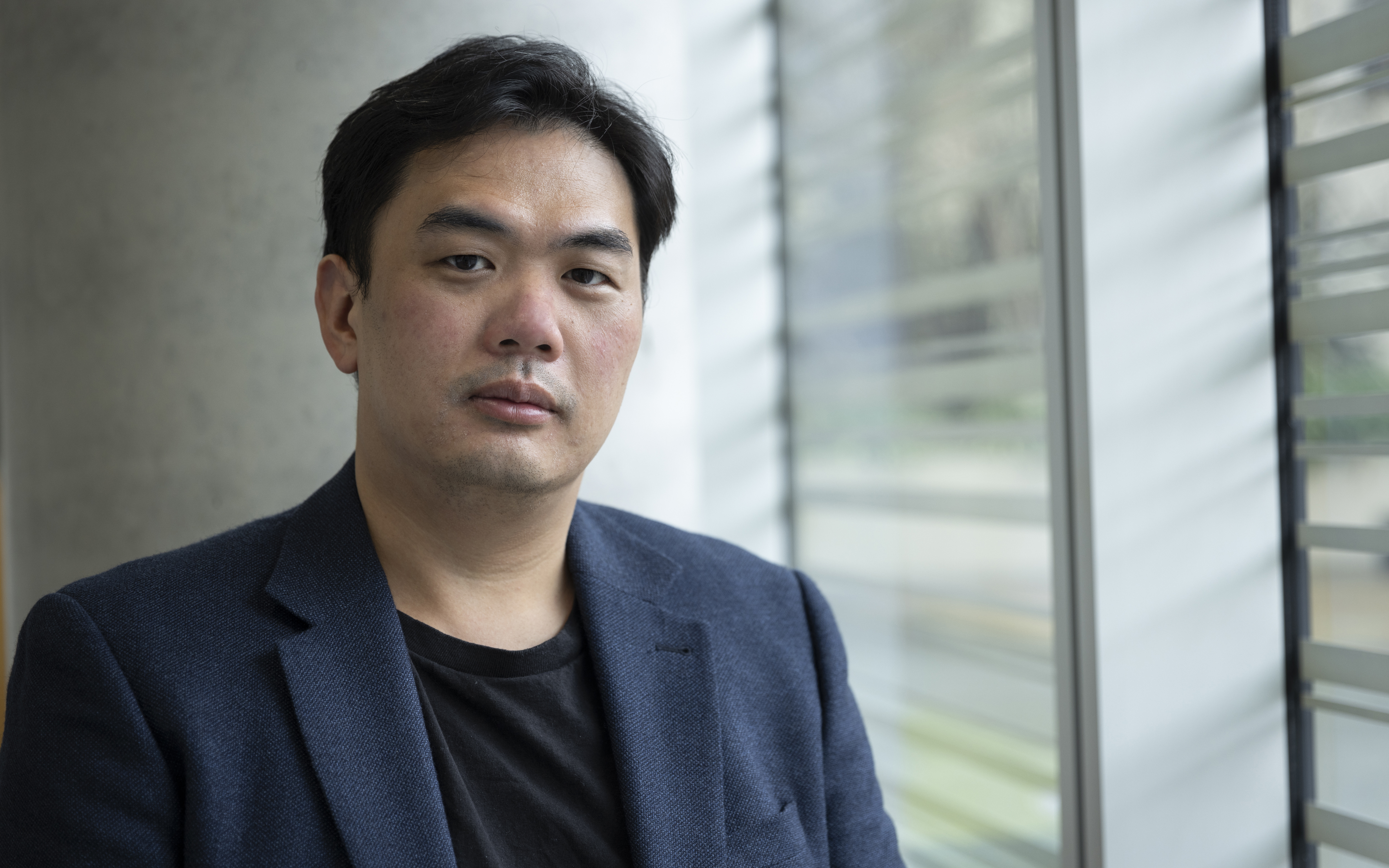
Sydney Horizon Fellow Dr Tingrei Tan at the Sydney Nanoscience Hub. Photo: Fiona Wolf
50
automatic
LinkWhy it matters
The ability to detect extremely small changes is important across science and technology. Ultra-precise quantum sensors could sharpen navigation in environments where GPS doesn’t work (such as submarines, underground or spaceflight); enhance biological and medical imaging; monitor materials and gravitational systems; or probe fundamental physics.
While still at the laboratory stage, the experiment demonstrates a new framework for future sensing technologies targeted towards measuring tiny signals. Rather than replacing existing approaches, it adds a complementary tool to the quantum-sensing toolbox.
“Just as atomic clocks transformed navigation and telecommunications, quantum-enhanced sensors with extreme sensitivity could enable whole new industries,” said Dr Valahu.
A collaborative effort
This project united experimentalists at the University of Sydney with theorists at RMIT, the University of Melbourne, Macquarie University and the University of Bristol in Britain. It shows how collaboration across institutions and borders can accelerate progress and strengthen Australia’s quantum research community.
“This work highlights the power of collaboration and the international connections that drive discovery,” Dr Tan said.
Research
Valahu, C. et al ‘Quantum-enhanced multi-parameter sensing in a single mode’ (Science Advances 2025) DOI: 10.1126/sciadv.adw9757
Declaration
The researchers declare no competing interests. Funding was received from the Australian Research Council, the US Office of Naval Research Global, the US Army Research Office Laboratory for Physical Sciences, the US Air Force Office of Scientific Research, Lockheed Martin, the European Commission, Sydney Quantum Academy, H. and A. Harley.
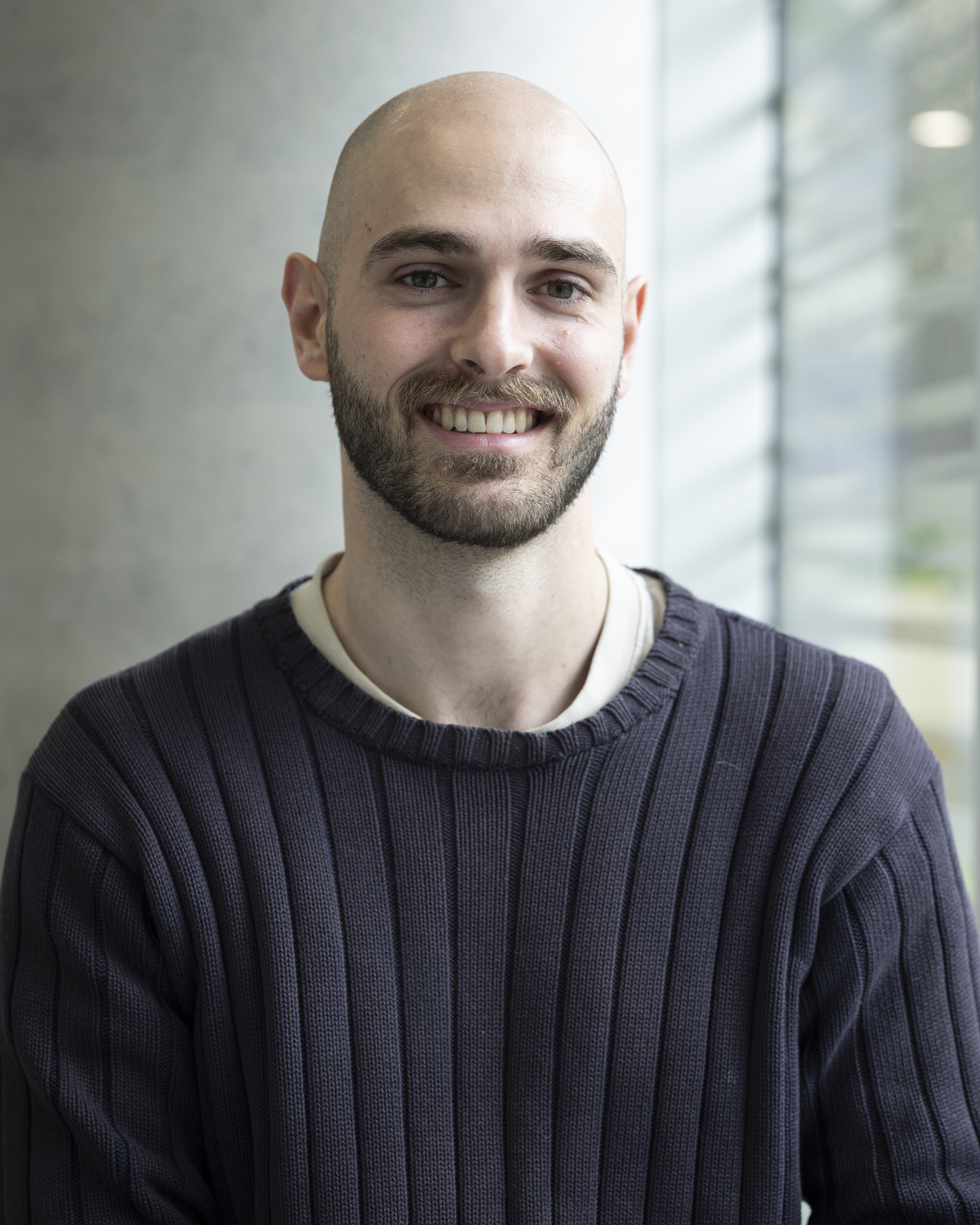
Main image caption: Lead author Dr Christophe Valahu in front of the ion trap in the Quantum Control Laboratory used in this experiment. Photo: Fiona Wolf/University of Sydney
Manual Name : Dr Tingrei Tan
Manual Description : Sydney Horizon Fellow, Sydney Nano and School of Physics
Manual Address :
Manual Addition Info Title :
Manual Addition Info Content :
Profile image : /content/dam/corporate/images/news-and-opinion/news/2025/september/dr-tingrei-tan.-photo-by-fiona-wolf.-university-of-sydney.jpg
Manual Type : profile
_self
Auto Type : contact
Auto Addition Title :
Auto Addition Content :
Auto Name : true
Auto Position : true
Auto Profile image :
Auto Phone Number : false
Auto Mobile Number : true
Auto Email Address : true
Auto Address : false
UUID :
Manual Name : Dr Christophe Valahu
Manual Description : Postdoctoral Research Fellow, Sydney Nano and School of Physics
Manual Address :
Manual Addition Info Title :
Manual Addition Info Content :
Profile image : /content/dam/corporate/images/news-and-opinion/news/2025/september/dr-christophe-valahu-university-of-sydney.-photo-by-fiona-wolf-usyd.jpg
Manual Type : profile
_self
Auto Type : contact
Auto Addition Title :
Auto Addition Content :
Auto Name : true
Auto Position : true
Auto Profile image :
Auto Phone Number : false
Auto Mobile Number : true
Auto Email Address : true
Auto Address : false
UUID :
Manual Name : Media contact
Manual Description : Marcus Strom, Science Media Adviser
Manual Address :
Manual Addition Info Title :
Manual Addition Info Content :
Profile image :
Manual Type : contact
_self
Auto Type : contact
Auto Addition Title :
Auto Addition Content :
Auto Name : true
Auto Position : true
Auto Profile image :
Auto Phone Number : false
Auto Mobile Number : true
Auto Email Address : true
Auto Address : false
UUID :