
Hanging on the wall of Professor David Goodman’s study is the front page of a faded Chinese newspaper from 1968. In pride of place above the banner headline (“The entire nation is red”) is an artist’s portrait of Mao Zedong, with the Great Leader represented as the rising sun.
The newspaper found its way into his life when he was a student in Manchester; wrapped around a takeaway dinner from a Chinese restaurant.
But it’s now a colourful reminder of his lifelong fascination for China – a fact recognised this week when Professor Goodman was conferred with a Friendship Award, the state’s leading honour for foreign citizens, by the Chinese Government in the Great Hall of the People in Beijing.
By the time he bought his Chinese takeaway in 1968, Goodman was already specialising in Chinese politics for his undergraduate degree in Politics and Modern History.
Eight years later in 1976, by now a lecturer in Chinese politics at the University of Newcastle upon Tyne, he was one of a small group of young English researchers who visited China as guests of the Chinese People’s Association, at a time when foreign visitors were still a rarity.
It was also a time of great political turbulence: Mao’s health was failing (he died a few months later) and the English visitors encountered protests on the streets against the Gang of Four and Deng Xiaoping.
Nevertheless, two years later, he decided to take leave from Newcastle to study in Beijing. “It changed my life,” he said, “because I decided in future I would prefer to study China from a political or social science perspective.”
In particular, he began to focus his research on social and political change at a local level, on the history of the CCP, and on social stratification. Over fifty years he has written or edited 51 books and 172 other academic publications, becoming the most cited China Studies scholar in Australia and one of the most cited anywhere in the world.
The newspaper from 1968 that Professor Goodman found wrapped around his fish and chips.
01
manual
LinkHe has worked and lived on-and-off in China since 1978. His research focused for a long time on Shanxi Province in Northern China; more recently he has turned his attention to Nanjing and Suzhou, in the southern part of Jiangsu Province.
He said: “As the economy has developed and society has changed so too has the system of government, and along with it my lasting interest in the structures of local government and local governance.”
Another of his long-term interests has been in maintaining a photographic history of China, recording the often-startling changes that have taken place over time.
He moved to Australia in 1987 at a time when Asia literacy was becoming a serious preoccupation of the Federal Government, and led the establishment of the ARC Asia Research Centre at Murdoch University. He moved to Sydney as director of the Institute for International Studies at UTS, where he also served as Deputy Vice-Chancellor International.
In China he has taught and worked at Nanjing University, Northwest Normal University (Lanzhou), Shanxi University (Taiyuan) and Xian Jiaotong-Liverpool University (Suzhou).
His association with the University of Sydney began when he was appointed Professor of Chinese Politics in 2009, and he played a key role in establishing the University’s China Studies Centre in 2010. He became the centre’s first Academic Director and later took over as Director in 2021.
Professor Kathy Belov, Pro-Vice-Chancellor (Global and Research Engagement) said: “David is one of the world’s most knowledgeable and respected scholars of China, and he has been instrumental in deepening our understanding of a country that’s of huge strategic importance to the University and to Australia.
“The award is wonderful recognition of David’s lifetime’s curiosity about China, and his ability to share that interest with others.”
The Friendship Award is China’s highest honour for “foreign experts who have made outstanding contributions to the country’s economic and social progress”. Fifty eight people are receiving it this year.
Professor Goodman becomes only the third University of Sydney academic to receive the award: plant pathologist Professor Robert Park received the award in 2009 for his work in helping China combat the devastating effects of wheat rust disease; and Professor Branka Vucetic, an ARC Laureate Fellow in the School of Electrical and Computer Engineering, was honoured in 2014 for her long-term collaborations with Chinese universities.
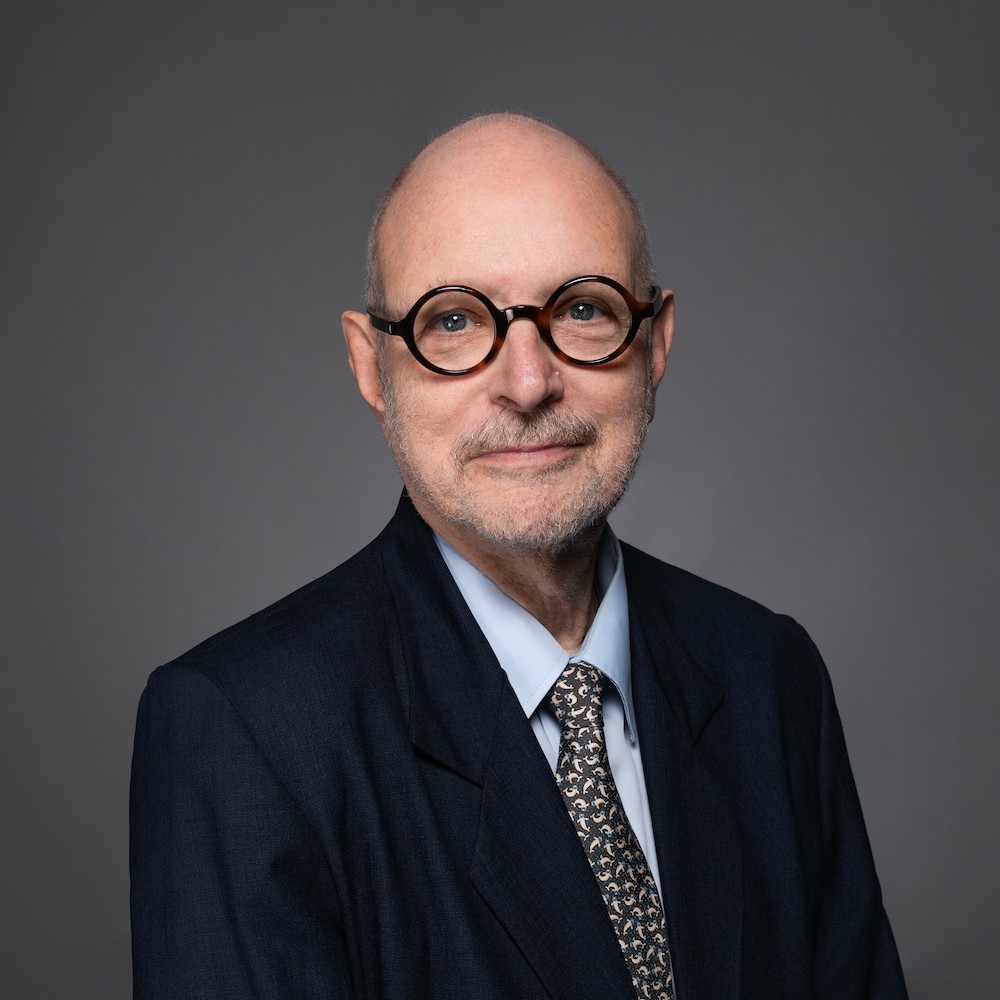
Manual Name : Professor David Goodman
Manual Description : Director, China Studies Centre
Manual Address :
Manual Addition Info Title :
Manual Addition Info Content :
Profile image : /content/dam/corporate/images/faculty-of-arts-and-social-sciences/research/research-centres/david-goodman.jpg
Manual Type : profile
_self
Auto Type : contact
Auto Addition Title :
Auto Addition Content :
Auto Name : true
Auto Position : true
Auto Profile image :
Auto Phone Number : false
Auto Mobile Number : true
Auto Email Address : true
Auto Address : false
UUID :