
A study led by researchers from the University of Sydney and the University of Adelaide has revealed how the breakup of an ancient supercontinent 1.5 billion years ago transformed Earth’s surface environments, paving the way for the emergence of complex life.
“Our approach shows how plate tectonics has helped shape the habitability of the Earth,” lead author Professor Dietmar Müller said. “It provides a new way to think about how tectonics, climate and life co-evolved through deep time.”
The research, published in Earth and Planetary Science Letters, challenges the notion of the “Boring Billion” – a time of supposed stasis, or biological and geological inactivity, in Earth’s history. Instead it shows that plate tectonics was reshaping the planet, triggering the conditions that supported oxygen-rich oceans and the appearance of the first eukaryotes, the ancestors of all complex life.
Eukaryotes are organisms whose cells contain a defined nucleus alongside other membrane-bound structures, called organelles. All plants, animals and fungi are eukaryotes.
“Our work reveals that deep Earth processes, specifically the breakup of the ancient supercontinent Nuna, set off a chain of events that reduced volcanic carbon dioxide (CO₂) emissions and expanded the shallow marine habitats where early eukaryotes evolved,” said Professor Dietmar Müller, from the EarthByte Group at the University of Sydney.
A dynamic Earth beneath a ‘boring’ surface
URL
embed-26b25e21e2
Mid-ocean ridge carbon outgassing and crustal storage
Relative plate motions and plate boundary geometries. Continents are light grey, with continental margins shown in medium grey. Continental shelves are marked by thin, light blue lines. The intensity of volcanic carbon outgassing from mid-ocean ridges is red (low) to yellow (high). Dark blue to light pink oceanic background colours represent oceanic crustal carbon storage.
Between 1.8 and 0.8 billion years ago, Earth’s continents assembled and broke apart twice, first forming Nuna, then Rodinia. Using a new plate tectonic model covering 1.8 billion years of Earth’s history, the team reconstructed changes in plate boundaries, continental margins, and carbon exchange between the mantle, oceans, and atmosphere.
They discovered that as Nuna fragmented around 1.46 billion years ago, the total length of shallow continental shelves more than doubled to about 130,000 kilometres. These shallow-water environments likely hosted extensive oxygenated and temperate seas, providing long-lived, stable environments for complex life to flourish.
At the same time volcanic outgassing of CO2 decreased, while the storage of carbon in the ocean crust increased due to an expansion of mid-ocean ridge flanks. Here seawater seeps into cracks in the crust, is heated and the CO2 it contains is stripped out to produce limestone.
“This dual effect – reduced volcanic carbon release and enhanced geological carbon storage – cooled Earth’s climate and altered ocean chemistry, creating conditions suitable for the evolution of more complex life,” said co-author Associate Professor Adriana Dutkiewicz, also from the School of Geosciences at the University of Sydney.
Co-author of the paper, Associate Professor Adriana Dutkiewicz. Photo: Australian Academy of Science
50
automatic
LinkFrom tectonics to life
The study’s results indicate that the appearance of the first fossil eukaryotes about 1.05 billion years ago coincided with continental dispersal and expanded shallow seas.
“We think these vast continental shelves and shallow seas were crucial ecological incubators,” said Associate Professor Juraj Farkaš from the University of Adelaide. “They provided tectonically and geochemically stable marine environments with presumably elevated levels of nutrients and oxygen, which in turn were critical for more complex lifeforms to evolve and diversify on our planet.”
The findings link deep-Earth dynamics with near-surface geochemical and biological evolution, offering a unifying framework that connects plate tectonics, the global carbon cycle, ocean chemistry and the emergence of complex life.
A new framework for Earth's evolution
This research represents the first time that deep-time plate tectonic reconstructions have been quantitatively linked to long-term carbon outgassing and biological milestones over nearly two billion years. The authors used computational models combining tectonic reconstructions with thermodynamic simulations of carbon storage and degassing through subduction, where one tectonic plate slides under another, and volcanism, which releases magma, ash and gases into the atmosphere and Earth’s surface.
Research
Müller, R. D. et al ‘Mid-proterozoic expansion of passive margins and reduction in volcanic outgassing supported marine oxygenation and eukraryogenisis’ (Earth and Planetary Science Letters 2025) DOI: 10.1016/j.epsl.2025.119683
Workflow data and code are publicly available at this link.
Declaration
The researchers declare no competing interests. Funding was received from the Australian Research Council and AuScope NCRIS.
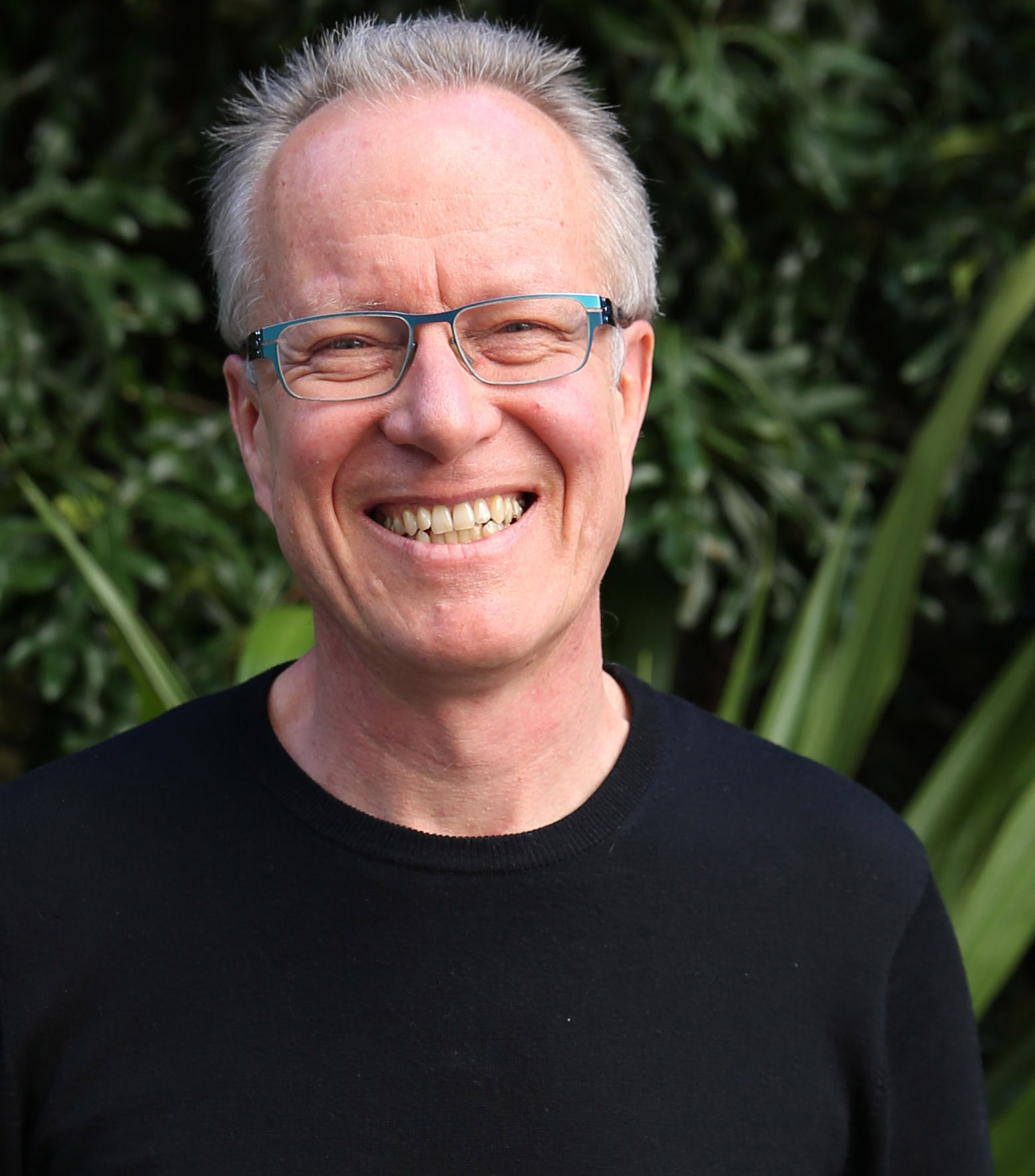
Manual Name : Professor Dietmar Müller
Manual Description : Professor of Geophysics
Manual Address :
Manual Addition Info Title :
Manual Addition Info Content :
Profile image : /content/dam/people/2021/dietmar-müller-geosciences-mug-photo-britta-campion.jpg
Manual Type : profile
_self
Auto Type : contact
Auto Addition Title :
Auto Addition Content :
Auto Name : true
Auto Position : true
Auto Profile image :
Auto Phone Number : false
Auto Mobile Number : true
Auto Email Address : true
Auto Address : false
UUID :
Manual Name : Associate Lecturer Adriana Dutkiewicz
Manual Description : ARC Future Fellow
Manual Address :
Manual Addition Info Title :
Manual Addition Info Content :
Profile image : /content/dam/corporate/images/news-and-opinion/news/2025/october/adriana-dutkiewicz-geosciences-university-of-sydney.-photo-credit-australian-academy-of-science.jpg
Manual Type : profile

_self
Auto Type : contact
Auto Addition Title :
Auto Addition Content :
Auto Name : true
Auto Position : true
Auto Profile image :
Auto Phone Number : false
Auto Mobile Number : true
Auto Email Address : true
Auto Address : false
UUID :
Manual Name : Media enquiries
Manual Description : Marcus Strom, Science Media Adviser
Manual Address :
Manual Addition Info Title :
Manual Addition Info Content :
Profile image :
Manual Type : contact
_self
Auto Type : contact
Auto Addition Title :
Auto Addition Content :
Auto Name : true
Auto Position : true
Auto Profile image :
Auto Phone Number : false
Auto Mobile Number : true
Auto Email Address : true
Auto Address : false
UUID :