
Four-in-five Australian company directors agree that nature-related risks are an important consideration, but only one-in-five boards were identified as active on the issue according to new research from the University of Sydney Business School in collaboration with the Australian Institute of Company Directors (AICD).
Nature enters the boardroom, led by Professor Clinton Free and PhD candidate Darya Boukata, is Australia’s first research report examining how company directors are integrating nature into governance, strategy and risk oversight.
The study includes a national survey of 250 non-executive directors and chairs, as well as in-depth interviews with 12 senior directors across listed, private, not-for-profit and government organisations.
The research reveals that while directors are at an early stage of engaging with nature-related issues, they are increasingly aware of the financial and operational implications of nature loss, including supply-chain vulnerabilities, cost pressures and asset exposure.
Professor Clinton Free said the study highlights a shift underway in boardrooms across the country, with those most advanced in this area approaching climate and nature jointly.
“Nature has traditionally been treated as external to business decision-making, but directors are increasingly recognising that nature underpins economic activity in fundamental ways, from the security of supply chains to long-term asset values. As these dependencies become more visible, governance expectations will continue to shift,” Professor Free said.
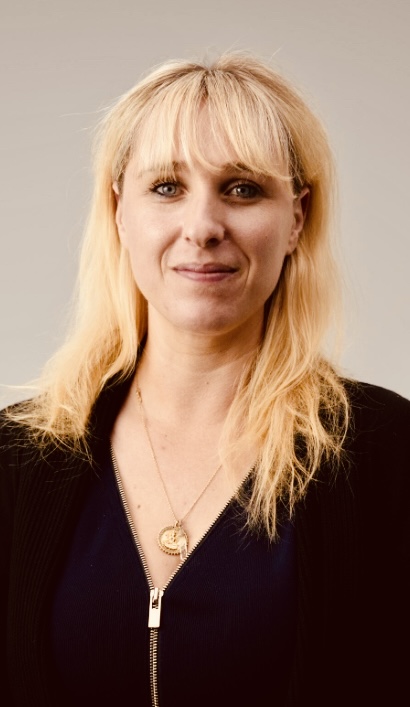
PhD candidate Darya Boukata added that directors increasingly view nature as central to modern risk oversight.
“Nature is the bedrock of our economy – the essential infrastructure that quietly sustains supply chains and underpins asset values,” Boukata said. “When nature degrades, those impacts cascade up the supply chain and create financially material risks for business.”
Directors are increasingly recognising that nature underpins economic activity in fundamental ways, from the security of supply chains to long-term asset values.
Professor Clinton Free
In his forward to the report, University of Sydney Chancellor David Thodey stressed that “framing nature as a financial and governance issue is critical. Nature is, in many ways, business’s most essential supplier – providing the water, air, soil and biodiversity on which economic activity depends. Ignoring these dependency risks undermines the most basic principle of value creation.”
Policy uncertainty emerged as a dominant challenge for boards, constraining their ability to evaluate and respond confidently to nature-related risks.
Key findings from the survey include:
- 81 percent agree nature-related risks are important for their organisation.
- Four in five directors say stakeholder expectations are shaping their approach.
- Half cite unclear policy settings as a barrier – particularly the lack of environmental standards (76 percent) and slow environmental approvals (35 percent).
- Half have updated risk frameworks to include nature-related risks.
- Among listed organisations, 24 percent have integrated nature into their climate strategy, and 53 percent plan to do so.
- One-third of organisations make no nature-related disclosures.
- 41 percent report full-board oversight of nature issues; 22 percent rely on committees, most commonly Audit and Risk.
“While nature is emerging or established as a governance concern, oversight and disclosure remain patchy and inconsistent,” Professor Free said.
“Our study establishes a national baseline for boardroom practice at a time of increasing scrutiny of environmental governance and rapidly evolving global reporting expectations. For boards already active in this area, nature governance is informing capital expenditure, underwriting and investment choices, underscoring that nature governance is inseparable from stewardship, culture, and long-term accountability.”
The University of Sydney has this year become the first university in the world to publish a nature-related financial disclosure aligned with the Taskforce on Nature-related Financial Disclosures (TNFD), setting a new global benchmark for how the higher education sector can understand and act on its relationship with the natural world.
The voluntary disclosure, released as part of the University’s 2024 Sustainability Annual Report, shows how the TNFD framework can be effectively applied to a large and complex organisation. It maps the University’s dependencies and impacts on nature across more than 12,000 hectares of campuses, farms and field stations, demonstrating how nature can be embedded in decision-making, investment planning and long-term strategy.
Manual Name : Clinton Free
Manual Description : Professor of Accounting, Governance and Regulation
Manual Address :
Manual Addition Info Title :
Manual Addition Info Content :
Profile image : /content/dam/people/academic-and-research-staff/clinton.jpg
Manual Type : profile

_self
Auto Type : contact
Auto Addition Title :
Auto Addition Content :
Auto Name : true
Auto Position : true
Auto Profile image :
Auto Phone Number : false
Auto Mobile Number : true
Auto Email Address : true
Auto Address : false
UUID :
Manual Name : Darya Boukata
Manual Description : PhD candidate
Manual Address :
Manual Addition Info Title :
Manual Addition Info Content :
Profile image : /content/dam/corporate/images/news-and-opinion/news/2025/november/darya-boukata.jpeg
Manual Type : profile
_self
Auto Type : contact
Auto Addition Title :
Auto Addition Content :
Auto Name : true
Auto Position : true
Auto Profile image :
Auto Phone Number : false
Auto Mobile Number : true
Auto Email Address : true
Auto Address : false
UUID :
Media contact
Manual Name :
Manual Description :
Manual Address :
Manual Addition Info Title :
Manual Addition Info Content :
Profile image :
Manual Type : contact
_self
Auto Type : contact
Auto Addition Title :
Auto Addition Content :
Auto Name : true
Auto Position : true
Auto Profile image :
Auto Phone Number : false
Auto Mobile Number : true
Auto Email Address : true
Auto Address : false
UUID : 5809c882-aa0f-4ed5-98e2-44232fb05659