
When Professors Tania Sorrell and Lyn Gilbert created the Sorrell–Gilbert Prize, they were doing more than establishing a new award. They were sending a signal that researchers need belief and backing to thrive.
Announced by the University of Sydney’s Infectious Diseases Institute (Sydney ID), the prize recognises outstanding publications by early and mid-career researchers, with two awards each year across basic science and clinical or public health research. The award is named after the women whose careers helped shape infectious diseases research, clinical care and public health in Australia, and whose legacy continues through the researchers now following them.
For Professors Sorrell and Gilbert, the decision to give was deeply personal. Reflecting on their own careers, they spoke not only about professional achievement, but about the support systems and opportunities that made those achievements possible. They wanted the prize to offer younger researchers something tangible at precisely the moment it was most needed.
We both thought that we had been very fortunate with our career choices and progression. It is much harder for young people these days. With this prize, our hope is to help researchers at an early part of their journey to get a leg up.
Professor Sorrell
Ambassador and Clinician Researcher, University of Sydney Institute for Infectious Diseases
That instinct comes from lives spent building bridges across disciplines. At Westmead, Professor Sorrell established the nation’s first major academic Infectious Diseases Unit (later Department) in a university teaching hospital, while Professor Gilbert built a nationally recognised program in diagnostic and public health microbiology. Working together at Westmead, the two women helped build a culture that brought clinicians, microbiologists and academics into closer partnership. It was an environment where research was not separate from care, but part of it.
That integrated vision is one reason the inaugural clinical or public health recipient, Associate Professor Phoebe Williams (MBBS'10), feels such a strong connection to the prize. A paediatrician and infectious diseases physician, Associate Professor Williams focuses on improving the treatment of serious infections in babies and children, particularly across Southeast Asia and the Pacific. As coordinating principal investigator of the Neonatal Sepsis in Southeast Asia and the Pacific study, she leads collaborative research aimed at improving antibiotic care and reducing child mortality in low-resource settings.
Associate Professor Phoebe Williams and members of the NeoSEAP team at the World Society of Paediatric Infectious Diseases conference. Photo: Courtesy of Phoebe Williams.
50
automatic
LinkAssociate Professor Williams describes Professors Sorrell and Gilbert as hugely inspirational.
“Those two women were like the pioneers,” she said. “They worked really hard to bring the wards into the lab, and for laboratory clinicians to think about the patient at the end of the test that they’re running.”
Her research is driven by a commitment to connecting knowledge with care. Associate Professor Williams says her work is about “getting better data on understanding why babies are dying and using that insight to improve treatment.” At its heart, she said, the goal is simple. “We are trying to stop children dying unnecessarily from infectious diseases globally.”
This is exactly why sustained investment in health research matters. Infectious diseases remain a moving target. As Professors Sorrell and Gilbert noted, new diseases continue to emerge, antimicrobial resistance is rising, vaccine hesitancy is undermining prevention, and vulnerable patients are increasingly at risk because of chronic disease, suppression of the immune system by treatments for cancer or to prevent transplant rejection as well as other causes of immune system malfunction. In that landscape, research shapes diagnostics, policy, prevention and care for communities locally and globally.
Yet the gap between brilliant ideas and funded careers is widening. The two founders were clear-eyed about the pressures facing researchers now. Grant funding is difficult to secure, budgets are tightly controlled, and even modest but career-shaping costs such as conference travel and publication fees can be hard to cover. As Professor Gilbert put it, even a relatively small sum “might pay an overseas trip and conference registration, or publication fee for a few publications in open access”.
That practical support matters. So does the confidence it conveys.
Associate Professor Williams knows both sides of that equation. “I would not be where I am in my career without mentors,” she said, reflecting on the women and men who encouraged her and helped her stay the course.
Receiving the Sorrell–Gilbert Prize provided not only recognition, but encouragement. “It’s the boost that you need to be able to keep going,” she said.
For Professors Sorrell and Gilbert, that kind of support matters because strong research careers are rarely built on talent alone. Both benefited from mentorship and opportunity early in their own careers, and both recognise that early and mid-career researchers today face a complex mix of challenges, from fierce competition for funding to the practical costs of building visibility, networks and momentum. The prize is their way of offering timely support at a pivotal moment.
Open to any eligible early and mid-career researcher affiliated with Sydney ID, the Sorrell-Gilbert Prize recognises the strongest published papers in each category, with recipients selected by a committee of senior Sydney ID members. In that sense, the prize is a way of backing research excellence while helping create the conditions in which promising researchers can keep going.
The Sorrell–Gilbert Prize cannot solve every challenge facing early career researchers, its founders know that, but that was never the point. The prize is a strategic act of faith in people and their potential, along the idea that small interventions at the right moment can change the course of a career.
Hero image: Associate Professor Phoebe Williams observes a young child being assessed by healthcare staff at the Kenya Medical Research Institute. Photo: Hamish Gregory.
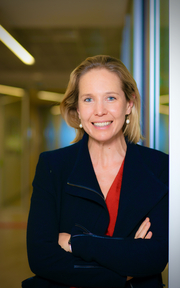
Manual Name : Phoebe Williams
Manual Description : Associate Professor School of Public Health
Manual Address :
Manual Addition Info Title :
Manual Addition Info Content :
Profile image : /content/dam/corporate/images/news-and-opinion/news/2025/september/phoebe-williams-public-health.jpeg
Manual Type : profile
_self
Auto Type : contact
Auto Addition Title :
Auto Addition Content :
Auto Name : true
Auto Position : true
Auto Profile image :
Auto Phone Number : false
Auto Mobile Number : true
Auto Email Address : true
Auto Address : false
UUID :