
For children born with cleft lip and palate, repairing gaps in the jawbone often means waiting until they are 10 to 12 years old before undergoing invasive bone graft surgery. University of Sydney researchers have developed a biodegradable ‘nanobone’ material that allows the body to harness its own healing properties to regrow bone, offering a potential future alternative to procedures that have changed little in more than 50 years.
In the longer term, the researchers hope the technology could allow treatment much earlier in childhood, reducing the need to wait years for bone grafting.
Published in ACS Nano and developed by researchers at the University of Sydney School of Dentistry, Charles Perkins Centre and Sydney Nano, in collaboration with the University of Queensland, the study found that in a preclinical bone model, the material generated approximately 80 percent more new bone than a material control after eight weeks. It also activated a key bone-repair growth factor with around 10 times the level achieved using conventional methods.
“The material activates dormant repair signals in the body, triggering a cascade of healing processes that attract bone-forming stem cells and stimulate new bone growth,” said lead researcher Associate Professor Chun Xu, a Sydney Horizon Fellow in the Faculty of Medicine and Health.
Cleft lip and palate is a birth defect that affects around 1 in 700 children. It occurs when parts of the upper lip or roof of the mouth do not fully fuse during pregnancy. Repairing gaps in the jawbone can be one of the most complex stages of treatment and can have lifelong impacts on speech and self-confidence.
“One of the biggest challenges for children born with cleft lip and palate is repairing the bone defect in the jaw,” said Associate Professor Xu.
“While some children with minor defects are treated as infants, many patients need to wait until they are around 10 to 12 years old before surgeons can take bone from another part of the body and graft it into the defect.
“That means many kids live with difficulties for years. It can affect their breathing, eating and speech. Most heartbreaking of all, it can have a huge impact on their confidence and social development.
“Our long-term goal is to develop materials that help the body regenerate bone naturally and reduce the need for these invasive and painful procedures. We hope this could allow treatment much earlier than is possible today.”
Teaching the body to heal itself
More than four million bone repair procedures are performed worldwide each year. Current approaches typically involve bone grafts taken from the patient, or animal-derived materials that largely act as structural fillers.
Rather than delivering manufactured growth factors, the new material – a calcium-aluminosilicate nanomaterial – activates a naturally occurring growth factor called latent Transforming Growth Factor β1 (TGF-β1), which already exists within the body. Once activated, it attracts bone-forming stem cells to the injury site and encourages them to develop into bone-producing cells. Over time, this process replaces the material with the body’s own tissue.
The material also promoted blood clotting within around 30 seconds, helping stabilise the injury site during the earliest stages of healing.
“Our body already contains many of the signals needed for tissue repair,” Associate Professor Xu said.
“We’ve developed a material that can help activate those signals at the right place and time. Instead of supplying external growth factors, we’re encouraging the body to use its own healing potential.”
The material activates dormant repair signals in the body, triggering a cascade of healing processes that attract bone-forming stem cells and stimulate new bone growth.
Associate Professor Chun Xu
Sydney Horizon Fellow, Faculty of Medicine and Health
Personalised bone repair
The study is the first to demonstrate a single nanomaterial platform that combines rapid blood clotting, activation of the body’s own latent growth factors, recruitment of bone-forming stem cells and enhanced bone regeneration.
While the technology remains in the preclinical stage and further testing is required before human trials can begin, the researchers believe it could have applications beyond cleft lip and palate, including traumatic injuries, tooth loss and other difficult to repair bone defects.
Associate Professor Xu and his team are also exploring how the material could be incorporated into personalised 3D-printed scaffolds designed to match an individual patient’s bone defect.
“Every patient is different and every bone defect is different,” he said.
“In the future, we hope to combine these materials with advanced 3D-printing technologies so treatments can be tailored to the specific needs of each patient.”
The study is the first to demonstrate a single nanomaterial platform that combines rapid blood clotting, activation of the body’s own latent growth factors, recruitment of bone-forming stem cells and enhanced bone regeneration. Image: Stef Zingsheim/University of Sydney
50
automatic
LinkResearch
Xu, C., Chen, Q., Chen, H., et al. Multifunctional Mesoporous Calcium-aluminosilicate Nanoparticles Enable Heterogeneous Activation of Endogenous Transforming Growth Factor 1 and Rapid Hemostasis for Bone Repair, ACS Nano (2026)
DOI: 10.1021/acsnano.6c05126
Declaration
This work is co-led by Dr Chang Lei from Faculty of Medicine and Health and Charles Perkins Centre, the University of Sydney and Prof Chengzhong Yu, Australian Institute for Bioengineering and Nanotechnology, the University of Queensland.
The authors acknowledge the funding support from Australian Research Council, National Health and Medical Research Council and the University of Sydney.
A provisional patent application related to the findings reported in this manuscript has been filed by the University of Sydney and the University of Queensland. The application covers calcium-aluminosilicate mesoporous nanoparticles and their use for bone repair, as described in the paper (Provisional Patent Application No. 2026903515).
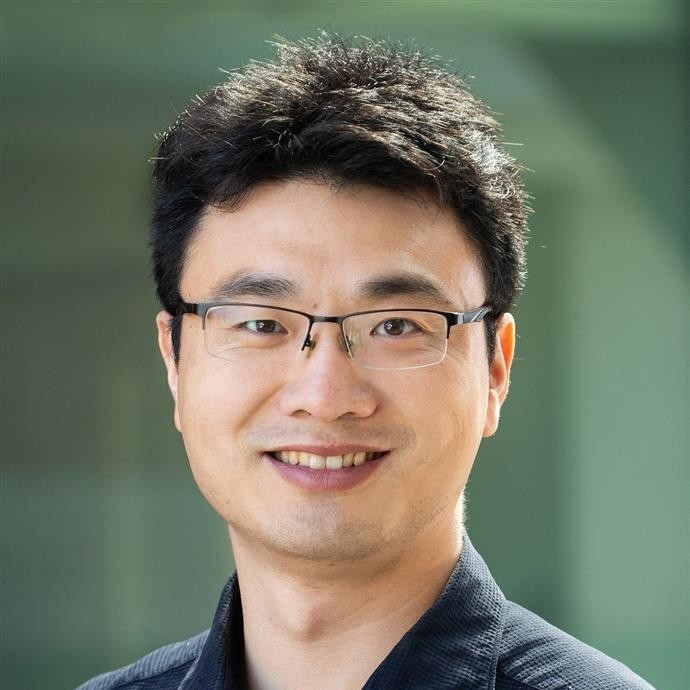
Manual Name : Associate Professor Chun Xu
Manual Description : Sydney Horizon Fellow, Charles Perkins Centre
Manual Address :
Manual Addition Info Title :
Manual Addition Info Content :
Profile image : /content/dam/corporate/images/sydney-nano/news-and-events/nanohealth-sumposium/dr-chun-xu.jpg
Manual Type : profile
_self
Auto Type : contact
Auto Addition Title :
Auto Addition Content :
Auto Name : true
Auto Position : true
Auto Profile image :
Auto Phone Number : false
Auto Mobile Number : true
Auto Email Address : true
Auto Address : false
UUID :
Media contact
Manual Name : Emily Fraser
Manual Description : Assistant Media Adviser (Medicine and Health)
Manual Address :
Manual Addition Info Title :
Manual Addition Info Content :
Profile image :
Manual Type : contact
_self
Auto Type : contact
Auto Addition Title :
Auto Addition Content :
Auto Name : true
Auto Position : true
Auto Profile image :
Auto Phone Number : false
Auto Mobile Number : true
Auto Email Address : true
Auto Address : false
UUID : 861ef23f-6d5e-422e-984e-8a05df9c7b78