
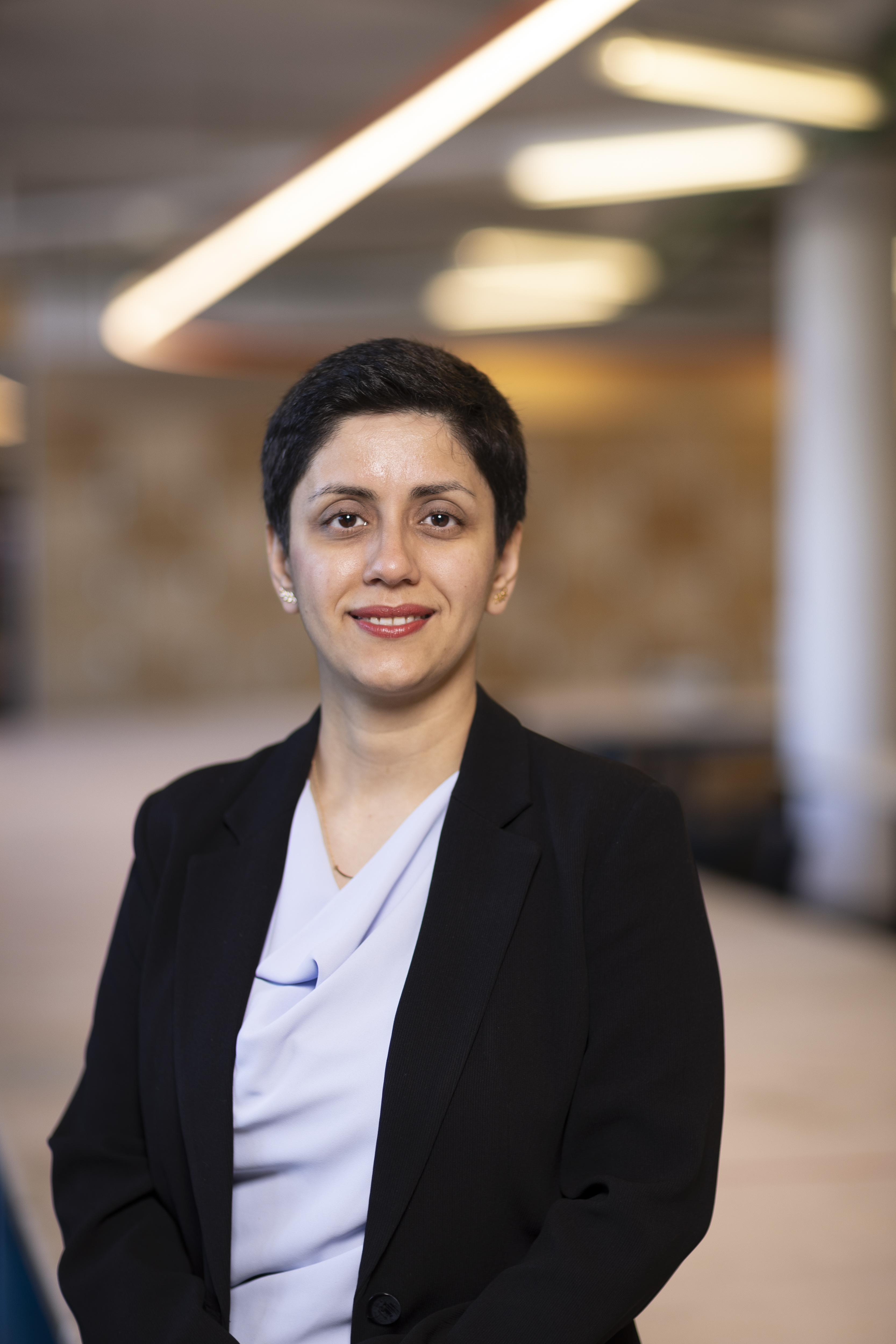
Through a City of Sydney funded research initiative, Dr Shamila Haddad and her team used participatory research methods to investigate the lived experience of social and community housing residents, amplifying their voice in shaping long-term urban planning.
“The main aim of the project was to engage local communities living in social and community housing, to participate in research investigating both indoor environmental quality and urban microclimate,” says Dr Haddad.
“Using contributory citizen science, our team aimed to empower community members to adopt heat mitigation and adaptation strategies contributing to planning for the future of the city.”
Locating knowledge in everyday experience
The project brought together residents from social housing communities in Sydney to actively participate in on ground environmental monitoring—collecting data on air and surface temperatures, humidity, wind speed, air quality, and UV radiation using low-cost portable devices in urban open spaces nearby their homes.
Research participants shared knowledge about their perception of indoor environmental conditions and impacts of climate on their health while interacting with monitoring equipment to stay more comfortable in their homes.
By embedding research into daily routines and familiar environments, the project captures detailed and localised insights into the real-world living conditions and health experiences of households—data that is often absent from conventional urban modelling.
Using contributory citizen science, our team aimed to empower community members to adopt heat mitigation and adaptation strategies contributing to planning for the future of the city.
Dr Shamila Haddad
Sydney Horizon Fellow, Senior Lecturer and Project Lead
Housing, urban heat and health
The results of the study point to a compounding set of risks driven by poor-quality housing and the changing climate.
Residents routinely experienced high indoor temperatures in warmer months and very cold conditions in colder periods —posing significant health threats, particularly for older people and those with chronic illness. These conditions disproportionately affect populations experiencing energy poverty and underconsumption.
Mould and high indoor humidity were also common concerns, closely linked to poor ventilation and associated with both physical and mental health impacts.
In outdoor environments, the research documented a pronounced Urban Heat Island effect of up to 1.5°C in the City of Sydney, with urban parks consistently recording lower ambient temperatures than surrounding built-up areas.
“This highlights the critical role of greenery in mitigating urban heat,” says Dr Haddad, “and the need for targeted cooling interventions—particularly in areas with high concentrations of heat-retaining surfaces and low vegetation cover.”
As part of the citizen science initiative led by local residents, community members collected data on the cooling benefits of shade, water bodies, green spaces, and reflective or light-colored materials. These strategies contribute to multiple environmental, economic, and social gains for communities.
Embedding community voices in urban climate strategies
The study positions citizen science as both a data collection method and a form of participatory planning. By enabling residents to contribute directly to climate research, the approach helps to ensure that interventions reflect the lived realities of those most at risk.
“This participatory approach builds awareness and fosters collaboration between communities, local governments and social housing providers,” says Dr Haddad.
“It allows for the co-creation of interventions—such as improved ventilation, shaded communal areas or heat-mitigating strategies—that are responsive to how people actually live and use their environments.”
Rather than applying one-size-fits-all design fixes, the research advocates for context-specific solutions grounded in community priorities and preferences.
“Embedding community voices into every stage of urban climate planning ensures that adaptation efforts are not only technically sound but also socially just,” Dr Haddad says.
From research to policy impact
The project is part of broader research that Dr Haddad is pursuing through her Sydney Horizon Fellowship, which focuses on the intersections between climate change, energy poverty and health outcomes in social housing.
Future work includes the development of a city-scale Urban Building Energy Modelling (UBEM) platform to simulate energy performance across different housing typologies and climatic conditions. The goal is to support evidence-based policy and retrofitting strategies that improve thermal comfort, reduce energy underconsumption, and build resilience across low-income communities.
“Improving energy efficiency in social housing is crucial,” Dr Haddad explains. “Raising building performance standards would generate significant cost savings for low-income households and reduce pressure on the health system.”
The project aligns with the National Science and Research Priorities and speaks to urgent questions about how we design cities and buildings that support equitable climate mitigation and adaptation.
“Urban overheating affects the sustainability, survivability and environmental quality of cities. To build a secure and resilient nation, we must address these risks by supporting healthy, thriving communities—especially those most impacted by climate change,” said Dr Haddad.
Research team
Manual Name : Dr Shamila Haddad
Manual Description : Project lead
Manual Address :
Manual Addition Info Title : Sydney Horizon Fellow (Senior Lecturer)
Manual Addition Info Content :
Profile image : /content/dam/corporate/images/architecture/staff-images/dr-shamila-haddad.jpg
Manual Type : profile
_self
Auto Type : contact
Auto Addition Title :
Auto Addition Content :
Auto Name : true
Auto Position : true
Auto Profile image :
Auto Phone Number : false
Auto Mobile Number : false
Auto Email Address : true
Auto Address : false
UUID :
Manual Name : Associate Professor Arianna Brambilla
Manual Description : Project chief investigator
Manual Address :
Manual Addition Info Title : Sydney Horizon Fellow (Senior Lecturer)
Manual Addition Info Content :
Profile image : /content/dam/intranet/images/news/2021/december/dr-arianna-brambilla.jpg
Manual Type : profile

_self
Auto Type : contact
Auto Addition Title :
Auto Addition Content :
Auto Name : true
Auto Position : true
Auto Profile image :
Auto Phone Number : false
Auto Mobile Number : false
Auto Email Address : true
Auto Address : false
UUID :
Manual Name : Dr Thomas Parkinson
Manual Description : Project chief investigator
Manual Address :
Manual Addition Info Title : Sydney Horizon Fellow (Senior Lecturer)
Manual Addition Info Content :
Profile image : /content/dam/corporate/images/architecture/research/dr-thomas-parkinson.jpeg
Manual Type : profile
_self
Auto Type : contact
Auto Addition Title :
Auto Addition Content :
Auto Name : true
Auto Position : true
Auto Profile image :
Auto Phone Number : false
Auto Mobile Number : false
Auto Email Address : true
Auto Address : false
UUID :
Manual Name : Professor Matthaios Santamouris
Manual Description : Project chief investigator
Manual Address :
Manual Addition Info Title : Sydney Horizon Fellow (Senior Lecturer)
Manual Addition Info Content :
Profile image : /content/dam/corporate/images/architecture/research/professor-mat-santamouris.jpg
Manual Type : profile
_self
Auto Type : contact
Auto Addition Title :
Auto Addition Content :
Auto Name : true
Auto Position : true
Auto Profile image :
Auto Phone Number : false
Auto Mobile Number : false
Auto Email Address : true
Auto Address : false
UUID :