false

/content/dam/corporate/images/faculty-of-arts-and-social-sciences/schools/humanities/philosophy/soh_philosophy.jpg

45%

Philosophy

Explore fundamental and important questions

m-hero--style-2

220.146.2x.jpeg 440w, 1440.954.2x.jpeg 2880w, 1280.1280.jpeg 1280w, 800.530.2x.jpeg 1600w, 440.292.2x.jpeg 880w

false

Ask the big questions about ourselves, our world, and how to live.

Philosophy explores some of the deepest and most fundamental questions about reality and human existence. What is the nature of reality, and how can we know it? What is consciousness? Can machines think? Do we have free will? How ought we to live? What makes an action right or wrong? How should we arrange our societies, and what does justice require? These questions are fascinating in themselves, and many of us simply want to know the answers.

At the same time, philosophy equips students with intellectual skills that are vital in any profession. A major in philosophy will train you to think precisely, deliberate carefully, and communicate with clarity and persuasion. Because these are transferable skills - critical thinking, persuasive speaking, and clear writing—they are valued in every workplace, across every sector.

The University of Sydney is home to one of the most wide-ranging philosophy departments in Australia, with strengths in both the analytic and continental traditions, historical and contemporary philosophy, and expertise across major fields including ethics, epistemology, metaphysics, logic, social and political philosophy, and aesthetics.

Students who major in philosophy learn to construct and evaluate arguments, identify key points in a debate, uncover assumptions, and draw fruitful conceptual distinctions. They also develop intellectual virtues such as honesty, fairness, and the ability to discuss matters of importance without recourse to insult or taking offense.

Our study offering

Philosophy formulates and explores questions of fundamental importance to us as human beings.  For example: What is consciousness? Are we free agents? What makes an action right? What makes an action wrong? What is truth, and how can we come by it? How should we form beliefs about the world? Is it possible for machines to think? Studying philosophy will equip you with a disciplined capacity for critical analysis and dramatically enhance your communication skills.

Undergraduate

Research

Critical thinking workshops for IB High Schools

Philosophy offers critical thinking workshops for International Baccalaureate (IB) students. If you would like more information or to enquire regarding future workshops, please feel free to contact us.

E | soh.events@sydney.edu.au
P | +61 2 9351 2271

Our research

  • Aesthetics, art, literature and film
  • Philosophy of science (biology and cognitive science)
  • History of philosophy
  • Logic
  • Metaphysics
  • Philosophy of mind
  • Epistemology
  • Decision theory
  • Philosophy of mathematics
  • Philosophy of law
  • Philosophy of language 
  • Pragmatism
  • Moral, social and political philosophy

_self

Philosophy

h2

Find out what you will study

cmp-call-to-action--ochre

_self

Bachelor of Politics, Philosophy, and Economics

h2

Find out more

cmp-call-to-action--grey

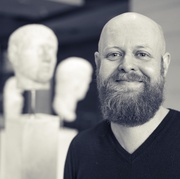
Manual Name : Professor Alexandre Lefebvre

Manual Description : Chair of Discipline

Manual Address :

Manual Addition Info Title :

Manual Addition Info Content :

Manual Type : profile

alt

_self

Auto Type : contact

Auto Addition Title :

Auto Addition Content :

Auto Name : true

Auto Position : true

Auto Phone Number : false

Auto Mobile Number : false

Auto Email Address : false

Auto Address : false

UUID : A-LEFEBVRE

Useful links

Anderson Visiting Fellowships

The Fellowship applications for the 2026 academic hear are now open.

Anderson Fellowships are bestowed through a bequest of the estate of John Anderson (1893-1962), influential Australian philosopher and Challis Professor of Philosophy at the University of Sydney from 1927 to 1958.

The Anderson bequest funds travel to the University of Sydney for up to two fellows each year with the aim of promoting collaboration between members of the philosophy department and leading researchers around the world. 

In order to apply, applicants must first have an academic sponsor from the Discipline of Philosophy with whom they will work when at the University.

Applications should highlight the ways in which the applicant will contribute to the research and teaching of the department and to collaborations with departmental members.

Applicants can apply for one of two fellowships.

  • Anderson Distinguished Visiting Fellowships funds travel and expenses up to $41 000 including up to $5000 in airfare and living allowance of up to $3000 per week.
  • Anderson Visiting Fellowships fund travel and expenses up to $32,500, consisting of $2,500 airfare and $2,500/week living allowance.

Anderson Fellows will be provided with office space, library borrowing rights and other resources.

Anderson Fellows are expected to be present at the University of Sydney for the duration of their Fellowship and to make a substantial contribution to the academic life of the Discipline of Philosophy through collaborative research and contributions to the teaching program.

Applications 

Download the 2025 Anderson Fellowship Nomination Form here

For further information, please contact our Research Support Officer.

  • 2024: Glen Pettigrove and David Plunkett
  • 2023: Hannah Tierney and Natalja Deng
  • 2022: Helen Beebee, Christoph Emanuel Viebahn and Jose Zalabardo
  • 2019: David Bronstein, Carrie Figdor
  • 2018: Amie L Thomasson, Lisa Shapiro
  • 2017: Anna Marmodoro, Natalie Stoljar
  • 2016: Nikk Effingham, Eric Watkins

50

automatic

Link

Our people

  • Dr Thomas Besch
  • Dr Pierrick Bourrat
  • Dr Brett Calcott
  • Dr Millicent Churcher
  • Dr Timothy Dean
  • Dr Luke Fischer
  • Associate Professor John Grumley
  • Dr Laura Kotevska
  • Dr Andrew Latham
  • Dr Kathleen Lynch
  • Associate Professor Michael McDermott
  • Mr Tibor Molnar
  • Mr Aidan Nathan
  • Dr James Norton
  • Dr Julie-Ann Robson
  • Dr Edward Spence
  • Dr Roderick Sutherland
  • Dr Gabriel Watts
  • Ms Shira Yechimovitz

Seminars and events

50

automatic

Link

Diotima

50

automatic

Link

Our seminars are held every Wednesday at 3.30 till 5.00 in Seminar Room N494, Quadrangle A14.

Click here for details on how to locate the Seminar Room. There is also a zoom link for those who cannot attend in person, which is mailed out to our mailing list each week via Sydphil.

Join our seminars and events

Diotima's Daughters: A Masterclass on Women Philosophers

Workshop | Tuesday 25 November 2025

Diotima is most well-known from her discussion of beauty in Plato’s Symposium. Details about her biography are highly controversial, and many today assume she is a fictional entity; but there are good reasons to question this assumption (and, indeed, most thinkers until the mid-nineteenth century did not share this view). This is important not only because her ideas about beauty, truth and goodness played a formative role in the development of western philosophy, but also because she figured as a critical model for thinkers across the centuries – especially women thinkers.

The aim of this masterclass is to discover how the figure of Diotima was received over the history of philosophy – especially by women philosophers, who not only engaged with the themes of The Symposium but who also modelled themselves on Diotima, as teacher, friend, and inspirator of Socrates. The masterclass will consider how Diotima’s ideas about beauty, truth and goodness were received at various moments in the history of philosophy and how the figure of Diotima was interpreted. We will focus on three historical periods: the ancient context, in which Diotima (ostensibly) lived, the late Hellenistic/early Medieval period, and the late eighteenth and early nineteenth centuries.

Click here for more information

This masterclass is organised in conjunction with the University of Notre Dame Australia conference, Women in the History of Philosophy of Nature, 26-27 November.

Philosophy podcasts

Discover the latest podcasts from our experts. Tune in for entertaining discussions, thought-provoking insights and interesting facts.

50

automatic

Link

Contact us

School of Humanities

Room 607, Brennan MacCallum Building A18,
The University of Sydney, NSW, 2006

Phone: 1800 SYD UNI (1800 793 864) (in Australia) 
+61 2 9351 2862 (outside Australia) 

Email: soh.enquiries@sydney.edu.au