
Researchers at the University of Sydney and Duke-NUS Medical School in Singapore are harnessing the power of artificial intelligence and stem cell science to transform our understanding of the human brain and open new doors for treating neurological disorders like Parkinson’s disease.
“My group’s research is focused on understanding how cells make decisions – how they choose to become a specific cell type, such as neurons or muscle cells,” said Associate Professor Pengyi Yang, member of the Charles Perkins Centre, Faculty of Science, and Head of Computational Systems Biology at the Children’s Medical Research Institute.
“By combining biology with artificial intelligence, we decode how genes and proteins interact to drive these ‘cell fate’ decisions. We then apply this knowledge to improve our understand of how diseases develop, and what medicines could be used to prevent or treat those diseases.”
The Duke-NUS team is led by Assistant Professor Alfred Sun, an expert in neuroscience. Assistant Professor Sun said the research partnership with the University of Sydney is a natural fit that brings out the best of both teams to deliver results with lasting impact.
Pengyi and his team bring expertise in computational biology and data integration, areas that perfectly complement our strengths in stem cell and developmental neuroscience.
Assistant Professor Alfred Sun
Duke-NUS Medical School
Mapping the brain with machine learning
Together, the teams are developing advanced tools to study midbrain organoids – tiny, brain-like structures grown from stem cells that mimic key features of human brain development.
Using cutting-edge machine learning techniques, the two teams have generated one of the most detailed molecular maps of the human midbrain to date.
This map is now being used to assess how faithfully midbrain organoids replicate the structure and function of the human midbrain – a crucial step for developing reliable models of brain disease that will be used for studying disease progression and testing new medications before they reach clinical trials.
“We have achieved quite a bit of progress,” said Associate Professor Yang. “We have combined computational expertise and experimental data to evaluate how accurately these models represent the brain.”
The findings were recently published in Science Advances.
(L-R) Assistant Professor Alfred Sun, Associate Professor Pengyi Yang, Dr Carissa Chen, Lisheng Xu, Dr Hilary Toh, Anna Fredericks
50
automatic
LinkCustom-made treatments designed for your DNA
This research has immediate applications for studying neurodevelopmental and neurodegenerative diseases. The two teams led by Associate Professor Yang and Assistant Professor Sun are particularly interested in using it to study new treatments for Parkinson’s disease that can be customised according to a patient’s unique genetic makeup.
Parkinson’s disease is associated with the loss of dopamine-sensitive neurons in the midbrain – a cell type that can be modelled using membrane organoids.
“We all have different DNA, so each patient will have a different experience with their condition, and a different response to treatments. A one-size-fits-all approach doesn’t work,” said Associate Professor Yang.
This is where organoids present a unique opportunity for real breakthroughs. By taking a sample of a patient’s skin cells – a quick and non-invasive procedure – scientists turn these cells back into stem cells, which are then grown into a brain organoid that contains the patient’s own DNA.
“Ultimately, we’re working to make these models more accurate so we can use them as powerful tools to discover new medications for Parkinson’s disease, tailored to and tested on a model of each patient’s unique brain cells.”
This was once science-fiction – creating a mini organ in a lab and using it to discover and design bespoke medical treatments. We’re making it a reality.
Associate Professor Pengyi Yang
Faculty of Science, University of Sydney
International collaboration: multiplying strengths
The partnership with Singapore was a natural fit, said Associate Professor Yang, thanks to Duke-NUS’s world-leading expertise in stem cell and developmental biology, and access to state-of-the-art research facilities that complement the facilities at Sydney. The research is supported by an Ignition Grant from the University of Sydney’s Office of Global and Research Engagement.
“We happen to share a common interest in stem cells and use them as a model to study disease. Our complementary expertise made this collaboration a natural choice,” Associate Professor Yang explained. “The Ignition Grant was instrumental to making this research a reality, thanks to the funding for research expenses and visits to each other’s facilities so we can collaborate in-person. It also opened up organisational support to help us navigate the complexity of international partnerships and regulations.”
Assistant Professor Alfred Sun from Duke-NUS Medical School said: “Pengyi and his team bring expertise in computational biology and data integration, areas that perfectly complement our strengths in stem cell and developmental neuroscience. By combining these capabilities, we can bridge the gap between complex molecular data and biological function, accelerating the translation of stem cell research into clinical application.”
From sci-fi to reality
With further funding applications pending, the Sydney-Singapore partnership is poised to expand its research into modelling a range of neurodegenerative diseases using patient-derived organoids and developing new computational models to guide organoid differentiation.
“Our research in Science Advances showed that we can still refine our organoid models further, and provided useful insights into how we can make this happen,” Associate Professor Yang said.
Armed with this information, the team plans to create improved midbrain organoids which they will use to study neurodegenerative diseases, find drugs that could help treat them, and test their potential for cell therapy and regenerative medicine.
“This research collaboration demonstrates the incredible potential of combining cutting-edge biology with advanced machine-learning capabilities. This was once science-fiction – creating a mini organ in a lab and using it to discover and design bespoke medical treatments. We’re making it a reality.”
The researchers declare they have no conflicting interests. This work is supported by the National Research Foundation Fellowship (NRF-NRFF14-2022-0008), the Singapore PARKinson’s disease Translational Clinical Programme, the USyd-NUS Ignition Grant, and the Singapore National Medical Research Council (NMRC) under OF-YIRG funding. The work is also in part supported by the Duke-NUS Parkinson’s Research Fund through the generous donation by the Ida C. Morris Falk Foundation.
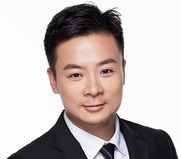
Manual Name : Associate Professor Pengyi Yang
Manual Description : School of Mathematics & Statistics, Faculty of Science
Manual Address :
Manual Addition Info Title :
Manual Addition Info Content :
Profile image : /content/dam/corporate/images/charles-perkins-centre/staff-images/Pengyi_Yang.jpg
Manual Type : profile
_self
Auto Type : contact
Auto Addition Title : School of Mathematics & Statistics, Faculty of Science
Auto Addition Content :
Auto Name : true
Auto Position : true
Auto Profile image :
Auto Phone Number : false
Auto Mobile Number : false
Auto Email Address : false
Auto Address : false
UUID : 9af0a766-7c3b-49bd-bb46-9f2b572acb4e