
Within a few short years, artificial intelligence (AI) has become involved in almost every aspect of our online lives, from optimising our search results and screening our emails for spam to generating customised content according to our prompts.
But while each of these applications involves AI working for us, the University of Sydney’s Dr Wanchun Liu and her team in the Faculty of Engineering are developing integrated cyber–physical–human systems in which the AI component will work with us – or, as she explains, “systems that do not simply automate tasks but adapt, collaborate, and evolve alongside human judgement.”
Dr Liu is a Senior Lecturer in the School of Project Management and an ARC Discovery Early Career Researcher Award (DECRA) Fellow in Intelligent Sensing and Control for Human–Machine Collaboration, with applications in large-scale cyber–physical systems and complex megaprojects.
With a background in electrical and information engineering, she is currently tackling the challenge of enabling intelligent, reliable and adaptive collaboration between humans and machines in complex, dynamic environments such as large-scale critical infrastructure projects and high-stakes industrial automation operations – those in which timely decision making, resilience to uncertainty and effective human–machine integration are critical.

The ultimate goal is to build a new generation of intelligent, human-centred project and control systems that adapt in real-time, operate reliably under uncertainty, and enhance both productivity and safety across various domains.
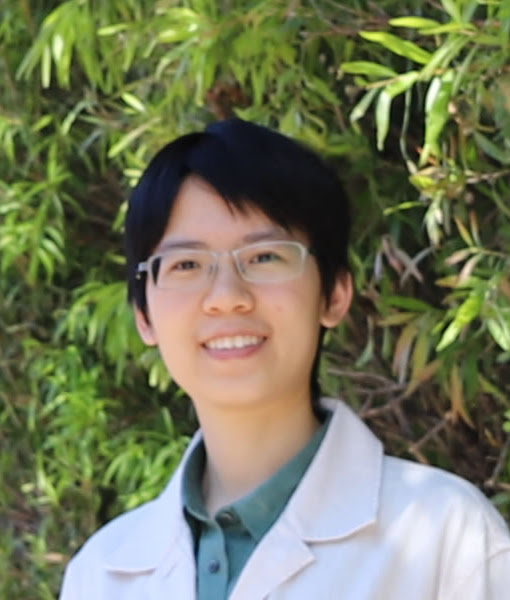
Dr Wanchun Liu
ARC Discovery Early Career Researcher Award (DECRA) Fellow, School of Project Management
As Dr Liu explains, “Traditional [AI] systems often fail to support real-time adaptability, especially in environments involving human operators, remote locations or large-scale coordination. The core aim of my project is to develop next-generation adaptive and intelligent systems that can sense, interpret and respond to dynamic, uncertain conditions across technical and human dimensions, tightly integrating physical infrastructure, autonomous machines, human operators and digital control layers to enable real-time, coordinated decision-making at scale.”
The societal impacts of this work will be numerous and far-reaching, including reduced project overruns and more sustainable infrastructure delivery; safer, more efficient systems across such industries as mining, manufacturing and logistics; and improved foresight and real-time responsiveness by planners and policymakers.
The ultimate goal: A new generation of human-centred intelligent systems
Dr Liu and her team have already successfully developed and demonstrated the use of models that combine human behavioural modelling with machine control and decision-making systems in real-time collaborations.
Having secured highly competitive Australia Research Council (ARC) funding, they have also been able to establish partnerships across academia and industry to enhance their research capability and optimise its real-world impacts.
The next stages include incorporating more advanced behavioural models and AI techniques; ensuring scalability and resilience in more diverse and complex contexts; and engaging end-users to validate the systems in real-world deployments.
“The ultimate goal,” Dr Liu says, “is to build a new generation of intelligent, human-centred project and control systems that adapt in real-time, operate reliably under uncertainty, and enhance both productivity and safety across various domains. Long term, this work aims to inform new standards and practices in cyber–physical infrastructure, next-generation automation and strategic project governance, contributing to both academic knowledge and practical innovation.”
Engineering today is no longer just about building tools, but about creating ecosystems that integrate people, machines and intelligence in ways that are ethically grounded, socially responsive, and technically resilient.
Dr Wanchun Liu
ARC Discovery Early Career Researcher Award (DECRA) Fellow, School of Project Management
From practicality to passion
Dr Liu initially studied electrical and information engineering in China – where, she says, the subject is a common ‘default’ option for high-achieving students. While that early choice might have been motivated by practicality rather than passion, it proved a perfect fit.
“Fortunately for me, that choice happened to align perfectly with my personality and strengths,” she reflects. “Although I didn’t initially have a full understanding of what an engineering career could look like, I quickly found that the process of problem solving, modelling systems and translating abstract theory into real-world impact was deeply fulfilling. Over time, engineering became more than just a practical option; it became a passion and a purpose.”
Having been at the University of Sydney now for eight years, Dr Liu says she greatly values the flexibility and autonomy the University provides in allowing her to pursue both her research and teaching ambitions, and its fostering of interdisciplinary collaborations both internal and external.
Paving the way for other women in engineering
While engineering in Australia remains a male-dominated field, Dr Liu says this is not something she feels consciously aware of on a day-to-day basis. “I have worked with many supportive colleagues, both men and women, and have always been encouraged to pursue my research and leadership goals,” she says. “What matters most is the individual’s expertise, curiosity, and commitment to ongoing learning.”
She does, however, see an important opportunity in her role as a successful woman in engineering, adding: “I am passionate about opening doors for the next generation of researchers – particularly those from underrepresented backgrounds – to contribute to shaping our socio-technical future.”
I am passionate about opening doors for the next generation of researchers – particularly those from underrepresented backgrounds – to contribute to shaping our socio-technical future.
Dr Wanchun Liu
ARC Discovery Early Career Researcher Award (DECRA) Fellow, School of Project Management
The future of engineering
The future that Dr Liu speaks of is the very one that her own work is helping to shape.
“Engineering today is no longer just about building tools, but about creating ecosystems that integrate people, machines and intelligence in ways that are ethically grounded, socially responsive, and technically resilient,” she says.
“This project brings together everything I find intellectually fulfilling: the rigour of systems theory, the challenge of real-world uncertainty, and the complexity of human behaviour.
“I find it incredibly rewarding to see abstract models translate into tangible impact – whether it’s improving safety in underground mining, reducing waste in urban systems or helping project managers better navigate uncertainty.”
For someone who originally chose the path of engineering by default, Dr Liu says, “Now, I can’t imagine doing anything else.”
Manual Name : Dr Wanchun Liu
Manual Description : ARC Discovery Early Career Researcher Award (DECRA) Fellow, School of Project Management
Manual Address :
Manual Addition Info Title :
Manual Addition Info Content :
Profile image : /content/dam/people/wanchun-liu.jpg
Manual Type : profile
_self
Auto Type : contact
Auto Addition Title :
Auto Addition Content :
Auto Name : true
Auto Position : true
Auto Profile image :
Auto Phone Number : false
Auto Mobile Number : true
Auto Email Address : true
Auto Address : false
UUID :