
When Dr Ann Na Cho completed her bachelor’s degree in biology in Korea, engineering was not on her radar.
Pursuing a long-held interest in health research, she followed her undergraduate degree with a PhD in biotechnology, during the early days of which she came across an article about a team of scientists who had managed to grow human brain cells in a laboratory for the purposes of medical research.
Excited by the potential of this nascent development, and recognising its particular value in studying rare childhood brain diseases for which there is scarce funding, Ann focused her PhD research on progressing it.
Working with patient communities with rare neurological syndromes, her work involved collecting an individual patient’s cells through biopsy of non-brain tissue, and using gene engineering tools to convert them to personalised stem cells. These engineered stem cells, just like naturally occurring embryonic stem cells, could then be developed into specialised cells – such as blood, skin or brain cells – unique to that person, for the purposes of research and testing outside the patient’s body.
But that was just her first step.
As Ann explains, “Growing pure brain cells alone is not enough. This tissue did not have the functional infrastructure that supports it in a real human brain. In order to serve as a useful model for research, we also need blood vessels, blood flow, electrical impulses and so on.”
These additional structures and systems were not able to be constructed in the biology lab, and so Ann turned to the techniques and tools of engineering to further progress her work.
Growing pure brain cells alone is not enough. This tissue did not have the functional infrastructure that supports it in a real human brain. In order to serve as a useful model for research, we also need blood vessels, blood flow, electrical impulses and so on.
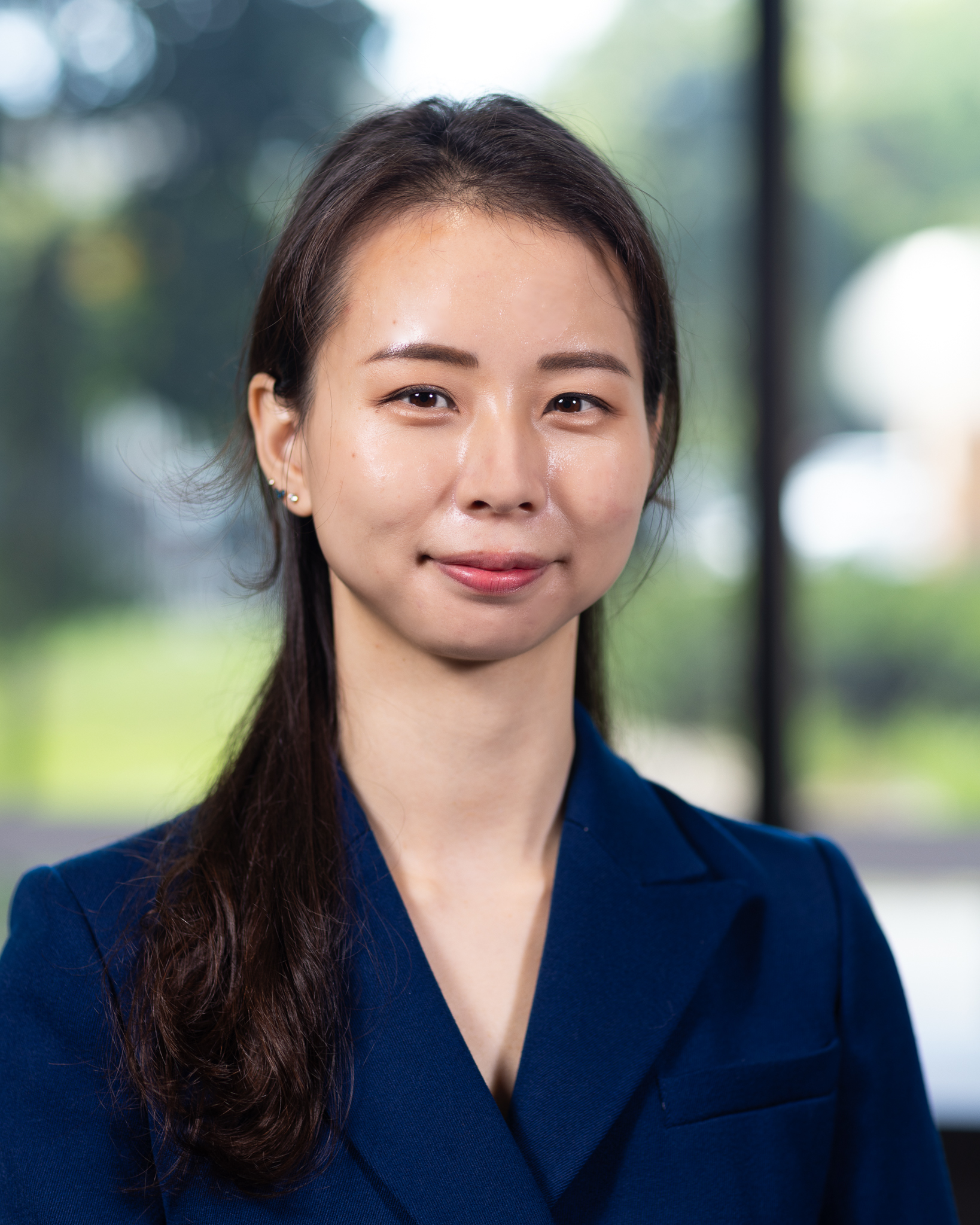
Dr Ann Na Cho
Lecturer (Principal Investigator, Group Leader of hBMS Lab), Sydney Horizon Fellow
A paradigm shift in neuroscience research
Now, as a Sydney Horizon Fellow and a lecturer and researcher at the School of Biomedical Engineering, Ann leads the human Brain Microphysiological System Laboratory (hBMS Lab), where she and her team are using cutting-edge stem cell biology and tissue engineering to create complex near-complete miniature 3D human brain models – known as brain ‘organoids’ – incorporating not only neural cells but also a vasculature and immune system, fluid flows and nutrient exchange, thereby supporting cell growth, differentiation and functional maturation that mimics real human brain development and function.
“We can use these models to study the development and treatment of brain diseases, infections, genetic issues and other disorders.” she explains. “They enable in-depth studies of the interactions between the brain, blood vessels and immune system, opening new avenues for understanding brain function and developing personalised therapeutic interventions.
“These brain organoids can survive for up to three years in an incubator, so we can also study how they function as they grow and develop and age, allowing us to model the progression of disease and trial potential treatments.”
With human brain health research having relied for centuries on animal testing, particularly using rodent brains – which has both ethical and practical drawbacks, a rodent brain not being identical to that of a human, much less to that of a particular human with a rare brain disorder – Ann’s work represents a transformative paradigm shift in neuroscience research and treatment trialling and development.
“We need to advance the field of preclinical trials,” she observes. “Now is the time, and I am proud to be at the forefront of this progress.”
Proud to be a pioneer in her field
A highly engaging and articulate representative of her team’s work, Ann emphasises that this confidence is not necessarily natural but deliberate.
“I’m Korean, a woman, a scientist and a researcher,” she says. “Traditionally, we don’t like to speak about our work! But I do it, because I think it’s important that I model confident and assertive communication of my work for my female students.
“I have observed in my own experience that women working in teams often take on roles such as deputy, rather than the top position. I want to really challenge this. And so I encourage my female students to speak up. I tell them, ‘I’m Korean, I’m a woman, I only came to Australia five years ago but still I present my work, I represent my team. You have no excuse!’
“I want more female students to see their value, and how they can be pioneers. I don’t want them to consider themselves as part of some kind of ‘second tier’. I tell all my students, ‘Don’t follow someone. I want you to be a pioneer in whatever you do. A leader.’ I want this to be part of my legacy.”
“I have observed in my own experience that women working in teams often take on roles such as deputy, rather than the top position. I want to really challenge this. And so I encourage my female students to speak up.
Dr Ann Na Cho
Engineering enhances impact
The other message Ann wants to broadcast far and wide is that the discipline of engineering is not just about building infrastructure. As her own work demonstrates, engineering can contribute to health research, just as it can to any other field that requires critical thinking, creative problem-solving, adaptability and cross-disciplinary collaboration, in addition to specific technical proficiencies.
“My research is in cell biology and tissue fabrication,” she points out, “but engineering tools help us to functionalise the tissue we create.”
She pays particular credit to the Faculty of Engineering for welcoming and supporting her work.
“Despite my work not being ‘traditional’ engineering, the faculty really recognises the value of this emerging field, and has been happy to take risks in terms of providing the funding and infrastructure we need to succeed,” she says. “I feel very supported and encouraged in my research here – if I want to do something, I can do it.”
She wants more people outside the discipline to appreciate how broad-ranging and inherently interdisciplinary the field of engineering really is.
“My interest in this work relates directly to health, but without engineering techniques we can’t scale our work up. By combining my background in biology and biotechnology with engineering, I can make a far more impactful contribution to health.”
Manual Name : Dr Ann Na Cho
Manual Description : Lecturer (Principal Investigator, Group Leader of hBMS Lab), Sydney Horizon Fellow, NHMRC Emerging Leadership Fellow, MIT Technology Review Innovators Under 35 (TR35) Asia Pacific, Australian Museum Eureka Finalist for Outstanding Early Career Researcher
Manual Address :
Manual Addition Info Title :
Manual Addition Info Content :
Profile image : /content/dam/people/ann_na_cho_engo1.jpg
Manual Type : profile
_self
Auto Type : contact
Auto Addition Title :
Auto Addition Content :
Auto Name : true
Auto Position : true
Auto Profile image :
Auto Phone Number : false
Auto Mobile Number : true
Auto Email Address : true
Auto Address : false
UUID :