
Like a rubber band, elastin tissue allows our skin to stretch as we move, our arteries to flex with each beat, and our lungs to expand with each breath. Over 30 years, Professor Tony Weiss not only discovered the key to how this substance works in our bodies, but how it can be synthetically produced to create new treatments that speed up wound repair and support organ transplants.
After his start-up company Elastagen was sold to a US pharmaceutical heavyweight for the sum of US$260 million (A$406 million) in 2018, Professor Weiss is working as hard as ever to see his discoveries get to market while supporting Australian science and entrepreneurship.
With four clinical trials completed in Australia and Europe, and another underway elsewhere, Elastagen’s elastin technology is set to revolutionise treatment for acne scars, stretch marks, aesthetic skin repair and surgical wound repair.
A question of healthy ageing
Elastin in one of the longest-living tissues in the body – the elastin in a blood vessel will have gone through an estimated two billion cycles of pulsation during a person’s life.
It’s this connection to longevity that first brought Professor Weiss’s attention to the substance in the 1990s, when he was researching a rare genetic disorder that causes rapid ageing in children called Hutchinson-Gilford progeria syndrome.
“I really wanted to explore this, not only because it had the potential to help children who were experiencing cardiovascular disease, arthritis and all of these effects of ageing at such a young age, but also because I thought this had the potential to unlock our understanding of what contributes to ageing in healthy people and how we can help people live healthier, longer lives,” says Professor Weiss.
One of the few markers for diagnosing the syndrome back then was a change in the gene that produced tropoelastin – the molecular building block for elastin. This realisation hinted at the possibility that tissue elasticity is inextricably linked to our overall health.
“It was serendipitous, really,” recalls Professor Weiss. “At the time, almost no-one was working on this, so I read up on tropoelastin and travelled to an elastin conference in the US to learn more. I realised there that the field was nowhere near where I knew I could take it, and where it needed to be to really make a change for people with this condition.”
Elastagen by numbers
- 176 full patents awarded
- 5 clinical trials globally
- 3 products in development
- 270 papers published
- 3 decades in the making
It’s incredible to think what we’ve accomplished since the 90s, and how far genetic and other technologies have come since then.
Professor Tony Weiss AM FAA FTSE FAHMS FRSN
How it's made
Professor Weiss knew there were two main steps to take these findings and turn them into a solution that could help people: find out how to make this building block synthetically, and then find out how to assemble it into fibres, sheets and tubes – the structures that help make up our body.
Creating synthetic elastin was a decades-long journey involving his lab at the University of Sydney and research partners from around the world, including Oxford University in the UK and MIT in the US.
With recent (at the time) advances in the nascent field of genetic engineering, Professor Weiss and his team were able to take a healthy copy of the gene that produces tropoelastin and insert it into bacteria.
“This was the largest tailored synthetic gene anybody had ever produced, which was a huge milestone. We then took that gene and inserted it into bacterial cells so they could begin making a lot of this human protein, identical copies of the tropoelastin protein made in a newborn baby’s skin.
“No-one had done anything like this, or anything on this scale, beforehand.”
With this milestone cracked, the team have begun producing medical devices made from this synthetic elastic protein which speeds up the healing process for skin injuries such as burns, cuts and abrasions.
By coaxing synthetic elastin structures into gels, sheets and tubes, the team is already creating medical devices that integrate naturally with the body. These devices could even be used as a flexible scaffold to support transplanted organs as they assimilate in their new bodies, or shore up the walls of damaged blood vessels while withstanding the enormous pressure from our hearts. The are being used to craft synthetic skin which heals faster and bends with our movements, reducing pain and the risk of infection due to longer healing times.
Even more applications such as injections with potential cosmetic applications are in the works, with over 176 full international patents issued for this intellectual property.
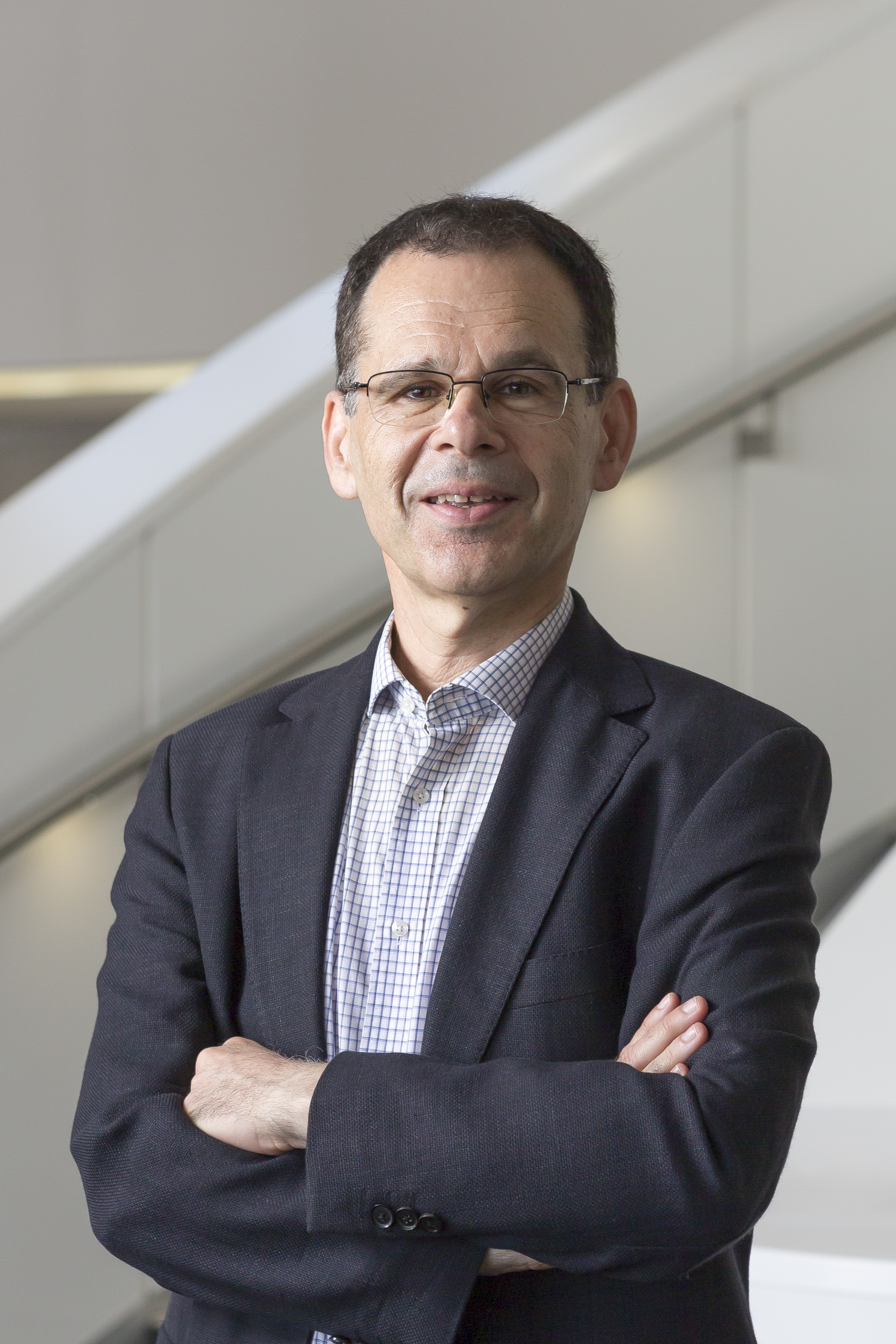
Professor Tony Weiss AM FAA FTSE FAHMS FRSN. Image credit: University of Sydney / Michael Amendola
50
automatic
LinkWhat's next
Despite selling Elastagen to US pharmaceutical company Allergan (now AbbVie) in 2018, Professor Weiss remains closely involved in its continued development of elastin technology. The team is currently exploring more ways to assemble tropoelastin proteins into different structures that can be used as medical devices.
“It’s one thing to produce the raw materials, to lay the foundation. Now, we’re building the house itself.”
Professor Weiss is also keen to support Australia’s emerging scientific entrepreneurs take their ideas from the lab to market, after having received help from so many partners and collaborators on his journey.
“Science is more about relationships than a lot of people realise. It’s because of relationships with scientists, but also with industry, that I was able to be an inventor with 176 patents. Science is complex, and discovering new solutions to really help people and get those in market, requires a whole ecosystem of experts. And like ripples in a pond, the learnings and success of one person expand to impact the journeys of everyone else.”
Professor Weiss is actively involved in mentoring young researchers through the Sydney Knowledge Hub, the University’s incubator for researcher-led startups that facilitates collaboration between academia and industry.
He is also optimistic about the University's partnership with the Sydney Local Health District and NSW Government on the Sydney Biomedical Accelerator (SBA) which focuses on fast-tracking scientific discovery into better health outcomes.
“The Sydney Biomedical Accelerator will be a world-leading health, education and biomedical research facility that will attract scientists, clinicians and engineers who want to solve big medical questions,” says Professor Weiss. “It will give us a fine translational hub from university and hospital to industry. The SBA will draw on the same approaches that I have taken in its mission to help the next generation of innovators” he says.
“It’s incredible to think what we’ve accomplished since the 90s, and how far genetic and other technologies have come since then,” says Professor Weiss. “That’s what gets me up and into the lab every day – the joy of scientific discovery and excitement about what lies ahead.”
The Weiss Lab at the Charles Perkins Centre, University of Sydney. University of Sydney / Michael Amendola
50
automatic
LinkProfessor Tony Weiss AM FAA FTSE FAHMS FRSN FRACI FRSC FRSB FAIMBE FNAI FBSE FTERM is McCaughey Chair in Biochemistry, Professor of Biochemistry and Molecular Biotechnology in the University of Sydney’s School of Life and Environmental Sciences. He is a member of the Charles Perkins Centre, Sydney Nano Institute, and an NHMRC Leadership Fellow.
Hero image: Professor Weiss with Miao Zhao and Jade Chen in the lab at the Charles Perkins Centre, University of Sydney. Image credit: University of Sydney / Michael Amendola.
Manual Name : Professor Tony Weiss
Manual Description : School of Life and Environmental Sciences, Charles Perkins Centre, Sydney Nano Institute
Manual Address :
Manual Addition Info Title :
Manual Addition Info Content :
Profile image : /content/dam/corporate/images/charles-perkins-centre/staff-images/Professor Anthony Weiss.jpg
Manual Type : profile
_self
Auto Type : contact
Auto Addition Title :
Auto Addition Content :
Auto Name : true
Auto Position : true
Auto Profile image :
Auto Phone Number : false
Auto Mobile Number : true
Auto Email Address : true
Auto Address : false
UUID :