

Rage against inequity: Social issues major driver of obesity
Dr Kathryn Williams has always been driven by a desire to make a difference. But today in her office at Charles Perkins Centre Nepean, that making a difference is sorely challenged by frustrating systemic issues in our healthcare system.
At the Nepean Blue Mountains Family Metabolic Health Service based at the Charles Perkins Centre's Nepean Hub, the fight against obesity is also a fight against inequity. Led by endocrinologist Dr Kathryn Williams, the clinic in Greater Western Sydney is reshaping the way we understand, manage, and research severe obesity, not just as a clinical condition, but as a consequence of social and systemic factors.
“Having the medicines we prescribe to our patients included in the pharmaceutical benefits scheme is imperative to what we do here at the Nepean Blue Mountains Family Metabolic Health Service (NBMFMHS) clinic: research shows comprehensively that obesity medications make a significant difference in stabilising and reducing weight and improving health and, over the long-term, should reduce the burden of severe obesity on the health system.
We’re not just seeing obesity. We’re seeing the legacy of trauma, disadvantage, and system failure
“But obesity and its complications are strongly linked to social determinants of health, including low socioeconomic status, and not including these drugs on the PBS significantly decreases take-up and adherence in those who need them most," she said.
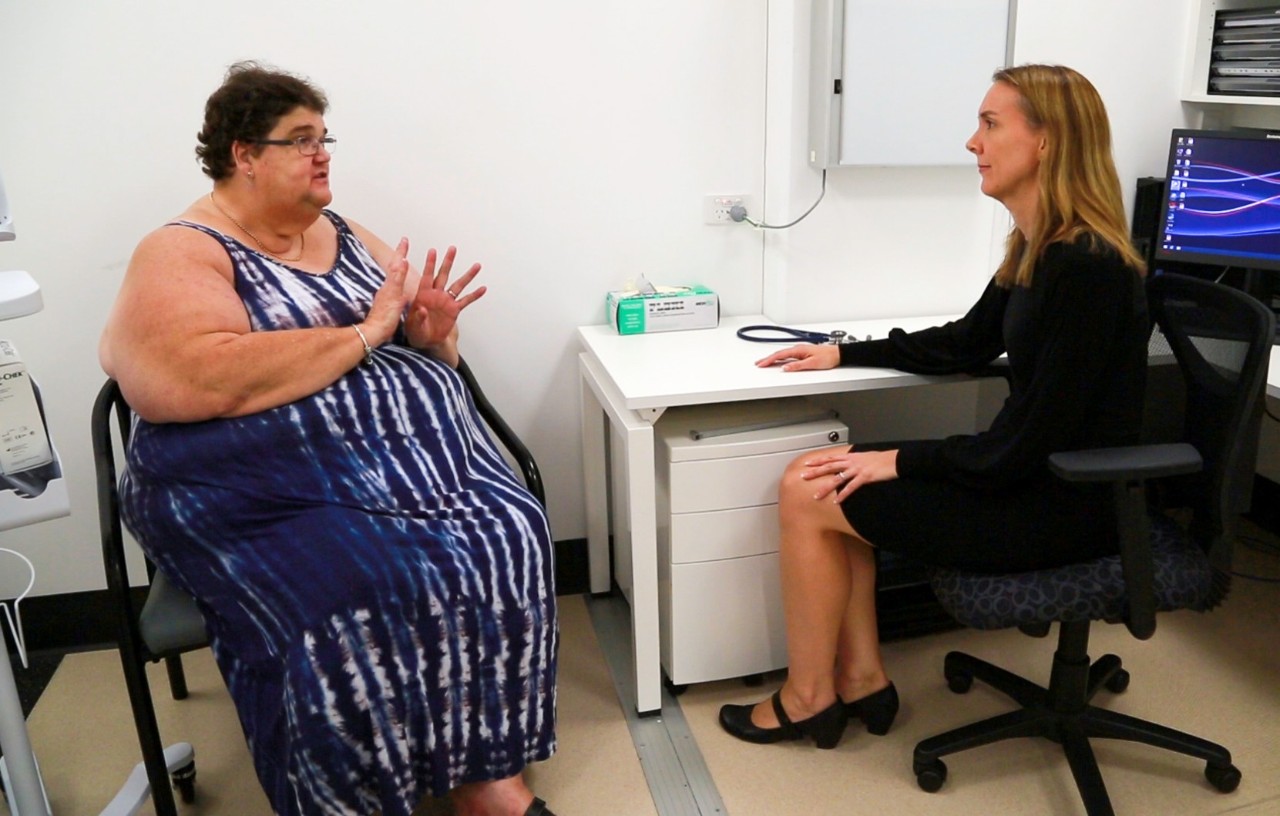
Dr Williams consulting with a client in clinic
Beginnings and translational vision
The service was established in 2016 through a unique partnership between the Charles Perkins Centre and Nepean Blue Mountains Local Health District. It emerged from a shared recognition that existing models of care were failing those with the most complex obesity-related needs.
With support from Charles Perkins Centre leadership, the service was designed from the ground up to integrate research, clinical care and disease and disability prevention, an embodiment of the Centre’s translational vision.
“Without the Charles Perkins Centre, I honestly don’t think we’d have gotten off the ground,” said Dr Williams. “It’s given us the intellectual space and practical support to keep going, even when the system makes it hard.”
Without the Charles Perkins Centre, I honestly don’t think we’d have gotten off the ground. It’s given us the intellectual space and practical support to keep going, even when the system makes it hard
Policy impact
Dr Williams describes cases that haunt her: patients burdened by complex health histories, trauma, and socioeconomic hardship.
“There are people who just want to live to see their grandkids, but I can’t access the medication that would help them, because it’s not listed on the PBS,” she said.
“Obesity in its severe forms is a disease that causes disability and premature death, but there’s still no recognition of that in policy.”
Serving one of the most disadvantaged populations in the country, the clinic takes a whole-of-life approach, treating children, adolescents, adults, and pregnant women. Many adult patients present with a BMI over 50 and multiple co-existing conditions, both physical and psychological.
“We’re not just seeing obesity. We’re seeing the legacy of trauma, disadvantage, and system failure,” said Dr Williams.
Multidisciplinary model
What sets the service apart is its holistic, multidisciplinary model. Patients receive coordinated care from endocrinologists, dietitians, clinical psychologists, physiotherapists and nurses and midwives tailored to their individual context. For families, this means acknowledging and addressing the circumstances that shape their health.
“We treat the whole family, not just the weight. You can’t improve health without improving dignity and access,” said Dr Williams.
Despite its innovative model, the Service faces persistent roadblocks: limited access to subsidised pharmacotherapy, waitlists in the hundreds, and a lack of follow-up options for patients after discharge.
“People often have to choose between feeding their family and paying for medication. When we can’t offer basic treatments, we’re setting them up to fail,” she said.
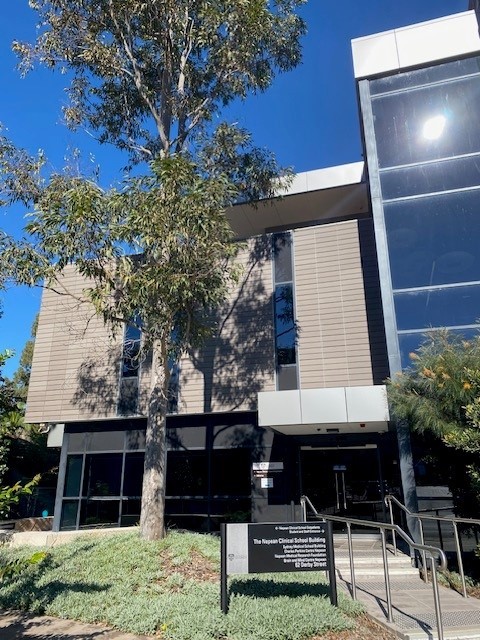
Nepean Blue Mountains Family Metabolic Health Service, Charles Perkins Centre Nepean
Growing into the future
Since launching in 2016, the clinic has expanded to include four integrated services: adult, paediatric, adolescent, and pregnancy care. Each stream is connected, ensuring continuity across life stages. The team is hoping for further growth in the future, with the opening of a second hospital tower in 2026, which may bring additional theatre space and infrastructure for bariatric surgery. Enhancement for outreach to areas of need and people most affected (for example, Lithgow) and virtualisation of their model of care is also within their future planning.
Yet the clinic is more than a point of care, it is also a research centre. Supported by the Charles Perkins Centre, Dr Williams and her team are building a robust evidence-base, collecting real-world data on what works in complex obesity management. With funding from the Jennie McKenzie Research Fund, the Service recently hired its first full-time research assistant to support data collection and expand capacity for early- and mid-career researchers.
Shifting the narrative
“This cohort has been overlooked in trials,” said Dr Williams. “They’re not just experiencing obesity, they are experiencing serious complications from it: they’re sick, sometimes housebound, and socially isolated. We’re finally starting to capture their stories in data.”
It’s part of a broader effort to shift the narrative on obesity from individual blame to systemic response. The team’s work intersects with public health, urban planning, and health economics, revealing how entrenched disadvantage creates health crises.
“Obesity is a disease of poverty and is most prominent in areas with the least health services. We see it in the rates, doubling as you move westward across Sydney, and even higher in rural areas,” said Dr Williams.
The future
Looking forward, Dr Williams envisions a system that treats obesity with the same seriousness as other chronic conditions. That includes improved access to medications, a better-funded model for long-term care, and training for GPs to engage patients without stigma. “This is a lifelong condition,” she said. “We can’t pretend it ends after 12 months with us.”
The stakes are not just clinical, they’re human. “When we help one person, we often see ripple-effects across the family and the community. People rejoin the workforce. They re-engage with life. They start helping others. That’s the real payoff,” said Dr Williams.
For now, she keeps going, driven not only by compassion, but by frustration. “It’s the inequity and inequality that motivates me. Because I see what’s possible, and I see what’s still being denied to significant sectors of our society.”
Lived experience