
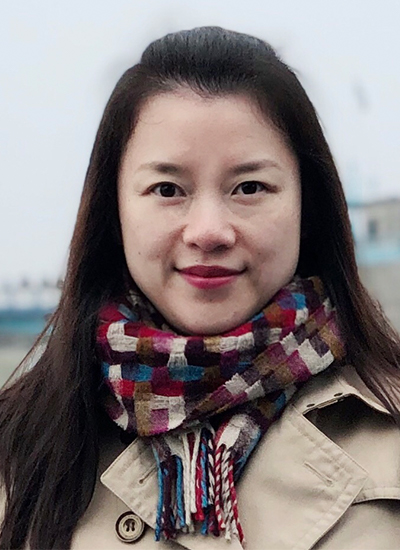
The misconception that engineering is a purely technical field with little creativity or human connection – and that it's somehow a better fit for men than women – can deter many people from considering it as a profession. But Dr Yi Shen's work on solving dementia demonstrates quite a different reality, despite Yi herself having fallen for those same misconceptions in her younger years.
"As a young student I never really liked the thought of engineering, to be honest," confesses Dr Yi Shen, now a Senior Lecturer and researcher at the University of Sydney’s School of Chemical and Biomolecular Engineering.
"It sounded boring, with lots of maths, so it didn't seem very attractive to me! I was interested in biology and human health, so I wanted to be a scientist of some kind, but I hadn't really thought beyond that."
It was during an exchange internship to Harvard University that Yi met Professor Howard A Stone, a highly respected engineering academic (now at Princeton University), whose dedication to science as a whole and to encouraging his students' curiosity inspired her greatly.
"Through Professor Stone, I realised that engineering is actually very relevant to so much real-world knowledge – including health," Yi says. "It's a very diverse field nowadays that's not just about computer science and robotics – there are so many different directions you can choose to take it."
Putting the brakes on dementia
Yi's own choices have led to her current position as an ARC DECRA Fellow conducting research into how to solve dementia. Not a single disease but a range of conditions affecting brain function, dementia was Australia's leading cause of death in 2024, and affects almost 30 percent of Australians aged 85 or over as well as many thousands of younger people. Almost two-thirds of those affected are women.
One biological process known to be associated with the development of dementia is the clumping together of protein molecules into aggregate formations (also known as plaques) that accumulate on the brain's neurons and disrupt their function. Yi's work – and that of the team she leads at the University's Biomolecular Engineering and Microfluidics Lab – focuses on understanding, preventing, and even harnessing this process for good.
"Put simply," Yi explains, "certain proteins have what we call different 'phases'. They can exist as separate molecules, they can come together in loose clumps known as biomolecular condensates, or they can form these super strong aggregates that contribute to the development of neurodegenerative disorders including Alzheimer's disease, Parkinson's disease and motor neurone disease. Once these very strong aggregates have formed, they are very difficult to remove or dissolve, so the primary focus is on preventing and slowing their formation to fight against these diseases."
Yi and her team are focusing particularly on the steps before the aggregation process, studying the molecular mechanics of biomolecular condensate formation – an emerging field worldwide and one that's not yet widely studied in Australia – and how we can detect and ultimately modulate this process to prevent the development of disease.
Engineering is actually very relevant to so much real-world knowledge – including health.
Dr Yi Shen
Thinking outside the box for the broader benefit of science
In parallel with the primary research goal, Yi and her team are also exploring how we might harness this natural aggregation process to our advantage, such as by using safe aggregate formations that can bind to certain drugs to deliver those drugs to targeted parts of the body, or by developing strong yet biodegradable materials from plant-based protein aggregates that could replace plastics in both food and health applications.
Another parallel goal of theirs is to streamline the experimental process itself by conducting more in vitro experiments initially, before progressing to animal cell studies. Even before in vitro experiments, however, computational simulation can often be used to predict how specific molecules will interact with each other and under different conditions, before moving on to in vitro studies. "In this way," Yi explains, "we should be able to reduce in vitro studies by around 90 percent, and animal cell studies by as much as 99 percent, making this kind of research much more efficient and cost-effective."
Tackling more than one problem at a time is an important part of Yi's scientific approach. "Researchers in general can have a tendency to focus on their own specific project or field to the exclusion of other issues," she observes. "I think it's very important to keep an open mind about discovering new things that may have applications beyond the project at hand. If we think outside the box, often research that aims to solve one problem can end up solving lots of others as well – or sometimes instead! Meanwhile, all technological innovation ultimately boosts the discovery of fundamental science. Each tool that we develop for a particular purpose advances science in the end."
Dr Yi Shen and team's research into protein phases stands to have benefits outside of dementia research. Image: whitehoune - stock.adobe.com
50
automatic
LinkAll technological innovation ultimately boosts the discovery of fundamental science. Each tool that we develop for a particular purpose advances science in the end.
Dr Yi Shen
Diversity of thinking increases success
In addition to addressing multiple problems at a time, Yi also believes in approaching any one problem from multiple perspectives to capture any approach that might contribute to its solution. To this end, she actively advocates for the inclusion of a wide range of 'ways of thinking' in engineering – a principle that naturally incorporates gender balance.
"I think it’s important to have female academics show that women can be who we are and still be successful," she says. "It can sometimes be difficult for women who are particularly quiet or shy to stand up and make their voice loud enough for others to hear. But when we have something to say, we can be confident while still being polite, and get our message across."
She also observes that people of different genders often bring different strengths to any team. "In my own experience, for example, it often seems that women researchers are particularly resilient when a project fails – and this is important, because very often a project is not going to succeed the first time, so you need to be able to adapt and try again.
"These are some of the reasons I've taken up the role of Faculty Academic Director of Culture and Community – to help lift the culture where necessary, and really bring people together with our complementary strengths."
Manual Name : Dr Yi Shen
Manual Description : DECRA Senior Research Fellow
Manual Address :
Manual Addition Info Title :
Manual Addition Info Content :
Profile image : /content/dam/corporate/images/faculty-of-engineering-and-information-technologies/news-and-events/2021/yi-shen.jpg
Manual Type : profile
_self
Auto Type : contact
Auto Addition Title :
Auto Addition Content :
Auto Name : true
Auto Position : true
Auto Profile image :
Auto Phone Number : false
Auto Mobile Number : true
Auto Email Address : true
Auto Address : false
UUID :