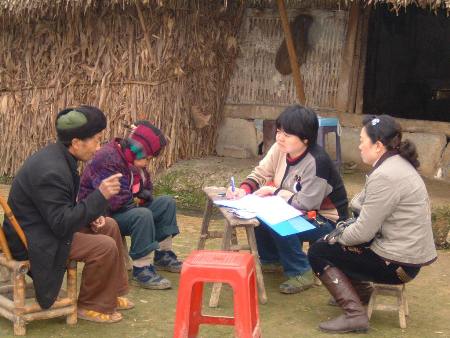
Lin Yuan
Participation by Miao Older People in the new Rural Cooperative Medical Scheme (RCMS) in Sichuan Province, P.R. China
My area of research is in rural healthcare services and rural health policy in P.R. China. My PhD study will explore the barriers to, and opportunities for, enhancing the participation of older Miao people in the local development and implementation of the new RCMS. A principal objective in the process will be to analyze how the needs of older Miao people are identified and addressed by the scheme.
The study will contribute to the effective development and implementation of health policy and services designed to enhance the health outcomes of marginalized, ethnic minorities in rural China.

Josh Stern
Recruitment of human telomerase to telomeres
My PhD at Children’s Medical Research Institute aims to understand how cancer cells achieve immortality. The chromosome ends, or telomeres, of normal cells shorten with age. This eventually causes cells to stop dividing. In cancer cells this does not happen. Most of the time this is because the telomerase enzyme repeatedly extends the telomeres. My goal is to work out what key factors recruit telomerase to the telomeres allowing it to extend the chromosomes.

Natalie D'Abrew
Impact of breast and gynaecological cancer in terms of the male partner's experience
I'm looking at the experience of male partners whose female partner is diagnosed with breast or gynaecological cancer. My research focuses on the impact of this disease in relation to body image and sexuality from the male partner's perspective. The aim is to improve knowledge of how male partners cope and to explore possible interventions for the male partner during this time.

Tristan Sharp
Doctor of Philosophy - biomechanical and physiological demands of front row forwards during the scrum
"My PhD is centred on rugby union scrummaging. More specifically the research is examining the biomechanical and physiological demands of front row forwards during the scrum. The reason behind only focusing on the front row guys is because they are the only ones during the scrum that are interlocked and can be influenced by the opposition. In addition, it is these guys who transmit the forces created by both their own team and the opposition. If these players understand their technique more and how it influences others, then it’s intended that the game will be a lot faster and more appealing to the rugby audience."

Kat Leaver
Neuroprotection and Parkinson's Disease
Currently the most effective treatments available to treat PD only alleviate the symptoms. There is a need to develop neuroprotective drugs which slow or stop the progression of the disease. Early intervention may help slow the onset of debilitating symptoms. I'm doing a cotutelle PhD, and so will be completing a year of research in Tours, France. I have the opportunity to travel to present at conferences.

Claire Deakin
Gene therapy for X-linked severe combined immunodeficiency (SCID-X1)
While two clinical trials of SCID-X1 gene therapy have shown success, some infants developed leukaemia as a result of the integrating virus used for gene delivery, a risk previously estimated as insignificant. My PhD project at the Children’s Medical Research Institute is focussed on developing an alternative, safer gene delivery system. My project also includes an ethics component to investigate risk and uncertainty in clinical gene therapy, which allows me to draw on my undergraduate training in science and law.

Sanket Joshi
Dynamin II as a potential anti-cancer drug target
My PhD project is to determine if the cellular protein dynamin II (dynII) is a potential anti-cancer drug target. DynII is implicated in the last step of the cell division process, called cytokinesis. Cell division is tightly regulated so that cells only divide when necessary and any damaged cells are killed. Cancer develops when this control is lost. We hope to stop the proliferation of cancer cells by targeting dynamin. This may result in stabilization or regression of a tumour. My research is conducted at the Children’s Medical Research Institute, part of the Westmead Research Hub.