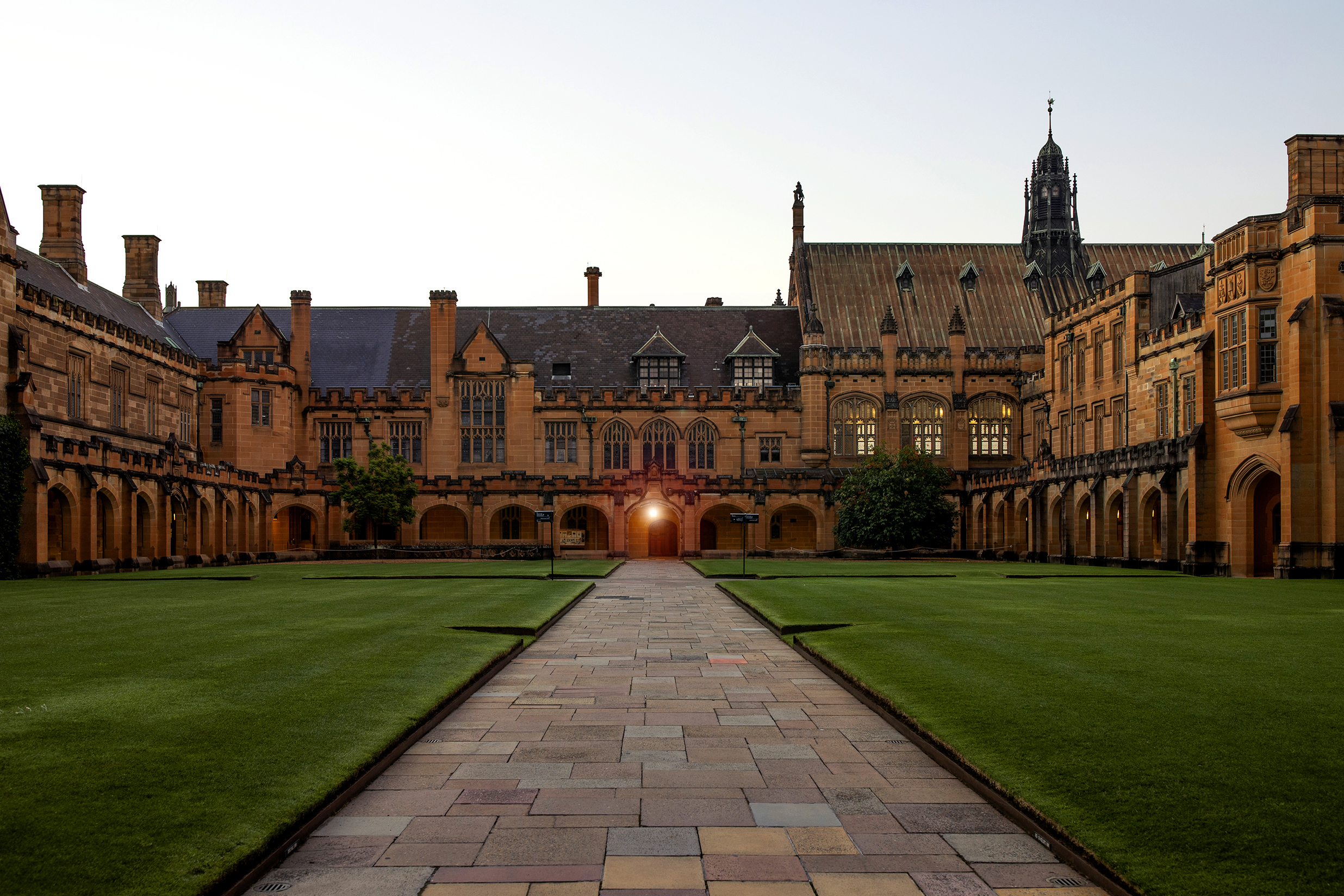
Bachelor of Arts and Bachelor of Social Work
An internationally recognised social work program.
What you’ll study
The Bachelor of Arts and Bachelor of Social Work is a combined undergraduate coursework degree that allows you to hone your analytical skills, think independently, and form and articulate judgements based on argument and evidence. It also provides you with the capacity to transfer knowledge and skills across different social contexts.
You will complete a major from the Arts and Social Sciences disciplinary pool, along with an additional minor in Sociology or Social Policy (or a minor or major from the disciplinary pool or the shared pool if you elected to take Sociology as your first major).
Additionally, you will complete units from the Open Learning Environment, and any elective units as needed to make up the required credit points for the degree.
After completing the Bachelor of Arts requirements, you will then complete core units from the Bachelor of Social Work
Explore your options
Browse the various subject areas you can choose within this degree.
Professional practice
Bachelor of Arts/Bachelor of Social Work candidates must complete work-based placement in Year 4 and Year 5. Field education is a core component of our Social Work program.
Field education learning expectations are developed across the program and aim to develop values, skills and knowledge for levels from beginner to a practitioner capable of meeting the Australian Association of Social Workers (AASW) Practice Standards.
Mandatory work hours
This course requires you to complete the following number of work hours:
980 Total hours
2027 tuition fees
This is the indicative annual student contribution amount (per calendar year), based on a full-time study load of 48 credit points. The degree requires 240 credit points in total.
Important fee information
This course offers a Commonwealth Supported Place (CSP). That means you don’t pay the full course fee. The Australian Government pays part of the cost, and you pay the remaining amount, called the student contribution amount.
You do not need to apply separately for a CSP. All eligible students will be considered when you apply for admission via UAC.
Your Fees Explained
This is an estimate
The indicative fees displayed are an estimate only. The estimate is for a Commonwealth supported place for 1 year of full-time study, which is usually 48 credit points (also known as 1.0 EFTSL).
The actual fees you will pay in your first calendar year will depend on many factors including:
1. the calendar year in which you commence studying your current course
2. the intake in which you commence your studies
3. whether your course is eligible for special rates for particular units of study
4. the specific units of study in which you enrol; and
5. the student contribution bands under which each unit of study sits.
The most recently published calendar year of fees payable for a specific unit of study are available here. If you have any questions, you can submit an enquiry.
How the estimate has been calculated
Generally, the estimate displayed on the course page is usually calculated based on one of two methods:
1. if a course has the effective equivalent of at least 10 full-time students enrolled, the fee estimate is based on the most recent data showing the average amount those students actually paid; or
2. for new courses or those with fewer students (where we don’t have enough data), the estimate is based on the typical cost of studying full-time in the main subject area of the course.
Additional costs, fees and incidentals
For most courses, there are other costs in addition to the tuition and/or student contribution amount, such as the Student Services Amenities Fee. Some are significant and can include course-specific materials, tools, protected clothing and equipment. Other costs may include application fees and credit card surcharges.

Entry requirements
Qualifications
Mandatory for course entry
To be eligible for admission into one of our undergraduate degrees, you need to have completed a recognised qualification and meet the required entry score.
Find your qualification in the qualification dropdown below (organised by country). If your qualification isn’t listed, you can find the full list on the recognised qualifications page.
International qualifications
For qualifications awarded outside Australia, equivalencies and entry requirements are determined based on the country, institution, and qualification.
Find your qualification
80.0
Selection rank
ATAR + adjustment factors
All scores listed are a guide for admission and subject to change.
Prerequisites
There are no prerequisites for this course.
Assumed knowledge
Depends on majors or units of study chosen.
Inherent requirements
Key consideration
Inherent requirements are the essential tasks and activities necessary to be able to achieve the core learning outcomes of a course.
Before applying, it is important for you to read and fully understand the inherent requirements for this course.
-
147.7KB
English Language Requirements
Mandatory for course entry
How to apply
Submit application
Domestic applications |
Please refer to the UAC website. |
International applications |
Closing dates Semester 1 - 15 January of the commencing year UAC applicants should refer to the UAC website. |