
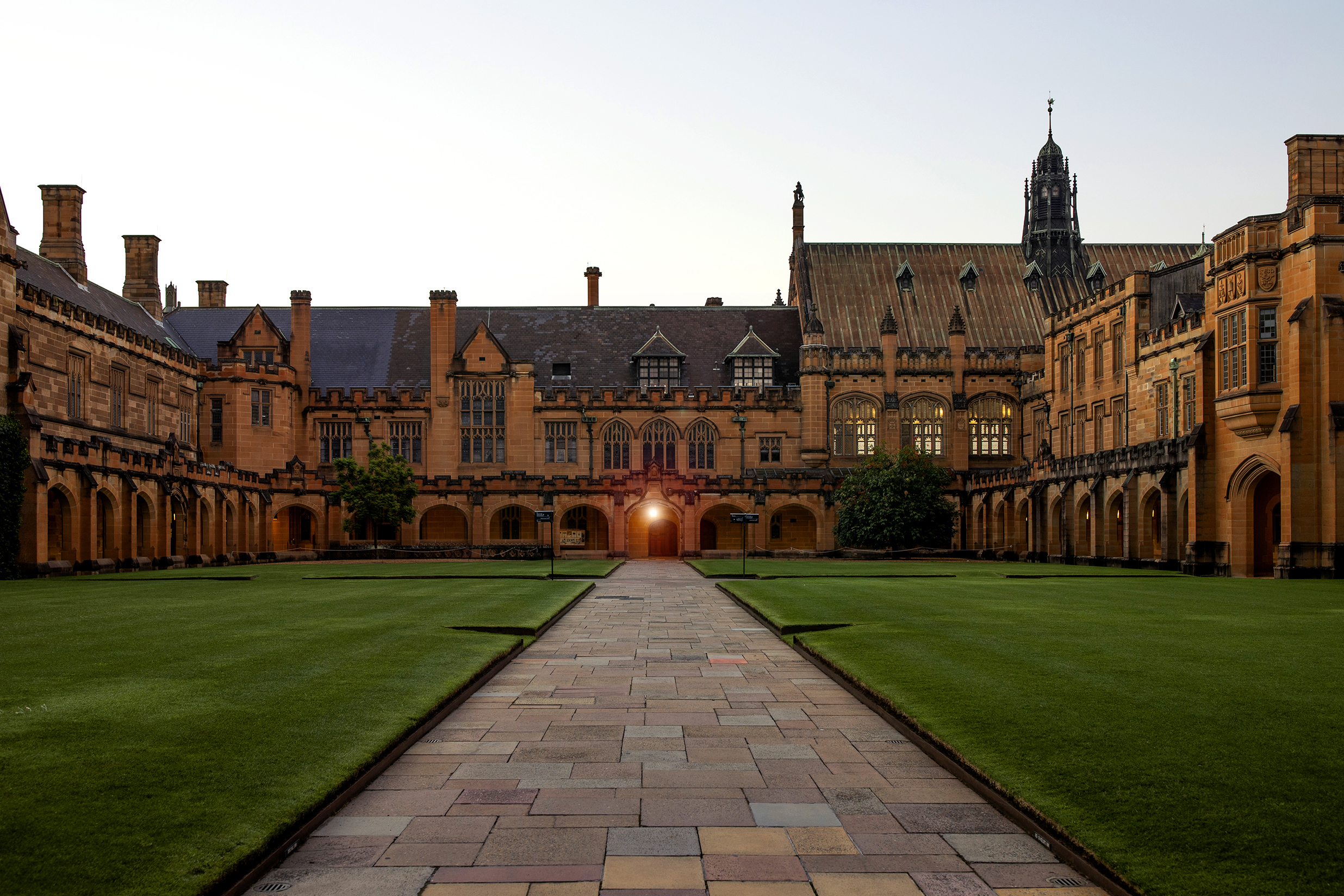
Bachelor of Science and Master of Nutrition and Dietetics
What you’ll study
Our Bachelor of Science and Master of Nutrition and Dietetics is a double degree that will provide you with solid knowledge of nutritional sciences and the expertise to pursue a career as a dietitian in a range of professional settings.
You will complete degree core and junior elective units, an embedded nutrition and dietetics program including a major in nutrition science, and a minor or second major from either the disciplinary pool or the shared pool.
Additionally, you will complete any elective units as needed to make up the required credit points for the course.
After successful completion of the Bachelor of Science (minimum credit average), you will progress to the Master of Nutrition and Dietetics wherein you will complete a prescribed course of study comprising core units in nutrition and dietetics, a training placement and a research project.
This program is directed by Professor Anna Rangan.
Unit of study table: Science and Nutrition and Dietetics
Explore your options
Browse the various subject areas you can choose within this degree.
Professional practice
Hands-on clinical training is required as part of the degree. This mandatory work component must be completed as part of the award requirements for the course.
Mandatory work hours
This course requires you to complete the following number of work hours:
800 Total hours
2027 tuition fees
This is the indicative annual student contribution amount (per calendar year), based on a full-time study load of 48 credit points. The degree requires 240 credit points in total.
Important fee information
This course offers a Commonwealth Supported Place (CSP). That means you don’t pay the full course fee. The Australian Government pays part of the cost, and you pay the remaining amount, called the student contribution amount.
You do not need to apply separately for a CSP. All eligible students will be considered when you apply for admission via UAC.
Your Fees Explained
This is an estimate
The indicative fees displayed are an estimate only. The estimate is for a Commonwealth supported place for 1 year of full-time study, which is usually 48 credit points (also known as 1.0 EFTSL).
The actual fees you will pay in your first calendar year will depend on many factors including:
1. the calendar year in which you commence studying your current course
2. the intake in which you commence your studies
3. whether your course is eligible for special rates for particular units of study
4. the specific units of study in which you enrol; and
5. the student contribution bands under which each unit of study sits.
The most recently published calendar year of fees payable for a specific unit of study are available here. If you have any questions, you can submit an enquiry.
How the estimate has been calculated
Generally, the estimate displayed on the course page is usually calculated based on one of two methods:
1. if a course has the effective equivalent of at least 10 full-time students enrolled, the fee estimate is based on the most recent data showing the average amount those students actually paid; or
2. for new courses or those with fewer students (where we don’t have enough data), the estimate is based on the typical cost of studying full-time in the main subject area of the course.
Additional costs, fees and incidentals
For most courses, there are other costs in addition to the tuition and/or student contribution amount, such as the Student Services Amenities Fee. Some are significant and can include course-specific materials, tools, protected clothing and equipment. Other costs may include application fees and credit card surcharges.

Entry requirements
Qualifications
Mandatory for course entry
To be eligible for admission into one of our undergraduate degrees, you need to have completed a recognised qualification and meet the required entry score.
Find your qualification in the qualification dropdown below (organised by country). If your qualification isn’t listed, you can find the full list on the recognised qualifications page.
International qualifications
For qualifications awarded outside Australia, equivalencies and entry requirements are determined based on the country, institution, and qualification.
Find your qualification
97.5
Selection rank
ATAR + adjustment factors
All scores listed are a guide for admission and subject to change.
Prerequisites
There are no prerequisites for this course.
Assumed knowledge
You are expected to have studied the following subjects in high school to succeed in this course:
- Mathematics Advanced or higher
- Biology
- Chemistry
Other assumed knowledge depends on major or units of study chosen for the BSc.
Inherent requirements
Key consideration
Inherent requirements are the essential tasks and activities necessary to be able to achieve the core learning outcomes of a course.
Before applying, it is important for you to read and fully understand the inherent requirements for this course.
-
139.8KB
English Language Requirements
Mandatory for course entry
How to apply
All domestic students need to apply through the Universities Admissions Centre (UAC).
Step 1:Documents you'll need
If you're an Australian Year 12 student UAC can usually obtain your results and ATAR from the relevant state education authorities.
You may be required to upload other documents depending on your circumstances and course preferences.
For a full list of documents required, visit the UAC website.
Step 2:Key dates
Applying for Semester 1 (February)?
- The University makes most of its Semester 1 offers through UAC's December Round 2.
- It does not participate in every UAC offer round and makes limited or no offers before December Round 2.
- Application close for December Round 2: Applications typically close in late November.
- Offers released for December Round 2: Offers are typically released in late December.
- After December Round 2, some courses may be full and stop making offers.
- Course vacancies will be available on the UAC website after January Round 1 offers are released.
Applying for Semester 2 (August)?
The University typically participates in selected UAC offer rounds between May and July. Offer rounds and dates may vary each year.
We strongly encourage you to visit the UAC website for a comprehensive list of key dates, including December Round 2 offers.
Step 3:Apply via UAC
To maximise your chances of receiving an offer from the University of Sydney, make sure to list your most desired degree at the University of Sydney as your first preference in your UAC application.
This course has limited places available. Not all applicants who meet the application deadline and requirements may be successful.
Step 4:After you apply
When the outcome of your application is available, you’ll receive an email from UAC. You will then receive an email from us with instructions on how to accept your offer.
Additional information
NSW Health Tertiary Health Study Subsidy
Domestic students may be eligible for the NSW Health Tertiary Health Study Subsidy Program. For information on how to apply, see here.