
Sydney's forgotten connection to the birth of the United Nations
A leading historian is calling for Sydneysiders to celebrate their connection to one of the world's greatest collective achievements: the founding of the United Nations.
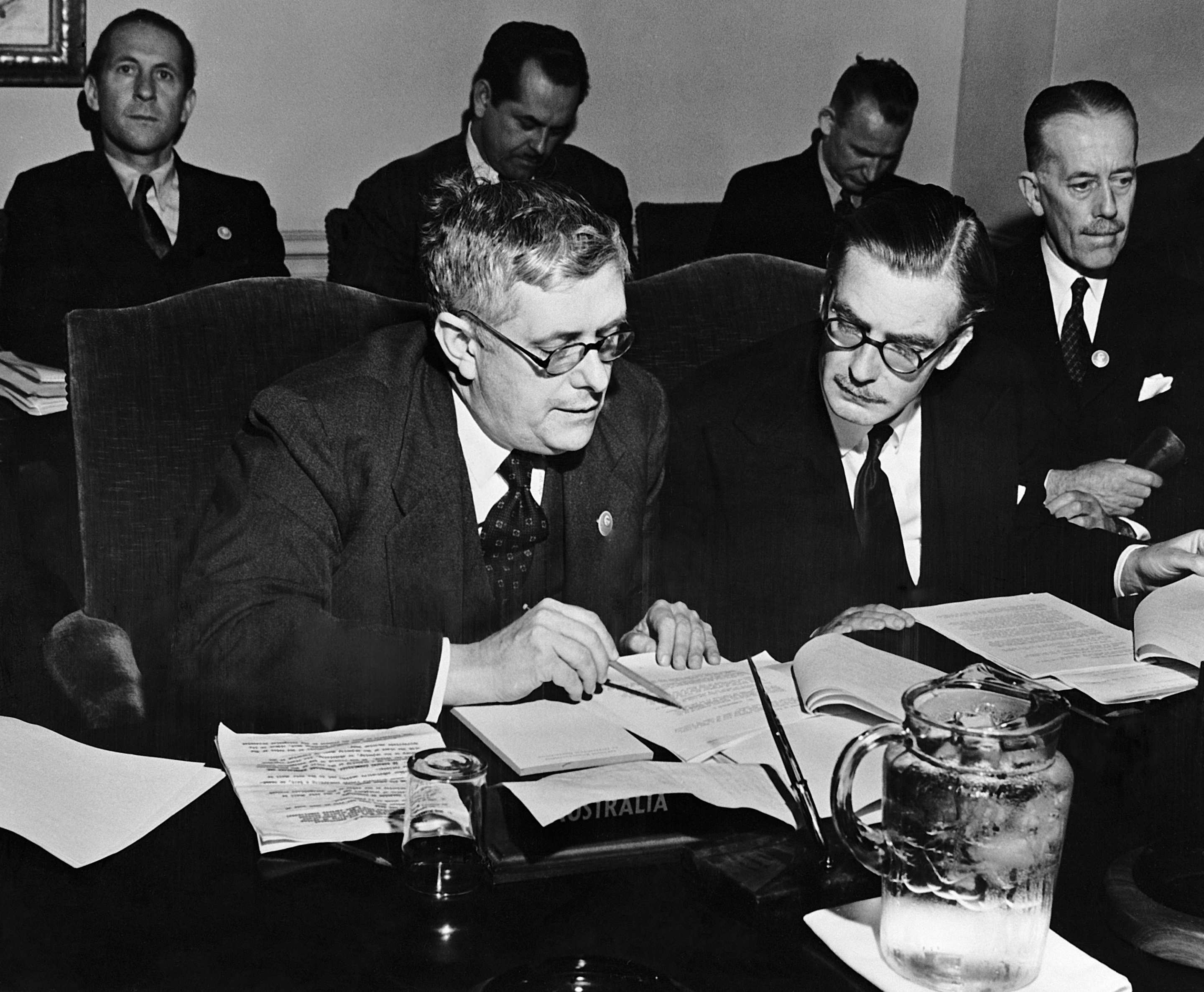
University of Sydney alumnus Herbert Vere Evatt (left) in May 1945 discussing the text of the proposal with UK Foreign Secretary Anthony Eden. Photo: United Nations
As cities across the globe prepare to mark the 70th anniversary of the UN on 24 October, Professor of International History Glenda Sluga said a fresh consideration is needed of Sydney's pivotal role in the founding of the organisation through the pioneering work of two University of Sydney graduates.
"As we approach the 70th anniversary of the founding of the United Nations, it is worth reminding ourselves of Australia's history in international relations. And at the heart of that story are University of Sydney alumni: Herbert Vere Evatt and Jessie Street," said Professor Sluga.
Dr Herbert 'Doc' Evatt (BA 1915, MA 1917, LLB 1918) enjoyed remarkable success as a student at the University of Sydney, holding four degrees and winning three University Medals. The eminent scholar went on to a distinguished legal and political career, eventually becoming a high court judge, Attorney-General and Minister for External Affairs in John Curtin's Labor government in 1941.
As the head of Australia's delegation to the UN, Evatt rallied for the creation of a new international organisation in which all countries, including smaller nations like Australia, could have a voice in global negotiations.
"Doc Evatt was a key figure in the drafting of the UN Charter at the extraordinary 1945 San Francisco conference that determined the scope of the new intergovernmental organisation, including the voice it gave to 'smaller powers', and the attention it paid to the rights of colonial peoples," said Professor Sluga.
"Evatt also went on to become the president of the UN General Assembly that passed the landmark document, the UN Declaration of Human Rights."
Lesser known to history but equally instrumental to the birth of the UN was Jessie Street (BA 1910), a prominent women's rights advocate and social justice campaigner.
"Jessie Street was by Evatt's side as an 'informal' yet government appointed delegate," said Professor Sluga.
[Jessie] Street went against the conventions of the era to make her political mark as a voice for indigenous peoples and women's rights on the international stage.
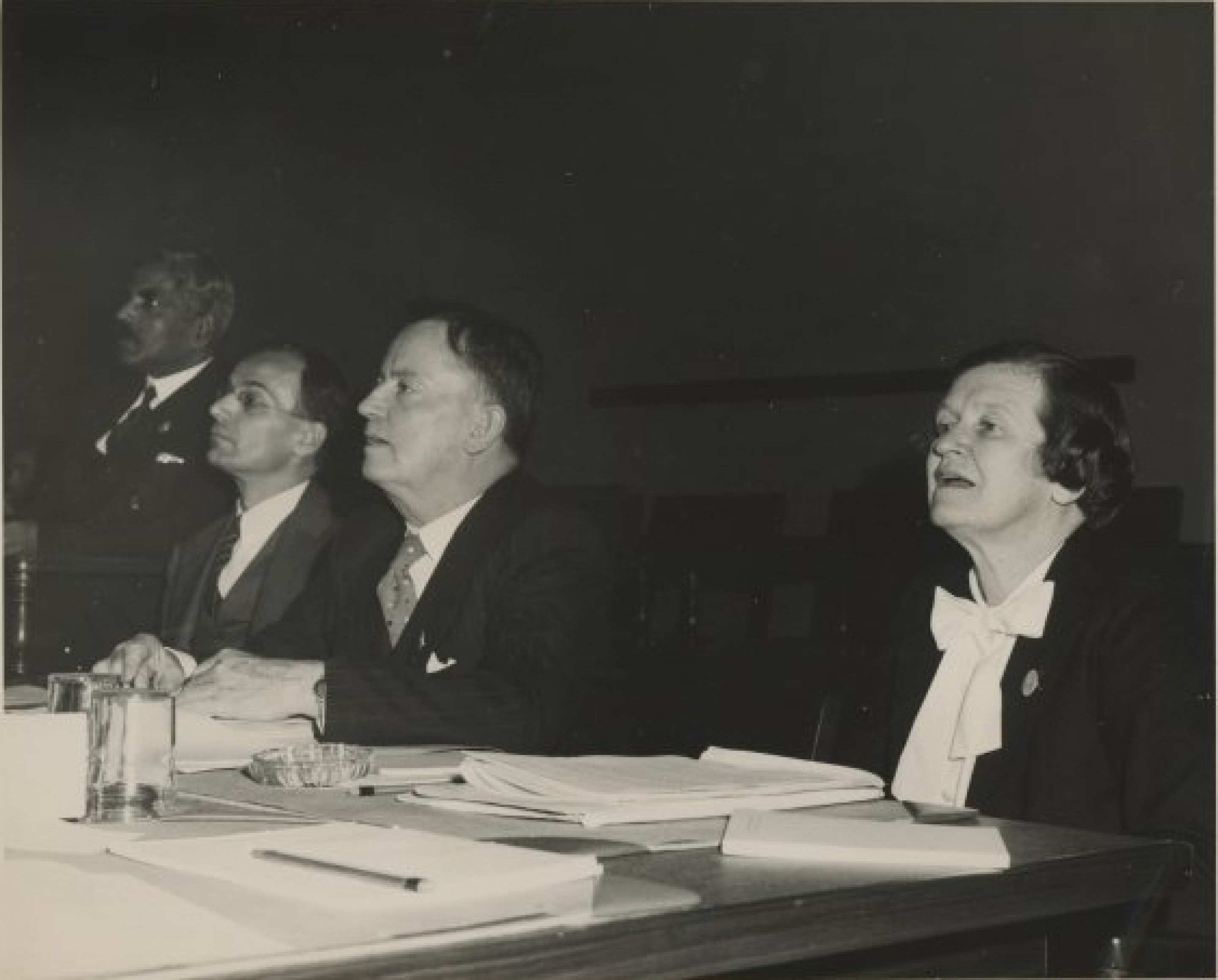
University of Sydney alumna Jessie Street (right) at the United Women's Conference in San Francisco, 19 May 1945. Image: Sam Rosenberg
"She was a prominent presence in San Francisco, and sent the message of the new international order far and wide through her radio presentations transmitted back to an interested Australian audience."
Professor Sluga believes that modern considerations of Australia and the United Nations, such as in the recent successful bid to win a seat on the UN Security Council for 2013-14, often neglect a broader view of our nation's rich history with the organisation.
"For more than a century Australians have been deeply involved at popular and governmental level in international institutions and international politics, and in the conceptualisation of international law and human rights," she said.
"For all the UN's chequered history, if we ask ourselves what the world might look like without it, the answer is undoubtedly we would be much worse off. Remembering what our forebears thought the UN should aspire to might even help us make the world a far more equal and safer place than it is today."
Related articles
Surge in flu this winter
People suffering severe flu this winter should seek medical treatment as soon as possible.

Dementia tsunami: Alzheimer's and other dementias to triple by 2050
Governments need to take action on delaying the onset of Alzheimer's disease and other dementias, argues Associate Professor Lesley Russell.
Legalising medicinal cannabis would create $100 million industry
Analysis from the University of Sydney Business School has found that legalising medicinal cannabis in Australia could create a new industry worth more than $100 million per year.
Ready, set, Rio: Sydney cohort heads to the Games
As more than 3.5 billion people around the world turn their sights towards Rio this week, 30 athletes from our community are getting ready to take their place on the globe’s biggest sporting stage.
Science student makes greatest self-discovery at the University
'Leave your comfort zone' is Kevin Gatdula’s motto in life. With an emphasis on continual personal development, the 20-year-old Bachelor of Commerce and Science student believes that this is the only way to cultivate a journey of personal growth.
Learning never stops - but it starts at Open Day
Like so many high school students in their final year, Denise Ong had a head full of questions. Little did she know at the time that one question she asked would later lead to a major turning point in her story.
Australian study wants your view on personal genomic testing
Do you want to know about your genetic information? Would you share it?
Sydney at Rio: two silver and a bronze add to our tally
In a blockbuster first week at Rio 2016 our athletes have continued to excel winning two silver and a bronze to add to Chloe Dalton's gold in the Rugby Sevens. Our total would see us sitting at 35th on the country tally rankings – ahead of Ireland, Slovenia and Romania.
Future research stars supported under new Sydney fellowship
The first cohort of fellows of the University's new Sydney Research Accelerator (SOAR) program has been announced.
Sydney tops the state for graduate employability
The University of Sydney has been ranked number one in New South Wales and 49 in the world in the most recent Times Higher Education Global Employability University Rankings.