
Superman dreams come true
Xiaopeng Wang, PhD research candidate at the University of Sydney's School of Electrical and Information Engineering is close to realising his dream of being like Superman, having X-ray vision and saving peoples' lives.
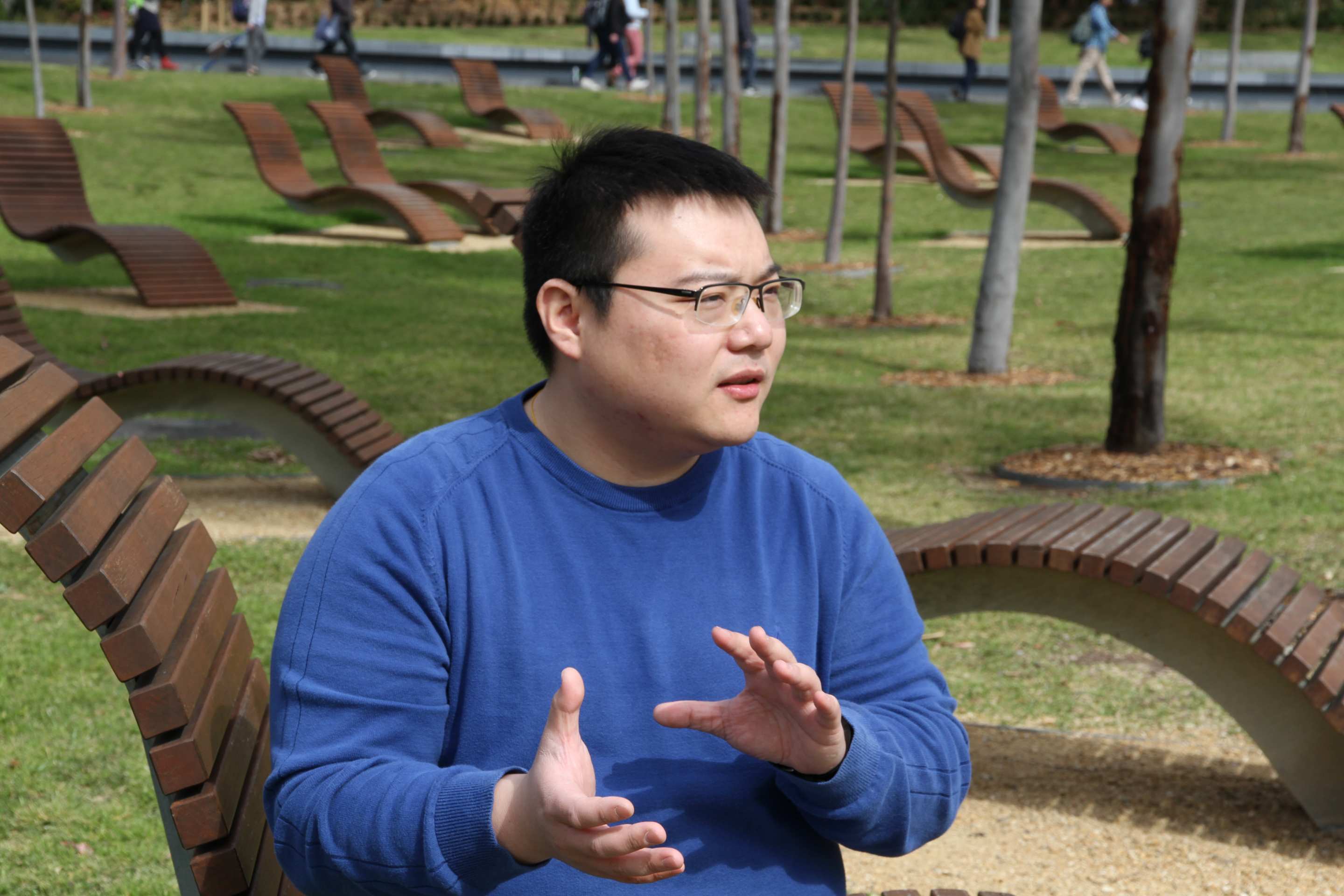
Wang’s super hero dreams led him to the telecommunication research group at the University where he is part of a team developing a device with capabilities to see through the walls of collapsed buildings or piles of rubble.
The 25-year-old who grew up in a village outside Beijing overlooking the Great Wall of China says:
“I suppose I have had a little bit of heroism in me since I was a kid. I wanted to be Superman, with super powers to protect the innocent, fight against crime and save lives.”
I envied Superman’s X-ray eyes the most! I thought his ability to see through walls would have great value in the real world
After successful trials of a large scale version of the team’s device, Wang is now working on a smaller model of his prototype.
“To achieve the ‘x-ray vision’, we used Electromagnetic (EM) waves, which are the same thing that give us the radio and Wi-Fi. Some kinds of the EM waves can go through a wall and send back the information relating to the object hidden behind it,” said Wang.
“We can then process the waves to retrieve the information we want. We then reshape the wave so people can tell the shape of the object it has captured.”
Dr Zihuai Lin, Wang’s PhD supervisors says his device has the potential to be used broadly in natural disasters, emergencies, such as the recent Tianjin Tanggu explosion and the Nepalese earthquake.
“When people get buried under collapsed buildings, a device such as this one could pinpoint the precise location of the survivor and definitely speed up the rescue mission,” says Dr Lin.
Before he embarked on his research journey, Wang was a devotee of video gaming. He admits to spending hours and hours playing games such as War of Warcraft, Counter Strike or Call of Duty. His immersive gaming experience also gave him some inspirational ideas for his research.
“In those virtual reality games, you use a gadget to probe inside architectural structures or buildings, either to win a fierce battle or rescue a teammate,” he says. “I thought this is what I want to achieve in reality.”
However Wang has had a much greater sense of satisfaction achieving his research goals than accomplishing his gaming tasks. “This is reality,” he says.
Related articles
Surge in flu this winter
People suffering severe flu this winter should seek medical treatment as soon as possible.

Dementia tsunami: Alzheimer's and other dementias to triple by 2050
Governments need to take action on delaying the onset of Alzheimer's disease and other dementias, argues Associate Professor Lesley Russell.
Legalising medicinal cannabis would create $100 million industry
Analysis from the University of Sydney Business School has found that legalising medicinal cannabis in Australia could create a new industry worth more than $100 million per year.
Ready, set, Rio: Sydney cohort heads to the Games
As more than 3.5 billion people around the world turn their sights towards Rio this week, 30 athletes from our community are getting ready to take their place on the globe’s biggest sporting stage.
Science student makes greatest self-discovery at the University
'Leave your comfort zone' is Kevin Gatdula’s motto in life. With an emphasis on continual personal development, the 20-year-old Bachelor of Commerce and Science student believes that this is the only way to cultivate a journey of personal growth.
Learning never stops - but it starts at Open Day
Like so many high school students in their final year, Denise Ong had a head full of questions. Little did she know at the time that one question she asked would later lead to a major turning point in her story.
Australian study wants your view on personal genomic testing
Do you want to know about your genetic information? Would you share it?
Sydney at Rio: two silver and a bronze add to our tally
In a blockbuster first week at Rio 2016 our athletes have continued to excel winning two silver and a bronze to add to Chloe Dalton's gold in the Rugby Sevens. Our total would see us sitting at 35th on the country tally rankings – ahead of Ireland, Slovenia and Romania.
Future research stars supported under new Sydney fellowship
The first cohort of fellows of the University's new Sydney Research Accelerator (SOAR) program has been announced.
Sydney tops the state for graduate employability
The University of Sydney has been ranked number one in New South Wales and 49 in the world in the most recent Times Higher Education Global Employability University Rankings.